Chandigarh EV Infrastructure Push Targets Charging Network Growth
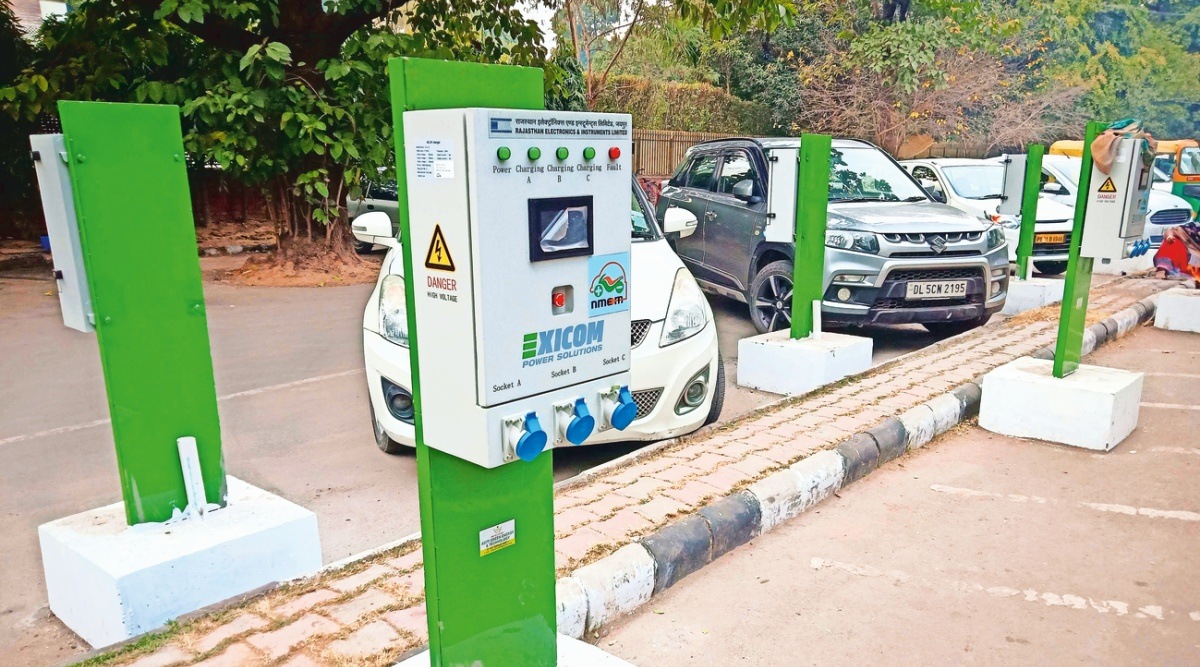
Chandigarh is preparing a fresh expansion of its electric-vehicle charging network after a sharp rise in electric car registrations in 2025 highlighted the gap between vehicle adoption and urban charging infrastructure. Officials say the next phase of the Chandigarh EV charging expansion will focus on new public charging points in high-demand areas, signalling a shift from pilot-stage projects to long-term clean-mobility planning.
Data reviewed by city agencies shows that electric-vehicle adoption, particularly among private car owners, has accelerated over the past year. The growth trend has forced planners to reassess the city’s charging capacity, which currently relies on a limited number of public charging locations spread across commercial zones and institutional areas. The proposed expansion is expected to target new high-footfall locations such as parking hubs, government buildings and major market areas where demand for public charging has grown steadily. Officials involved in the planning process say the Chandigarh EV charging expansion will follow a public-private partnership model similar to earlier phases, where the civic body provides land while private operators install and manage the charging infrastructure. This model has already shown financial viability in earlier installations, generating revenue both for the municipal administration and private operators while reducing dependence on conventional fuel vehicles in the city. The move reflects a broader national shift towards building large-scale charging infrastructure to support clean mobility. Government schemes such as the PM E-DRIVE programme aim to deploy tens of thousands of public charging stations across the country, while state governments are increasingly linking EV policies with urban transport planning and climate targets.
Experts say city-level infrastructure decisions, such as the Chandigarh EV charging expansion, are likely to play a decisive role in how quickly electric-vehicle adoption accelerates in India’s urban centres. Urban planners also point out that the expansion is not only about mobility but about how cities prepare for future energy demand. Public charging networks are increasingly being integrated with smart-grid systems, solar-powered infrastructure and sustainable transport planning. In smaller planned cities like Chandigarh, this transition is seen as an opportunity to build low-carbon urban mobility systems before congestion and pollution reach the levels seen in larger metros. The proposed Chandigarh EV charging expansion is also expected to support changes in consumer behaviour. Industry analysts note that rising electric-car ownership often depends more on reliable charging access than on vehicle subsidies alone. By expanding charging availability across residential and commercial areas, the city could encourage more households to shift towards electric vehicles while reducing long-term fuel costs and urban emissions.
The next phase will depend on final approvals, site selection and coordination between the municipal administration and energy agencies. If implemented as planned, the Chandigarh EV charging expansion could become one of the most significant clean-mobility initiatives in the city in recent years — and a model for mid-sized Indian cities planning a transition to sustainable urban transport.