


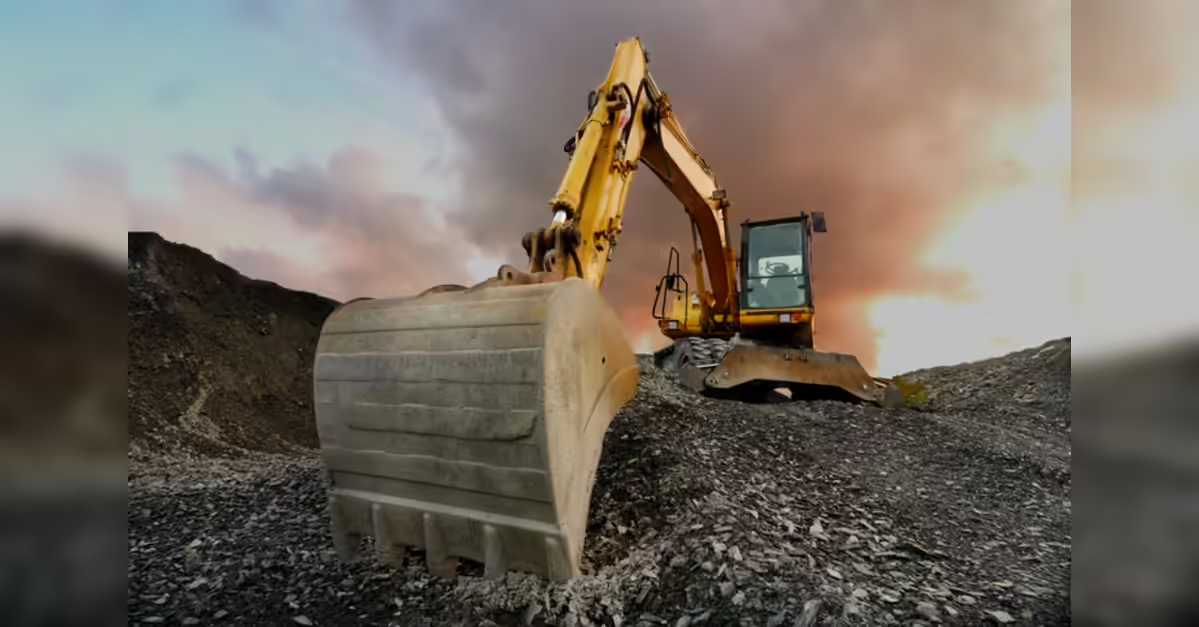
Nagpur is set to undertake a comprehensive statewide survey of mining activity, a move aimed at strengthening oversight, improving environmental compliance and ensuring more responsible use of natural resources. The initiative, to be conducted over the next few months, reflects a broader shift toward data-driven governance in sectors critical to infrastructure and economic growth. Officials involved in the exercise say the Maharashtra mining survey will map active mining sites, assess compliance with regulatory norms and create a more accurate database of resource extraction across districts. The effort is expected to support better planning and monitoring of mineral resources used extensively in construction and infrastructure development.
Urban and environmental experts note that the Maharashtra mining survey comes at a time when demand for construction materials is rising across cities and industrial corridors. Sand, stone and other aggregates are essential inputs for roads, housing and public infrastructure, making effective resource management a key priority for sustainable urban expansion. By establishing clearer visibility over mining operations, authorities aim to streamline supply chains and improve transparency in the sector. A well-regulated mining ecosystem can help ensure consistent material quality while reducing uncertainties in pricing and availability for developers and infrastructure projects. The Maharashtra mining survey is also expected to strengthen environmental safeguards. Regulated extraction practices can minimise ecological disruption, protect water resources and maintain land stability in mining areas. Urban planners emphasise that responsible sourcing of construction materials is essential for building climate-resilient cities. Advances in digital mapping and monitoring technologies are likely to play a key role in the survey process. Satellite imagery, geospatial data and digital reporting systems can enable more accurate tracking of mining activities, helping authorities identify gaps and improve enforcement efficiency. Policy analysts say the Maharashtra mining survey represents a proactive approach to governance, focusing on prevention and system improvement rather than reactive enforcement. By creating a comprehensive database of mining activity, the state can develop long-term strategies for sustainable resource use. The initiative is also expected to support economic formalisation within the sector. Improved regulation can encourage legitimate operators, enhance revenue collection and create a more level playing field for businesses involved in mining and construction supply chains. From an urban development perspective, reliable access to responsibly sourced materials is critical for maintaining the pace of infrastructure projects. Roads, housing developments and public utilities all depend on stable material supply, making governance reforms in mining directly relevant to city growth. The Maharashtra mining survey may also contribute to improved coordination between departments involved in mining, environment and infrastructure planning. Integrated data systems can help align policies and ensure that resource use supports both development and conservation goals.
For Maharashtra, the initiative signals a shift toward more structured and transparent resource management. As urbanisation and industrial activity continue to expand, such measures will be essential for balancing economic growth with environmental sustainability. In the long term, the success of the Maharashtra mining survey will depend on how effectively its findings are translated into policy and practice. If implemented well, the initiative could help create a more resilient, efficient and sustainable framework for managing the state’s natural resources.
ALSO READ – Nagpur Jabalpur Gas Pipeline Strengthens Regional Energy Network
Nagpur Mining Survey To Strengthen Sustainable Resource Use
