


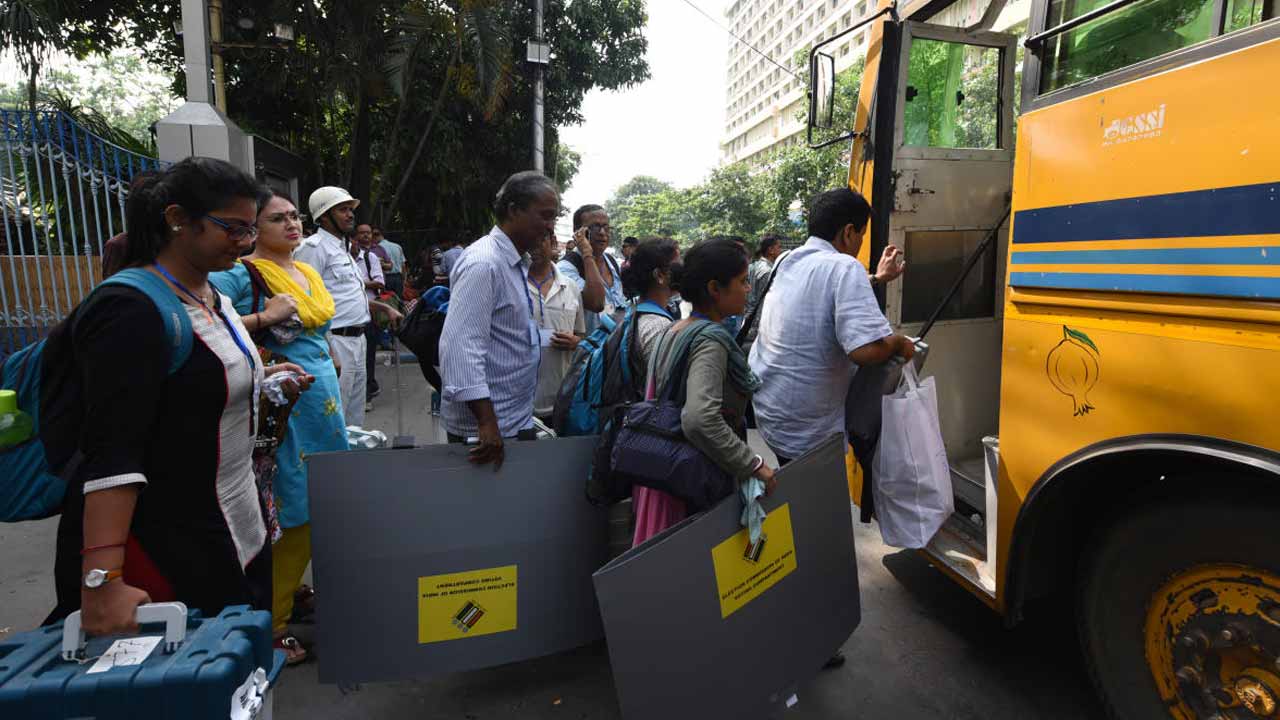
Kolkata’s transport ecosystem is set for a temporary recalibration as the state administration revises hiring rates for vehicles deployed during election duty, a move aimed at ensuring smoother logistics while balancing operational costs for private operators.
The decision comes ahead of a high-demand polling season, where mobility planning plays a critical role in the functioning of democratic processes and urban systems.The updated framework increases compensation for vehicles requisitioned for election work, including cars, buses and commercial carriers. Officials indicate that the revision reflects rising fuel costs, maintenance expenses and driver wages, which have strained participation from private vehicle owners in recent years. By adjusting rates, authorities aim to maintain an adequate fleet pool and reduce last-minute shortages that can disrupt election logistics.Urban planners note that large-scale mobilisation of vehicles during elections often places additional pressure on city traffic networks. Kolkata, with its dense road infrastructure and mixed-use transport system, must manage this demand without significantly affecting daily commuters. The revision, therefore, is not merely administrative but also linked to broader urban mobility management, especially in high-density zones where road capacity is already constrained.
Industry observers point out that predictable and fair compensation can encourage better compliance among vehicle owners, reducing informal negotiations and delays.Transparent rate-setting also helps standardise procurement across districts, which is essential for cities like Kolkata where suburban and peri-urban areas are closely tied to the urban core. This integration is critical for ensuring timely movement of polling personnel, electronic voting equipment and security staff.The revised election vehicle hiring rates also highlight the economic interplay between governance and local transport markets. For many small fleet operators and independent drivers, election duty represents a short-term but significant income opportunity. Ensuring viability for these stakeholders contributes to a more inclusive economic cycle, particularly in urban regions where informal and semi-formal transport services remain vital.However, mobility experts caution that large-scale vehicle requisitioning should be balanced with long-term sustainability goals. Temporary spikes in diesel-powered vehicle usage can increase emissions and congestion. Some suggest that future planning could explore integrating electric or low-emission fleets into election logistics, aligning civic processes with climate-resilient urban strategies.
As Kolkata prepares for upcoming electoral exercises, the revised rates are expected to stabilise supply and improve coordination between authorities and transport providers. The effectiveness of the move will ultimately depend on execution—timely payments, clear communication and efficient deployment. In a city where governance, infrastructure and mobility are deeply interconnected, such measures underline how even administrative decisions can shape the broader urban experience.
Also Read:Kolkata Startup Funding Boosts Urban Innovation Growth
