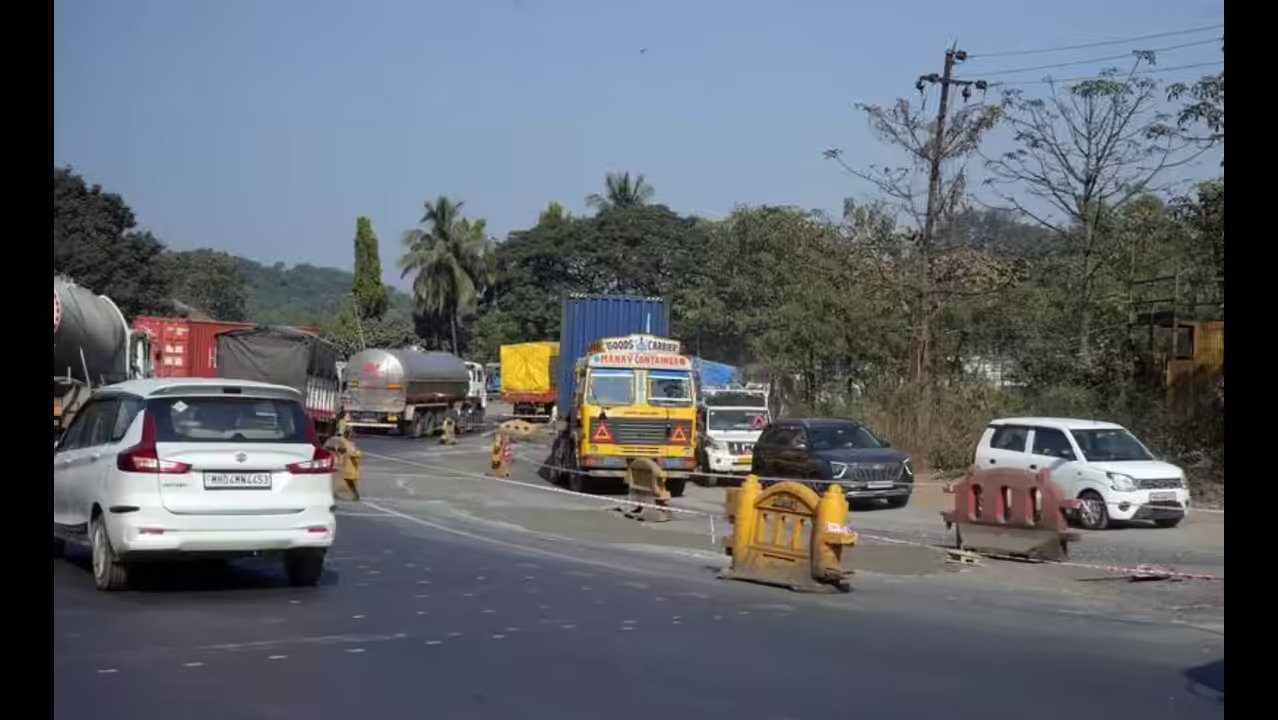
The proposed transfer of a key stretch of the Ghodbunder Highway to the Thane Municipal Corporation is facing delays as pending structural repairs on multiple flyovers raise concerns over readiness and financial responsibility, highlighting coordination gaps in urban infrastructure management.
At the centre of the issue is a 10-kilometre-plus corridor connecting Gaimukh to Kapurbawdi, a vital east–west arterial route that supports daily commuter and freight movement across Thane. While the state has initiated steps to shift ownership to the municipal body, unresolved maintenance work on four major flyovers has slowed the process. The Ghodbunder Highway handover has been under discussion following a series of administrative transitions between agencies responsible for its upkeep. Although the road itself is undergoing upgrades, including concreting works, the elevated structures along the corridor remain in need of repairs. Civic officials indicate that the municipality had expressed willingness to take control of the stretch only if it was handed over in a fully serviceable condition.
However, funding constraints at the current managing agency have complicated this transition. With limited resources available for undertaking structural rehabilitation, the responsibility may now shift to the municipal corporation, potentially increasing its financial burden. Preliminary estimates suggest that restoring the flyovers could require significant capital expenditure, subject to technical assessments and structural audits. Engineers within the municipal system are currently awaiting detailed reports on the condition and design specifications of the flyovers before finalising the scope of intervention. These include stability evaluations and engineering drawings necessary to determine the extent of repairs required for long-term safety and usability.
Urban infrastructure experts note that the delay in the Ghodbunder Highway handover reflects a broader challenge in India’s metropolitan regions, where multiple agencies manage interconnected assets without a unified maintenance framework. Such transitions often expose gaps in funding, accountability, and lifecycle planning for critical infrastructure. From a mobility perspective, the delay has implications for commuters who rely on the corridor for daily travel between Thane’s residential zones and commercial hubs. Any prolonged uncertainty over maintenance responsibilities could affect road safety and traffic flow, particularly on elevated structures that handle high volumes of vehicles.
The situation also underscores the need for more integrated infrastructure governance, where asset ownership transfers are accompanied by clear financial provisions and pre-defined maintenance standards. As cities expand and infrastructure ages, ensuring structural integrity becomes as important as building new capacity. Looking ahead, the timeline for completing repairs and formalising the Ghodbunder Highway handover will depend on inter-agency coordination and funding clarity. For Thane’s rapidly growing urban landscape, the outcome will set a precedent for how legacy infrastructure is managed, upgraded, and integrated into city-level governance systems.
Ghodbunder Highway Handover To Thane Hit By Repair Issues