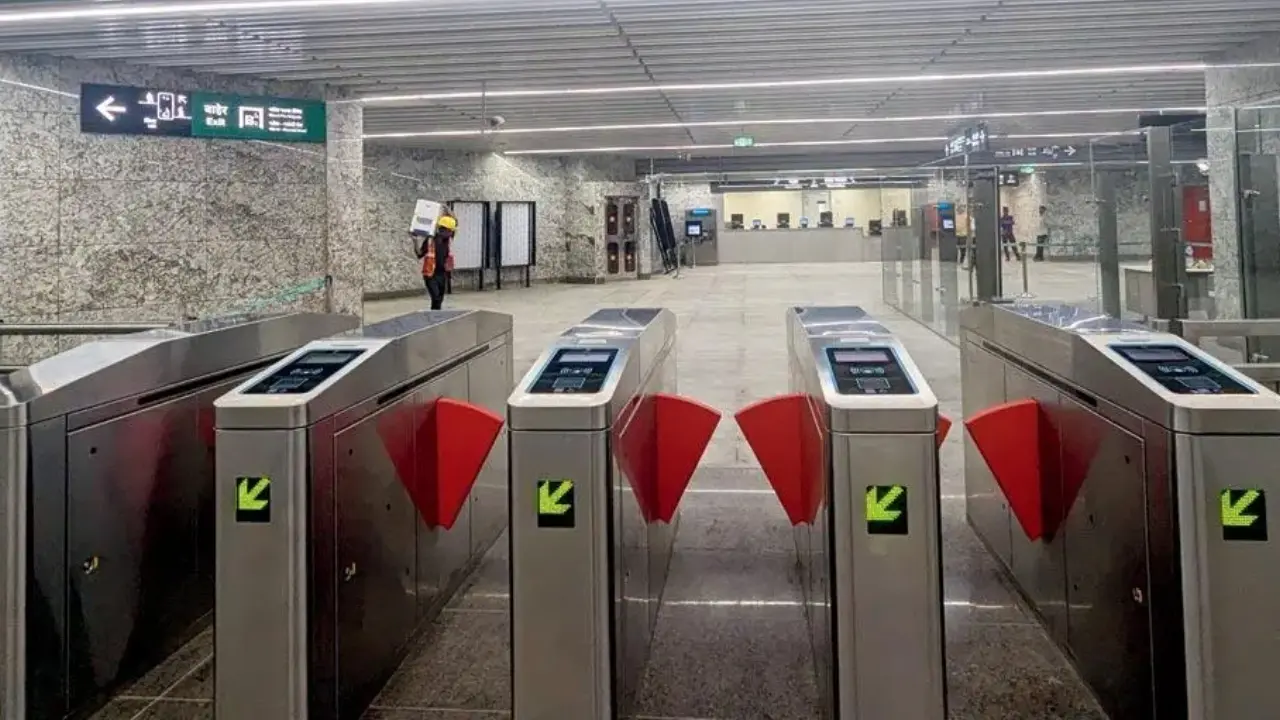
A section of Mumbai’s underground metro infrastructure has been impacted following unauthorised borewell activity in South Mumbai, raising fresh concerns around construction safety and regulatory enforcement in densely built urban areas. The incident affects a stretch of the city’s fully underground Aqua Line corridor, a flagship project aimed at strengthening mass transit connectivity across key business districts.
Preliminary assessments suggest that unauthorised drilling work carried out above the tunnel alignment led to structural damage, prompting immediate inspection by technical teams. While the extent of the impact is still being evaluated, officials indicate that safety protocols have been activated to ensure there is no risk to operations or commuter movement. The Mumbai Metro Aqua Line, which runs through some of the city’s most congested and infrastructure-heavy zones, has been engineered using advanced tunnelling methods designed to withstand complex ground conditions. However, experts point out that external disruptions such as unregulated excavation or borewell activity can pose serious risks to underground assets, particularly in areas with high building density and ageing utilities.
Urban infrastructure specialists note that such incidents highlight gaps in coordination between civic authorities, utility agencies, and private contractors. In cities like Mumbai, where multiple layers of infrastructure coexist beneath limited surface space, even small-scale interventions can have cascading impacts if not properly regulated. The Mumbai Metro Aqua Line, being entirely subterranean, is especially vulnerable to unauthorised surface-level activities that intersect with its alignment. Beyond immediate repairs, the episode has renewed calls for stronger monitoring mechanisms and stricter enforcement of excavation norms. Industry experts suggest that real-time mapping of underground infrastructure, combined with digital permitting systems, could help prevent similar occurrences. There is also a growing push for better public awareness regarding the risks associated with unregulated drilling in urban areas.
The incident comes at a time when Mumbai is expanding its metro network to reduce reliance on road-based transport and ease pressure on suburban rail systems. Large-scale investments in underground corridors are central to this strategy, offering high-capacity, low-emission transit options in land-constrained zones. Any disruption to such projects not only affects timelines and costs but also raises broader questions about urban resilience and governance. Officials are expected to carry out a detailed structural audit of the affected section, followed by necessary reinforcement measures. Service schedules, if impacted, are likely to be adjusted in line with safety requirements.
As Mumbai continues to build deeper and more complex infrastructure networks, ensuring coordination between construction activity and existing assets will be critical. The incident serves as a reminder that sustainable urban development depends not just on new investments, but also on safeguarding what has already been built.
Mumbai Aqua Line Tunnel Hit By Illegal Drilling