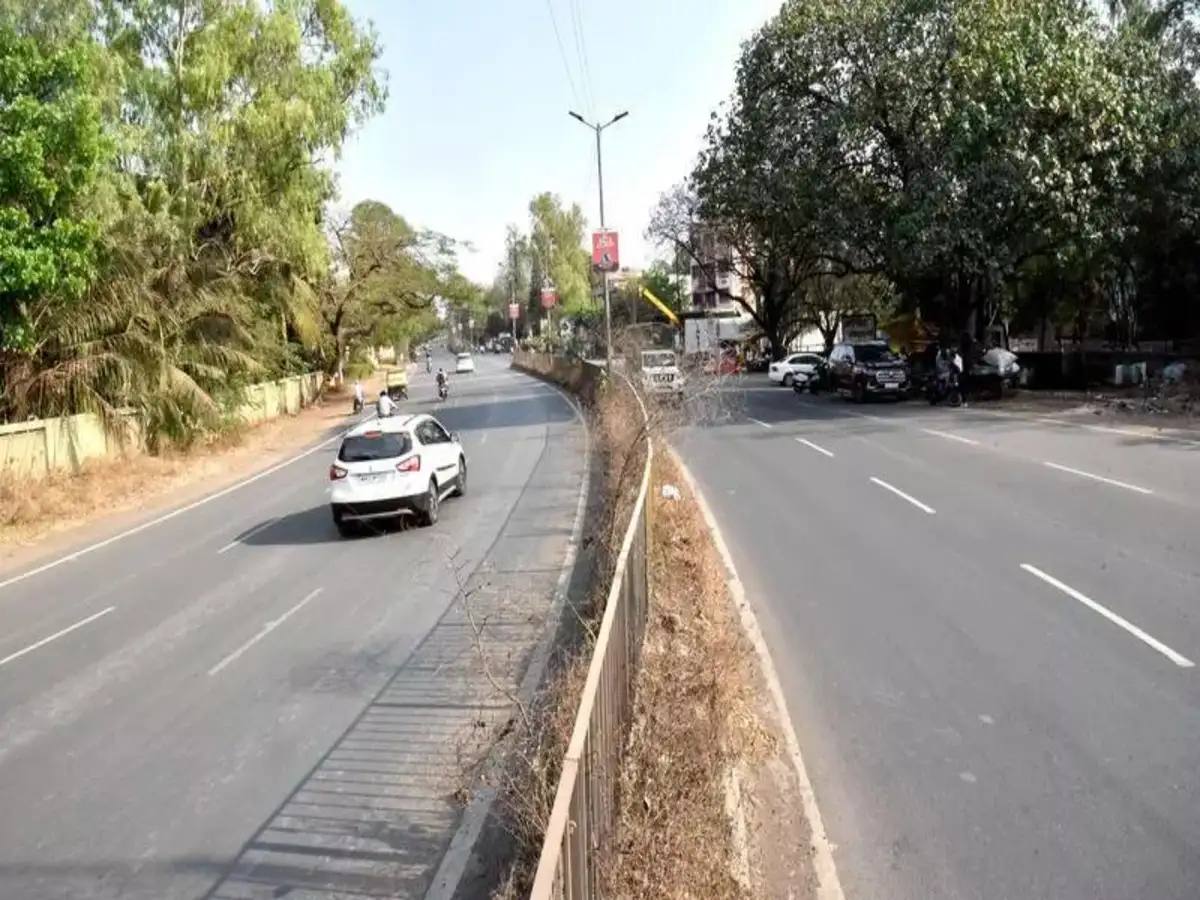
A new transport link planned between Thane and Navi Mumbai is set to reshape daily commuting patterns across the Mumbai Metropolitan Region (MMR), with authorities approving a ₹723 crore project aimed at reducing travel time and easing pressure on existing corridors. The proposed connection is expected to significantly shorten journeys between key residential and employment hubs, addressing one of the region’s most persistent mobility bottlenecks.
The project will establish a more direct route linking eastern Thane with nodes in Navi Mumbai, improving access to areas such as Airoli and Digha. At present, commuters rely on circuitous routes that funnel traffic through already saturated stretches, including the Kalwa creek crossing and adjoining arterial roads. This results in frequent delays, particularly during peak hours, with travel times often stretching unpredictably. Officials involved in regional planning indicate that the new alignment has been designed to bypass some of the most congested choke points, allowing vehicles to move more efficiently between the two urban clusters. By offering an alternative to overloaded corridors, the Thane Navi Mumbai link is expected to redistribute traffic flows and improve overall network performance.
For a region witnessing rapid residential and commercial expansion, improved cross-city connectivity is becoming increasingly critical. Urban planners note that infrastructure projects such as the Thane Navi Mumbai link play a key role in shaping development patterns by making peripheral locations more accessible. This can help reduce pressure on core city areas while encouraging more balanced growth across the metropolitan region. The economic implications are also significant. Reduced travel times translate into productivity gains for both individuals and businesses, while lower congestion levels can lead to decreased fuel consumption and logistics costs. In a city where long commutes are a daily reality for millions, even marginal time savings can have a cumulative impact on quality of life.
However, experts caution that road-based infrastructure must be complemented by investments in public transport and non-motorised mobility to ensure long-term sustainability. While the Thane Navi Mumbai link is expected to improve vehicular movement, its integration with broader multimodal networks—such as suburban rail and metro systems—will determine its effectiveness in reducing overall congestion and emissions. The revised project plan is also expected to streamline execution timelines, reflecting a broader push by regional authorities to accelerate infrastructure delivery. As part of a wider pipeline of connectivity projects, the initiative underscores a growing emphasis on inter-city linkages within the MMR, where economic activity is increasingly decentralised.
As construction moves forward, the focus will remain on timely delivery, environmental safeguards, and seamless integration with existing infrastructure. For commuters, the Thane Navi Mumbai link represents a step towards shorter, more predictable journeys—an essential component of building a more efficient and liveable urban region.
Thane Navi Mumbai Corridor To Cut Commute By 30 Minutes