


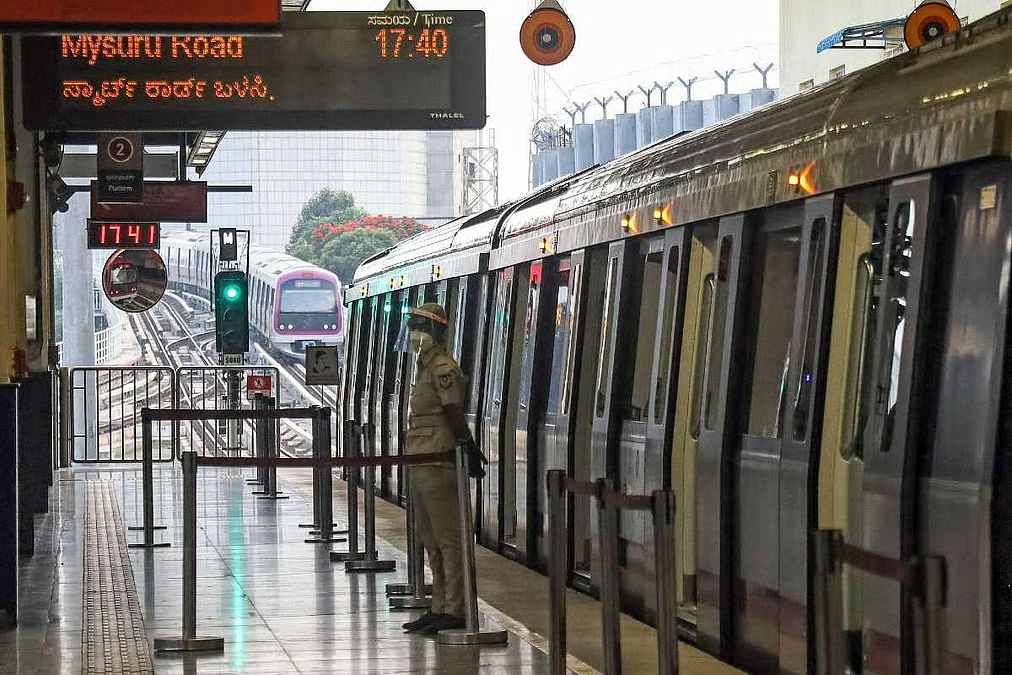
A recent disturbance aboard a train on the Namma Metro in Bengaluru has drawn attention to passenger conduct and safety enforcement within India’s rapidly expanding urban transit networks.
Authorities confirmed that multiple individuals were booked following an incident involving disruptive behaviour inside a metro coach, prompting intervention from security personnel and raising questions around commuter discipline in high-density public transport systems.The episode, which reportedly involved loud singing and crowding that inconvenienced other passengers, temporarily affected the travel experience during peak hours. While no major operational disruption was reported, officials indicated that such incidents can escalate risks in confined transit environments where safety protocols depend on predictable commuter behaviour.Urban mobility experts note that metro systems are designed to optimise efficiency, reliability, and safety for large passenger volumes. Any deviation from expected norms—whether through overcrowding, obstruction, or disruptive activity—can compromise both operational flow and emergency preparedness. In a city like Bengaluru, where metro ridership continues to grow alongside urban expansion, maintaining order within transit spaces is becoming an increasingly critical governance challenge.The Bengaluru metro incident also highlights the broader issue of behavioural compliance in shared infrastructure. Unlike road transport, where enforcement is more visible, metro systems rely heavily on self-regulation supported by surveillance and periodic intervention.
Experts suggest that as systems scale, authorities must invest not only in physical infrastructure but also in awareness campaigns and enforcement frameworks that reinforce acceptable public conduct.From an economic and urban development perspective, reliable public transport is central to reducing congestion and lowering carbon emissions. Metro networks such as Namma Metro are positioned as key components of sustainable city planning, offering an alternative to private vehicle use. However, their effectiveness depends on commuter trust and comfort, both of which can be undermined by repeated disturbances.Infrastructure planners also point to the need for integrating design solutions that anticipate behavioural challenges. This includes clearer signage, real-time monitoring, and rapid response mechanisms to address incidents before they escalate. In high-growth cities, where transit systems are under constant pressure, such measures can help maintain service quality without significantly increasing operational costs.Civic authorities indicate that enforcement actions in the Bengaluru metro incident are intended to signal zero tolerance for activities that disrupt public order within transit systems. At the same time, there is recognition that long-term solutions will require a combination of regulation, design, and public engagement.
As Bengaluru continues to invest in expanding its metro network, ensuring a safe and predictable commuting environment will be essential to sustaining ridership growth. Strengthening behavioural norms within shared urban infrastructure is likely to become as important as building new lines, shaping how effectively cities transition towards cleaner and more efficient mobility systems.
Also Read:Bengaluru Clean Air Funds Face Governance Delays
