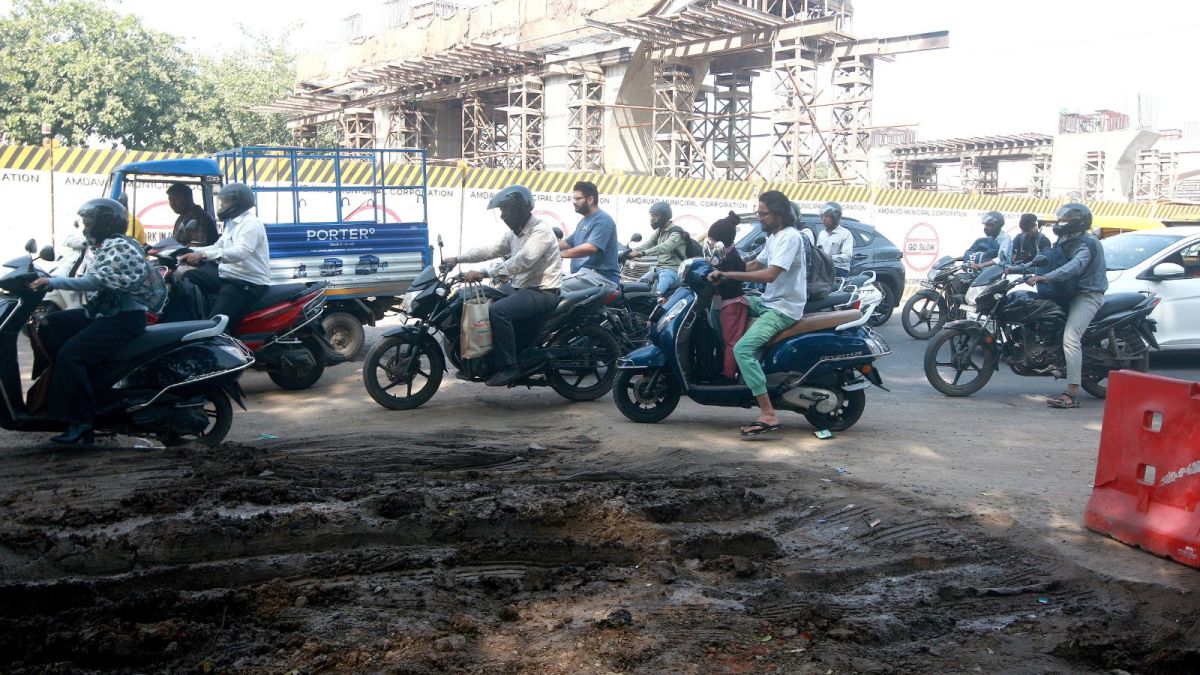
Recurring road collapses across Ahmedabad are raising fresh concerns about the durability of urban infrastructure, even as the city prepares for large-scale global events and long-term capital investments. Despite sustained spending on maintenance, Ahmedabad sinkholes and potholes continue to disrupt daily life, pointing to deeper systemic issues beneath the surface.
Municipal records and local assessments indicate that hundreds of sinkhole incidents and major road cave-ins have been reported across the city in recent years. While repair works have been undertaken regularly, including targeted interventions costing several crores, the recurrence of failures suggests that surface-level fixes may not be addressing underlying structural weaknesses. Urban infrastructure experts attribute the persistence of Ahmedabad sinkholes and potholes to ageing underground utilities, particularly water supply and drainage networks. Over time, leaks from deteriorating pipelines can erode soil stability, eventually leading to sudden collapses of road surfaces. In dense urban zones, where multiple utility lines intersect, these risks are further compounded by excavation works and uncoordinated maintenance.
The issue is particularly visible during monsoon periods, when waterlogging accelerates ground erosion and exposes vulnerabilities in drainage systems. Commuters across several neighbourhoods report frequent disruptions, with damaged roads not only slowing traffic but also posing safety hazards for pedestrians, cyclists, and motorists alike. Civic authorities have outlined ambitious plans to upgrade core infrastructure, including significant investments in water and drainage systems over the coming years. However, urban planners note that execution timelines and coordination across departments remain critical challenges. Without synchronised upgrades to underground utilities and road surfaces, repair cycles risk becoming repetitive and cost-intensive.
Data transparency has also emerged as a concern. Requests for detailed ward-level information on expenditure and repair outcomes have reportedly yielded inconsistent responses across administrative zones. This lack of uniform reporting makes it difficult to assess the effectiveness of interventions or prioritise high-risk areas for comprehensive upgrades. The persistence of Ahmedabad sinkholes and potholes carries broader implications as the city positions itself for international events such as the Commonwealth Games 2030. Large-scale events typically place additional stress on urban infrastructure, making reliability and safety critical parameters for both residents and visitors.
From a sustainability perspective, the situation underscores the importance of resilient urban systems. Experts advocate for integrated asset management approaches that combine real-time monitoring of pipelines, preventive maintenance, and climate-adaptive design. Strengthening sub-surface infrastructure is increasingly seen as essential to achieving long-term urban resilience, particularly in cities facing rapid growth and environmental stress. As Ahmedabad advances its development agenda, the focus is likely to shift from reactive repairs to systemic upgrades. Ensuring that investments translate into durable, safe, and climate-resilient infrastructure will be key to maintaining public trust and supporting the city’s ambitions on the national and global stage.
Ahmedabad Roads Face Recurring Sinkhole Failures