


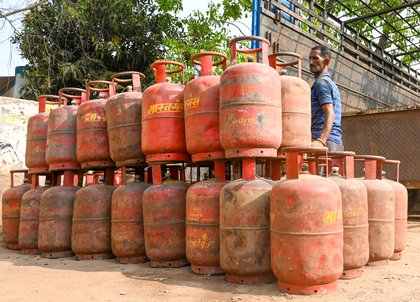
Industrial townships across Indore are facing operational disruptions after restrictions on commercial cooking gas supplies began affecting factory kitchens that provide meals to thousands of workers daily. The curbs, linked to limited availability of commercial LPG cylinders, have raised concerns about the resilience of essential services within the city’s major manufacturing clusters. Factory canteens, which serve large workforces in industrial estates and manufacturing facilities, rely heavily on bulk LPG cylinders for preparing daily meals. The Indore LPG supply curbs have forced several kitchens to reduce cooking capacity or adjust meal schedules as operators struggle to secure regular gas deliveries.
Industrial managers say worker meal services are a critical component of manufacturing operations, particularly in facilities where employees work long shifts. Any disruption in food preparation can affect productivity and worker welfare, especially in large factories where thousands depend on on-site canteens. The Indore LPG supply curbs have been felt across multiple industrial zones where manufacturing units operate around the clock. Some facilities have attempted to shift to alternative cooking methods, including electric equipment and smaller gas cylinders, though these options often increase operating costs and may not meet large-scale cooking requirements. Urban economists note that the situation highlights the hidden infrastructure networks that sustain industrial cities. Beyond power supply and logistics, industrial operations depend on services such as food preparation, water supply and sanitation to support large workforces. Indore has emerged as one of central India’s most important manufacturing hubs, with industrial estates hosting sectors ranging from pharmaceuticals and automotive components to textiles and food processing. The smooth functioning of these clusters depends on reliable supply chains not only for raw materials but also for everyday operational services. The Indore LPG supply curbs reflect a broader challenge in managing energy supply systems for commercial users. Commercial LPG cylinders are widely used by restaurants, catering services and institutional kitchens across cities. When supply constraints arise, these sectors often experience immediate operational stress. Energy policy experts say diversifying cooking energy sources could help reduce such vulnerabilities in the future. Industrial kitchens and large institutional facilities may increasingly adopt piped natural gas networks or electric cooking technologies as part of more resilient energy systems. Urban planners also emphasise the need to integrate essential service infrastructure into industrial development planning. As manufacturing zones expand and employ larger workforces, support services such as food preparation facilities must be supported by reliable energy and utility networks.
For Indore’s industrial sector, stabilising LPG supply remains an immediate priority. Authorities are expected to coordinate with fuel distributors to ensure that factory kitchens and institutional facilities receive adequate fuel to maintain operations. In the longer term, the Indore LPG supply curbs may prompt industries and policymakers to reassess energy strategies for large-scale kitchens. Strengthening energy resilience for essential services will be crucial for sustaining industrial productivity while supporting worker welfare in rapidly growing manufacturing cities.
ALSO READ – Indore Metro Safety Review Advances Corridor Readiness
Indore LPG Restrictions Disrupt Industrial Food Services
