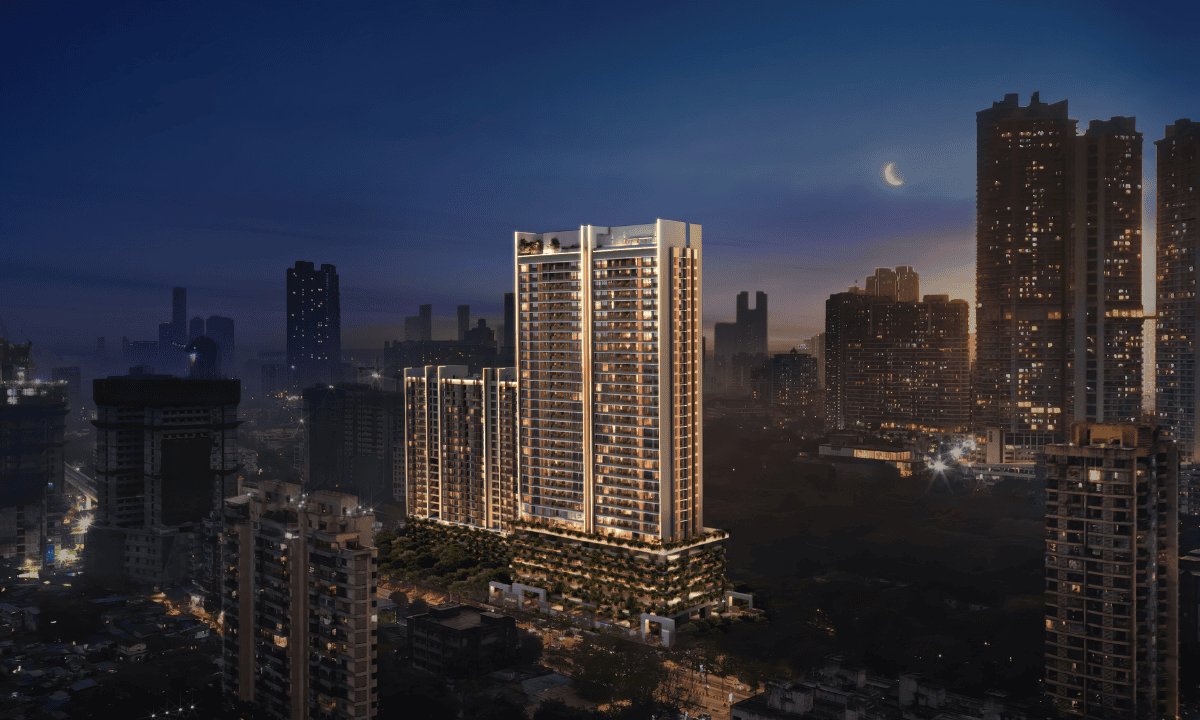
A major residential development has been announced in Parel Extension, signalling growing investor confidence in the eastern waterfront corridor of Mumbai. The project, with an estimated gross development value of about ₹900 crore, will introduce roughly 200 apartments within a gated residential tower, adding to the steady shift of housing demand toward neighbourhoods benefiting from new transport infrastructure.
Urban planners say the project reflects a broader pattern of redevelopment along the city’s eastern edge, historically dominated by industrial land but now emerging as a mixed-use urban district. With land scarcity in traditional South Mumbai neighbourhoods, developers have increasingly targeted underutilised parcels near the harbour to create high-density residential communities linked to upcoming transit systems.
The development is planned on approximately 1.5 acres and will feature two- and three-bedroom apartments designed with relatively larger floorplates compared with many newer projects in the city. Industry observers note that design choices such as limited apartments per floor, higher ceiling heights, and cross-ventilated layouts are becoming standard in premium housing developments seeking to differentiate themselves in a competitive market. Crucially, the project sits within a corridor where several infrastructure initiatives are reshaping commuting patterns across the metropolitan region. These include the recently operational Mumbai Trans Harbour Link, as well as upcoming projects such as the Sewri Worli Elevated Connector, the Orange Gate Tunnel, and the proposed Mumbai Metro Line 11.
Urban economists point out that such connectivity upgrades are gradually altering the spatial economics of the island city. Improved east-west mobility and links to emerging job centres like Bandra Kurla Complex and Navi Mumbai are likely to influence residential demand in formerly overlooked precincts. Housing analysts also suggest that projects in this zone could appeal to professionals seeking proximity to central business districts while avoiding the extreme land costs associated with legacy neighbourhoods. However, they caution that premium developments alone cannot address the broader housing pressures in the metropolis.
Mumbai continues to face a structural shortage of affordable homes, and urban policy experts argue that large residential projects should be accompanied by infrastructure upgrades, open spaces, and climate-sensitive design standards to support sustainable growth in a dense coastal city. The eastern seaboard corridor, in particular, faces environmental sensitivities due to its proximity to port zones and tidal ecosystems. Planners therefore emphasise that new construction must incorporate energy efficiency, water management, and resilient urban design to cope with rising temperatures and flooding risks linked to climate change.
As transport links mature and older industrial parcels transition to residential and commercial uses, the eastern waterfront is increasingly viewed as one of Mumbai’s next growth districts. Whether this transformation produces inclusive and environmentally resilient neighbourhoods will depend not only on private investment but also on long-term planning choices that balance density with liveability.