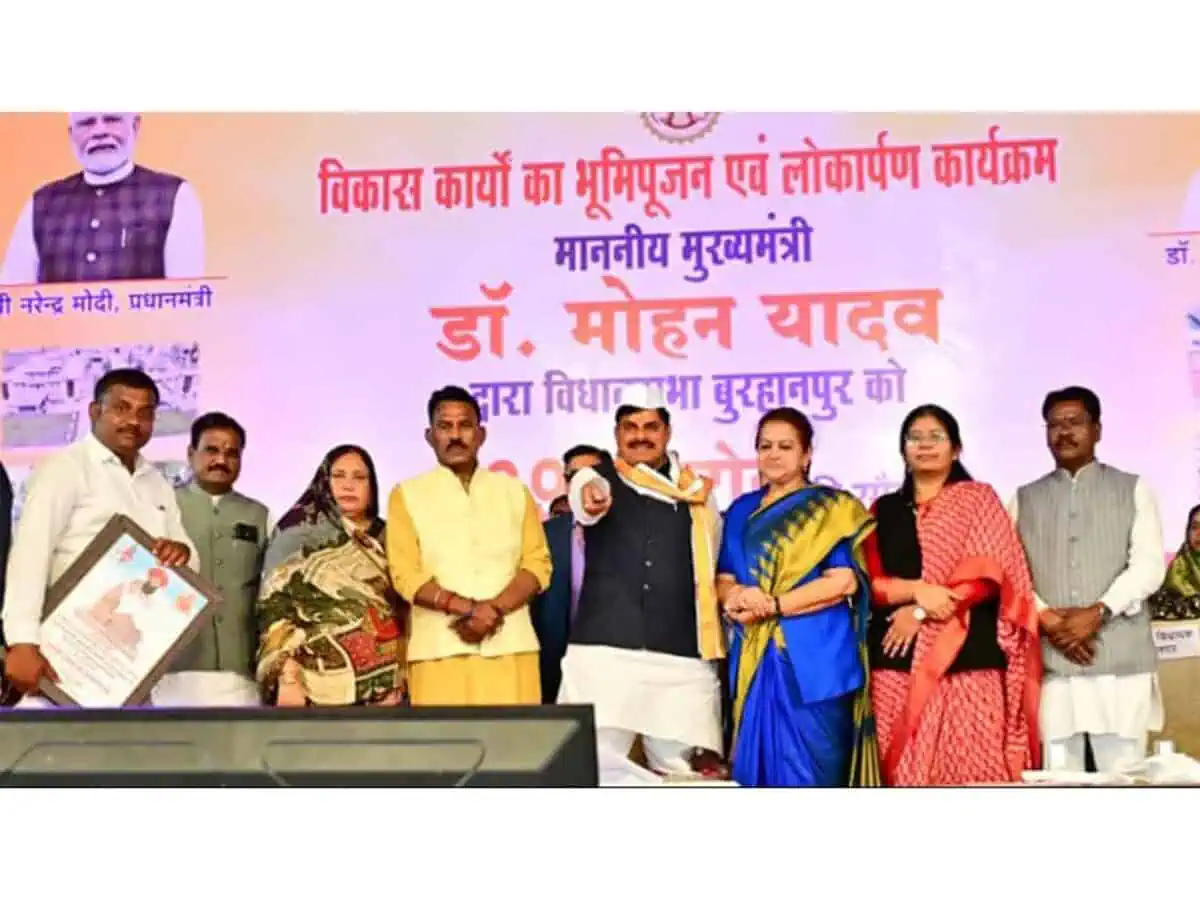
A new public investment package aimed at industrial expansion and employment generation has been announced for Burhanpur district in Madhya Pradesh, signalling the state government’s push to strengthen smaller urban economies as part of its broader development strategy. Officials said projects worth about ₹363 crore will be directed towards industrial and infrastructure activity in the district, a move expected to stimulate manufacturing, local employment, and supporting urban services.
The Burhanpur investment plan comes at a time when many tier-two and tier-three districts are emerging as new nodes of industrial growth, partly due to rising land costs in larger metropolitan areas and improved connectivity across central India. State authorities say new factories and related projects forming part of the investment package could generate significant employment opportunities in and around the district, strengthening the regional economic base. Burhanpur, historically known for its textile and agricultural trade, has increasingly been identified by planners as a potential manufacturing and logistics hub. Its proximity to major transport corridors linking Indore, Bhopal, and neighbouring Maharashtra has positioned the district within a growing industrial belt that connects central India’s emerging production clusters. Urban development specialists say targeted investment in such districts can have ripple effects beyond industrial output. New manufacturing facilities typically trigger demand for worker housing, commercial services, and improved urban infrastructure, including water supply, roads, and public transport. If managed well, this growth could support more balanced regional development and reduce migration pressures on large metropolitan centres. Officials also highlighted welfare and rural support programmes that complement the Burhanpur investment plan, particularly schemes designed to strengthen rural incomes and social protection.
Programmes providing direct financial assistance to women, income support to farmers, and healthcare coverage for low-income families form part of the state’s broader social policy framework. Urban economists note that linking social welfare initiatives with local economic development can improve labour participation, particularly among women and younger workers. In districts like Burhanpur, where agriculture and small-scale industry remain key employers, such programmes may help stabilise household incomes while enabling workforce mobility into emerging manufacturing sectors. At the same time, policy analysts say that industrial expansion in smaller districts must be accompanied by careful planning around environmental safeguards, worker housing, and public services. As industrial clusters grow, local governments face increasing pressure to ensure that land use, waste management, and transport infrastructure evolve alongside economic activity.
For Burhanpur, the new investment signals an effort to reposition the district within central India’s evolving economic geography. Whether the initiative translates into sustained urban and industrial growth will depend largely on how quickly projects are executed and how effectively local infrastructure keeps pace with new investment. If implemented with long-term planning and environmental safeguards, such district-level investments could become an important building block in India’s broader effort to create more balanced, resilient urban economies.