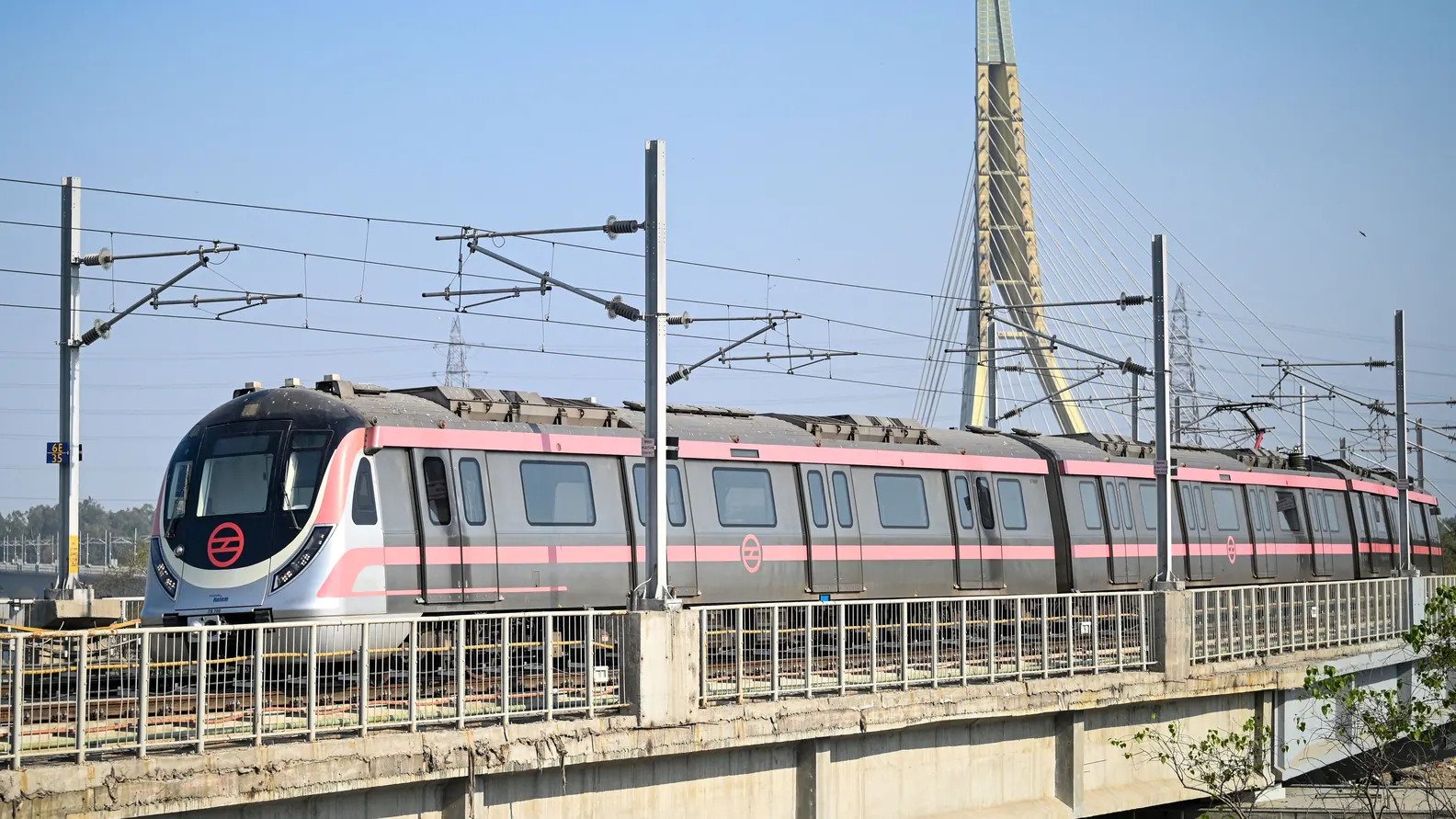
Delhi’s mass transit system has taken another step towards becoming a more interconnected urban mobility network with the launch of two new metro corridors, including the completion of a long-anticipated circular alignment known as the Delhi Metro Ring Line. The expansion strengthens rail connectivity across northern and eastern parts of the capital, providing new travel options for commuters who previously relied heavily on congested road corridors. Operations on the new sections began Sunday afternoon after the projects were formally flagged off by national leadership earlier in the day. Together, the newly opened routes add more than 22 kilometres to the metro grid, linking residential clusters in north, north-west and north-east Delhi with the city’s wider rail network.
Urban mobility planners say the most significant development is the operationalisation of the Delhi Metro Ring Line, created by completing the final missing stretch of the Pink Line. With the loop now functional, the corridor extends across more than 70 kilometres, forming a circular route around much of the city’s outer and intermediate neighbourhoods. Transport experts note that circular transit systems play a crucial role in large metropolitan regions. Instead of forcing passengers to travel through central interchange stations, ring corridors allow lateral movement between outer districts. For daily commuters, this can reduce travel times and crowding at key hubs while improving access to jobs, education centres and healthcare facilities across multiple parts of the city. The newly activated section linking neighbourhoods in north and north-east Delhi includes several elevated stations that bring the metro system closer to dense residential areas where public transport options were previously limited. Localities along this route have historically depended on buses and private vehicles to reach the metro network, leading to long first-mile journeys and significant road congestion. Infrastructure officials associated with the project highlighted that engineering work along the corridor involved complex construction across the Yamuna river. The alignment includes a new bridge structure and a dual-level design carrying both a metro track and a road flyover, a solution increasingly used in land-constrained cities to maximise transport capacity without expanding the urban footprint.
The second addition extends another metro line further into north-west Delhi, connecting growing residential districts and improving interchange possibilities with the circular corridor. Elevated stations along this stretch are designed to integrate with surrounding road networks and feeder transport systems, enabling smoother transfers between buses, metro services and last-mile mobility options. Urban economists say such expansions have broader implications beyond commuting. Improved metro access often influences real estate development patterns, commercial activity and employment mobility. Residential areas located near new stations typically witness increased demand due to shorter travel times to major employment zones. Environmental planners also point to the climate benefits of expanding high-capacity public transport. Shifting more daily journeys from private vehicles to electric rail systems can help reduce urban air pollution and carbon emissions, particularly in cities like Delhi where transport is a major contributor to deteriorating air quality.
As the capital continues to grow outward, the success of the Delhi Metro Ring Line will likely shape how future transit corridors are planned. For policymakers, the challenge ahead lies in strengthening last-mile connectivity and ensuring new metro infrastructure remains integrated with inclusive, low-carbon urban development strategies.