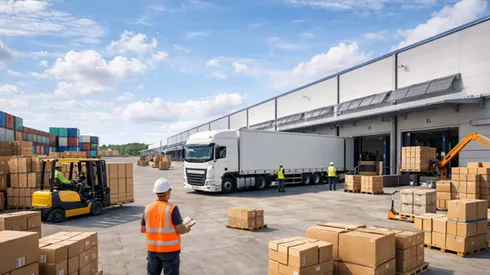
The logistics real estate landscape in the National Capital Region is poised for a major expansion, with total Delhi NCR warehousing stock projected to exceed 120 million square feet within the year.
The milestone reflects rapid growth in logistics infrastructure driven by rising consumption, e-commerce expansion and large-scale transport investments reshaping regional supply chains. Industry analysts say the surge in Delhi NCR warehousing stock is being fuelled by demand for modern Grade A facilities from third-party logistics providers, manufacturers and online retail platforms. These companies increasingly require high-capacity storage and distribution centres to manage complex supply networks serving one of India’s largest urban consumption markets.
The NCR region already functions as a critical logistics hub connecting northern India with key industrial corridors and freight routes. Infrastructure projects such as the Delhi–Mumbai Industrial Corridor and dedicated freight rail corridors are improving connectivity between production clusters, ports and consumption centres, encouraging developers to expand warehousing capacity across the region. Clusters along major highway corridors — particularly around Gurugram, Farukhnagar, Ghaziabad and the Kundli-Manesar-Palwal belt — have emerged as focal points for logistics investment. These areas benefit from proximity to national highways, freight rail links and large consumer markets in Delhi and surrounding cities.
Real estate consultants note that institutional investors and large developers are playing a growing role in shaping the region’s logistics infrastructure. Modern warehouses increasingly feature automation, higher ceiling heights and integrated transport access to support large-scale distribution operations. Demand for logistics space has been particularly strong from third-party logistics companies, which manage storage and distribution for multiple brands and retailers. Manufacturing sectors such as automotive components, engineering goods and electronics have also contributed to leasing activity, reflecting broader growth in India’s industrial supply chains.
Across India’s major cities, industrial and warehousing leasing activity has also recorded significant growth in recent years as companies restructure supply chains to serve expanding urban markets and faster delivery networks. Urban planners say the expansion of logistics infrastructure must increasingly balance economic growth with sustainability and land-use efficiency. Warehousing developments are gradually shifting toward the urban periphery to reduce freight congestion within city centres and to create dedicated logistics corridors.
New logistics parks are also integrating green building standards, renewable energy systems and advanced inventory technologies to improve operational efficiency and reduce environmental impact. Such approaches align with broader efforts to make supply chains more climate-resilient while supporting the needs of rapidly growing metropolitan regions. Looking ahead, experts expect logistics infrastructure to become a defining element of regional urban development. As e-commerce, quick commerce and manufacturing activity expand, the NCR’s warehousing ecosystem is likely to play a central role in sustaining economic growth while reshaping how goods move through India’s largest consumer markets.
With infrastructure investments continuing across freight corridors and highways, the region’s logistics sector appears set to remain one of the fastest-growing segments within India’s commercial real estate landscape.