Surat Smart Cities Deliver Projects Worth 11000 Crore
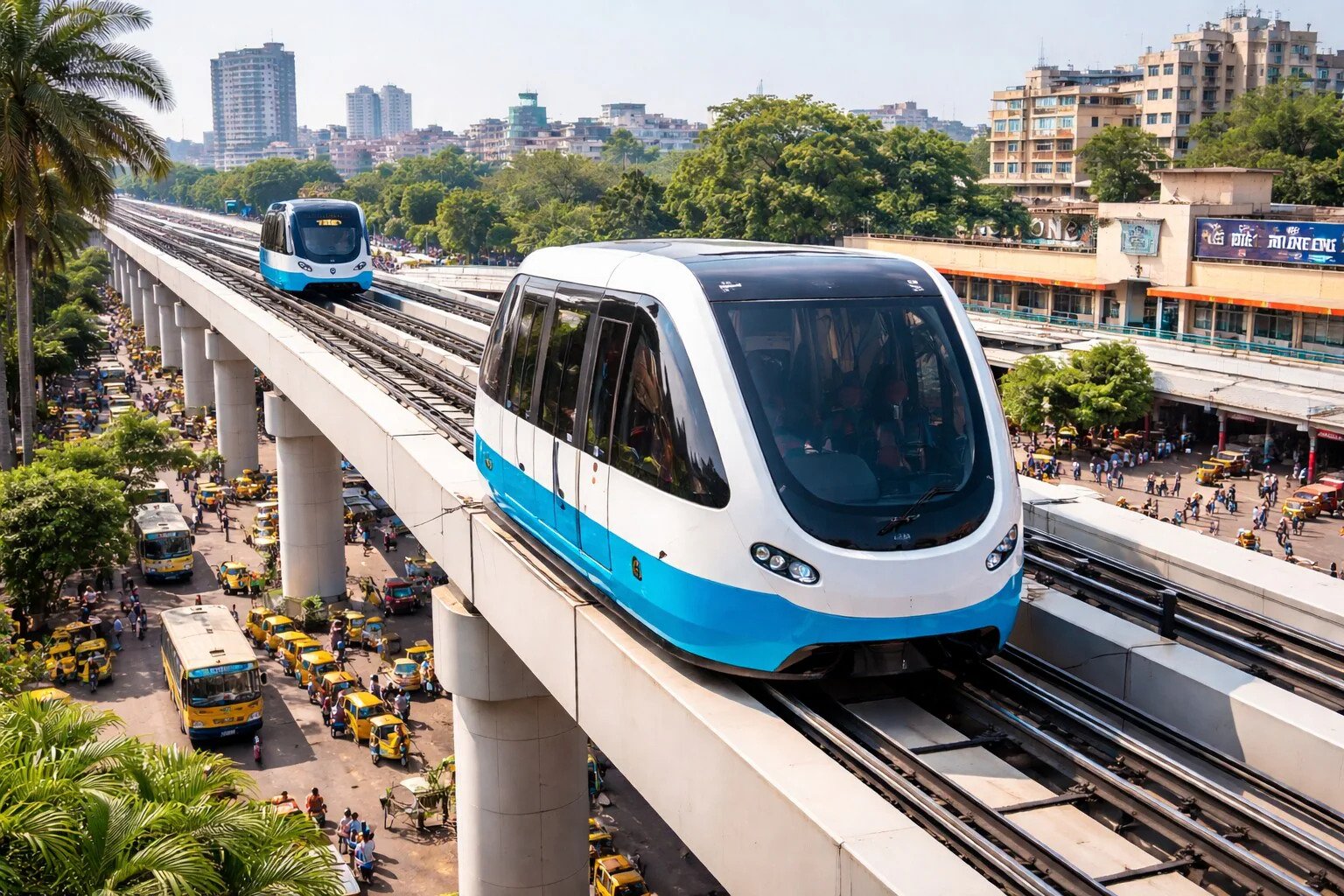
Patna is preparing to introduce a new automated public transport system designed to improve mobility within its administrative district, marking a shift towards compact, low-emission urban transit solutions. The proposed ULTraPOD transit system will operate along a five-kilometre route connecting several key government complexes, offering an alternative to short-distance vehicle travel that currently contributes to congestion and pollution in the city centre.
Estimated to cost about ₹296 crore, the project will deploy small automated passenger pods that travel on dedicated guideways. Each pod is expected to carry up to six passengers and operate as part of a network designed to provide rapid, on-demand transport between stations. Urban mobility planners say the concept falls under Personal Rapid Transit (PRT), a system intended to combine the efficiency of rail with the flexibility of individual transport. Officials associated with the project say around 59 pods will run along the corridor, enabling quick transfers between administrative offices and nearby public facilities. Unlike traditional bus or rail services that follow fixed schedules, pods in the ULTraPOD transit system will be dispatched automatically based on passenger demand, reducing waiting times and improving travel efficiency within the route network. Urban transport specialists view Personal Rapid Transit systems as particularly suited for short corridors where conventional metro or bus infrastructure may be too costly or spatially complex. Because pods operate on elevated guideways, the system requires minimal road space while separating transit operations from regular traffic flows. In densely built urban cores such as Patna’s administrative district, this separation could play an important role in improving mobility while limiting the need for new road expansion. Planners also suggest that automated pod networks can complement larger public transport systems by providing efficient last-mile connectivity between major transit hubs and surrounding government or institutional zones.
Environmental considerations have also shaped the design approach. The small pod vehicles are expected to operate using energy-efficient electric systems, potentially lowering emissions compared with conventional vehicles used for short trips across the district. As Indian cities confront rising air pollution levels, transport planners increasingly emphasise electric and automated systems that reduce both emissions and congestion. Infrastructure experts note that projects like the ULTraPOD transit system also signal a broader shift in how cities approach mobility planning. Instead of relying solely on large-scale metro corridors, many urban authorities are exploring layered transport networks combining mass transit with smaller automated systems designed for specific zones such as business districts, campuses or government complexes. For Patna, which has experienced rapid population growth and expanding administrative infrastructure, improving internal connectivity within government areas could also enhance efficiency for employees and visitors navigating the city’s public institutions.
The project is currently positioned as a pilot initiative for the state, and its performance could influence future adoption of similar mobility technologies in other urban centres. If implemented successfully, automated pod-based systems may emerge as a complementary tool in building cleaner and more responsive urban transport networks across India.