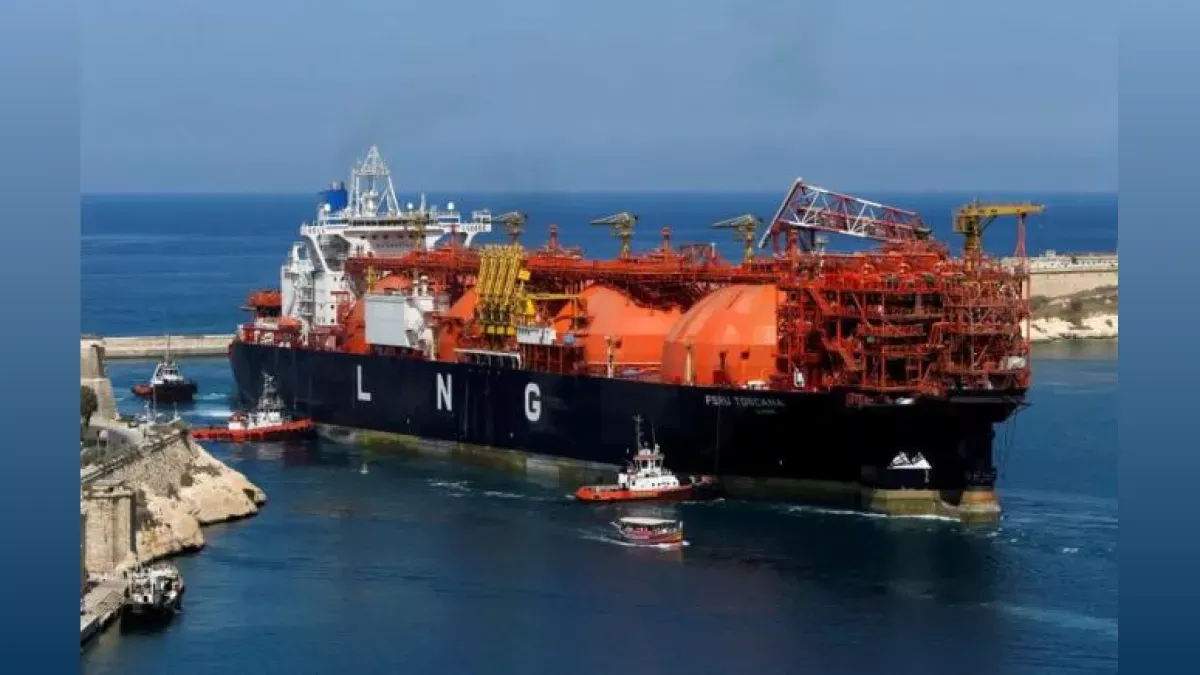
Kolkata Port Backs Haldia LNG Infrastructure Expansion
India’s eastern maritime gateway is moving to expand its role in the country’s transition towards cleaner fuels, with Kolkata’s major port authority formalising a new energy infrastructure project at the Haldia Dock Complex. The initiative, centred on the creation of a floating storage and regasification unit, is expected to strengthen LNG infrastructure in eastern India while supporting industrial and urban energy demand across the region. The port authority has granted a licence to a private energy developer to establish the floating facility at Haldia, with an estimated investment of about ₹260 crore. Once operational, the project will allow imported liquefied natural gas to be stored offshore and converted back into natural gas for distribution to industries, power plants and urban gas networks.
Energy planners view LNG infrastructure in eastern India as a missing link in the country’s broader natural gas strategy. While western and southern coasts host several operational LNG terminals, the eastern seaboard still faces limited regasification capacity. As a result, industries across eastern states often depend on more carbon-intensive fuels such as coal, furnace oil or diesel. By enabling LNG imports closer to regional markets, the Haldia facility could gradually shift energy consumption patterns across sectors including manufacturing, transport and city gas distribution. Urban development experts say access to cleaner fuels is becoming increasingly important as cities attempt to balance industrial growth with climate commitments and air quality improvements.
The proposed floating terminal is expected to operate as a flexible maritime energy hub. LNG carriers would deliver super-cooled gas to the floating vessel, where it would be stored and later converted into gaseous form before entering downstream pipelines. Such floating infrastructure typically requires lower capital expenditure and shorter construction timelines compared to land-based terminals, making it attractive for ports seeking rapid capacity expansion. Officials familiar with the project say the move is also aligned with India’s policy objective of raising natural gas usage in the national energy mix. Increasing gas consumption is seen as a transitional pathway to reduce carbon intensity while renewable energy capacity continues to expand.
Beyond the energy transition, the project could also influence economic activity around Haldia’s industrial corridor. The port area already supports petrochemical units, logistics operations and manufacturing clusters. Improved access to LNG could attract additional investments in energy-intensive sectors while enabling existing industries to modernise their fuel systems. Urban planners and infrastructure analysts note that ports are increasingly becoming strategic nodes in India’s low-carbon transition. Investments in LNG infrastructure, green fuels and energy logistics are reshaping port-led development models, particularly in regions seeking to combine industrial competitiveness with climate resilience. As the project progresses through development and regulatory stages, its success may determine how quickly eastern India can build a diversified gas supply ecosystem. For a region undergoing rapid urbanisation and industrial expansion, reliable and cleaner energy infrastructure is likely to become a defining factor in shaping sustainable growth pathways.