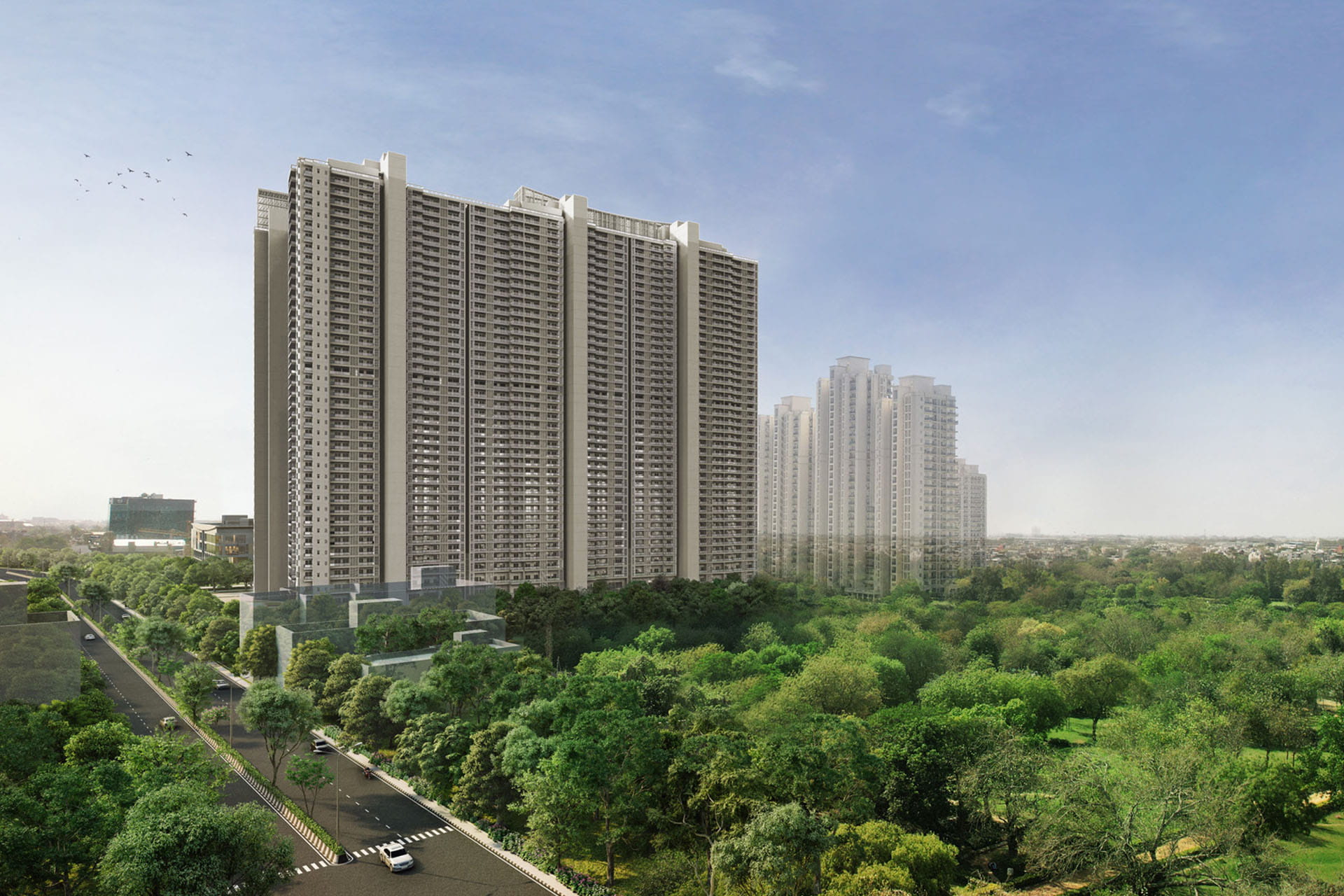
West Delhi is witnessing a gradual shift in its residential landscape as a new high-rise development in Moti Nagar introduces vertical housing and community-focused design to an area traditionally dominated by low-rise neighbourhoods. The project, known as DLF Midtown, reflects a broader transformation in how residential districts within the capital are being redeveloped to accommodate growing demand while preserving access to open spaces and shared amenities.
Located along Shivaji Marg, the residential complex forms part of a larger master-planned district that combines housing, commercial offices and community infrastructure. Urban planners say developments like DLF Midtown illustrate how underutilised urban land in established neighbourhoods is increasingly being reimagined as higher-density residential clusters within city limits. The latest phase of the project includes four residential towers rising close to 40 storeys, offering more than 900 apartments designed with larger windows and open layouts intended to maximise natural light and views. The development primarily consists of two-, three- and four-bedroom units, targeting families seeking modern housing within central urban areas rather than in distant suburban townships.
A defining feature of the complex is the emphasis on shared outdoor spaces integrated into the residential environment. Rooftop terraces, landscaped areas and community zones are intended to create social spaces where residents can gather, dine or relax outside their apartments. In a city where accessible green areas are limited, architects and urban designers say such features have become increasingly important in residential planning. The housing towers form part of the broader DLF Midtown ecosystem, a large mixed-use neighbourhood that already includes several residential communities and office developments. The wider district covers a substantial land parcel in Moti Nagar and integrates housing with workplaces, retail activity and public spaces an approach often described as transit-oriented urban development.
Real estate analysts note that West Delhi has historically seen fewer luxury residential towers compared with areas in South Delhi or emerging satellite cities. However, improving transport connectivity and redevelopment opportunities along major corridors such as Shivaji Marg have begun attracting new residential investments. High-rise developments in established neighbourhoods can also help reduce urban sprawl by bringing more housing into well-connected city zones. By increasing residential density near employment hubs and public transport routes, such projects can shorten commuting distances and support more efficient urban infrastructure.
Industry experts say the next phase of growth in Delhi’s residential sector will likely focus on similar redevelopment models transforming ageing industrial or institutional land parcels into integrated neighbourhoods that combine housing, offices and community facilities.
However, urban planners caution that vertical residential growth must be accompanied by strong environmental and infrastructure planning. Sustainable water management, efficient energy systems and well-designed public spaces are increasingly seen as essential elements in high-density housing projects. As construction and occupancy continue across the DLF Midtown district, the development is expected to contribute to the gradual transformation of Moti Nagar into a mixed-use urban neighbourhood, reflecting wider shifts in how Delhi’s built environment adapts to rising population density and changing lifestyle patterns.
Delhi West Midtown Housing Project Redefines Urban Living