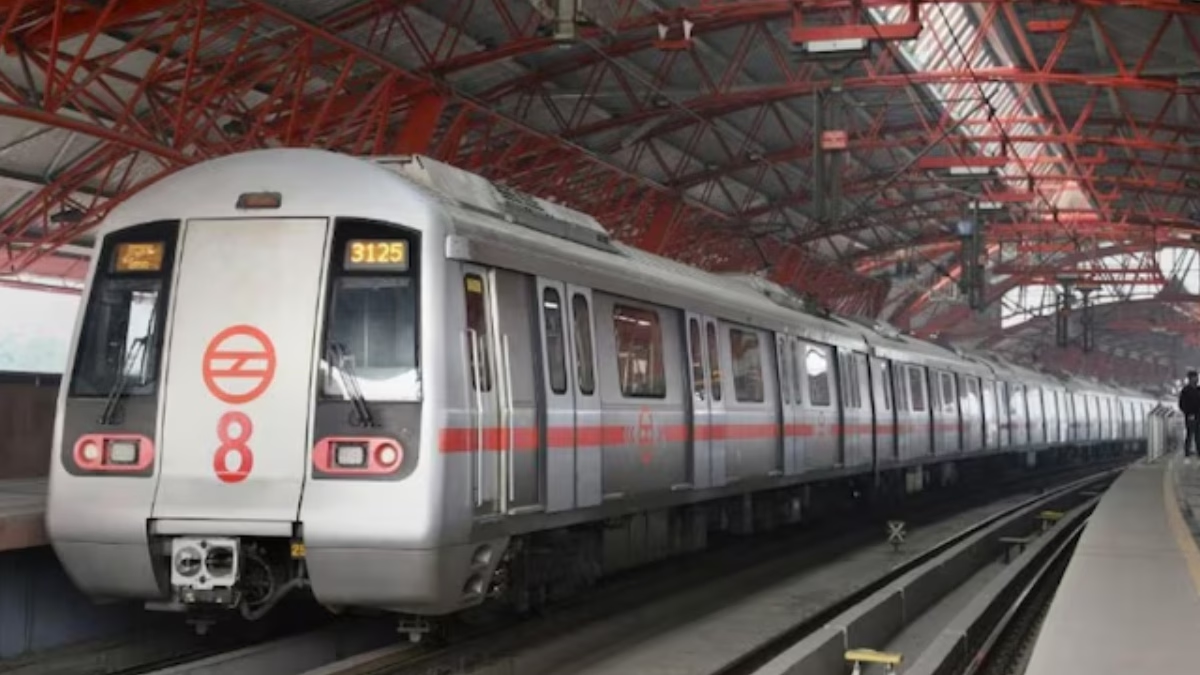
Delhi’s rapid transit network has expanded further with the launch of new corridors connecting northern and northeastern parts of the capital, strengthening public transport access for several densely populated neighbourhoods. The latest additions to the Delhi Metro expansion extend rail connectivity to areas that had long relied on road-based transport, signalling another step in the capital’s long-term strategy to reduce congestion and improve sustainable mobility.
Two newly operational corridors form part of the broader Delhi Metro expansion, covering nearly 21 kilometres combined. The first link connects Majlis Park to Maujpur over a stretch of around 12 kilometres, while another nine-kilometre extension runs between Majlis Park and Deepali Chowk. These routes improve access to communities such as Wazirabad and Bhajanpura, which are now directly integrated into the city’s metro grid for the first time.
Urban planners say the extensions address a persistent gap in Delhi’s public transport network by bringing high-capacity transit closer to residential clusters along the Yamuna’s eastern and northern edges. Many of these districts have experienced rapid population growth over the past decade, intensifying pressure on road infrastructure and increasing travel times for daily commuters.
Officials involved in the project noted that the network expansion forms part of a wider set of urban infrastructure initiatives unveiled in the capital. Alongside the metro corridors, new government housing developments and urban infrastructure upgrades have also been announced, together representing investment commitments worth tens of thousands of crores.
Transport specialists highlight that metro network growth has been a central pillar of Delhi’s urban development strategy since the early 2000s. Over two decades, the system has evolved into one of the world’s largest urban rail networks, connecting residential districts with business hubs, education centres and regional transport nodes.
The current Delhi Metro expansion is also expected to influence development patterns in the surrounding neighbourhoods. Property analysts note that areas newly connected to metro lines often see increased demand for housing and retail spaces, as accessibility improves and commuting becomes more predictable. Transit-oriented development around stations can encourage denser, mixed-use neighbourhoods while reducing dependence on private vehicles.
City officials also emphasised that additional corridors are already in planning or early construction stages, aimed at further integrating the metro network with emerging urban zones. These projects are expected to strengthen connectivity between outer districts and the capital’s economic centres, while supporting more balanced urban growth.
Urban mobility experts say that sustained investment in mass transit systems is critical for cities like Delhi, where population density and vehicle ownership continue to rise. Expanding rail-based public transport not only shortens travel times but also contributes to lower emissions and improved air quality by shifting commuters away from private cars and two-wheelers. With more corridors expected in the coming years, the metro network is likely to remain a defining feature of Delhi’s urban transformation. The focus, planners say, will increasingly shift toward integrating metro lines with buses, pedestrian pathways and cycling infrastructure to build a more seamless and climate-resilient mobility ecosystem.
Delhi Metro Expansion Connects Northern Neighbourhoods