Two New Metro Corridors Boost Connectivity Across North Delhi
India’s metro network expanded further as Prime Minister Narendra Modi inaugurated two new corridors of the Delhi Metro in the national capital, strengthening public transport connectivity across several densely populated neighbourhoods. The new sections are part of the city’s ongoing metro expansion programme and are expected to significantly improve commuting options in North, Northwest and Northeast Delhi.
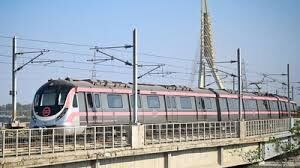
The two corridors inaugurated include the Majlis Park–Maujpur-Babarpur extension of the Pink Line and the Deepali Chowk–Majlis Park section of the Magenta Line. Together, the projects form part of metro works valued at more than ₹18,300 crore under the network’s expansion plan. The Pink Line extension is approximately 12.3 kilometres long and adds multiple elevated stations across North and Northeast Delhi. Once operational, the extension increases the total length of the Pink Line to around 71.5 kilometres, making it India’s first fully operational “Ring Metro” corridor that runs around large parts of the city. This circular connectivity allows passengers to travel across several districts without repeatedly interchanging lines, potentially reducing congestion at central stations.
The corridor will improve metro access for several neighbourhoods including Burari, Jagatpur, Khajuri Khas, Bhajanpura and Yamuna Vihar. Infrastructure elements in the project include a bridge across the Yamuna River and a double-decker viaduct carrying both metro tracks and a road flyover—an engineering design intended to optimise space in dense urban areas. Meanwhile, the Magenta Line extension between Deepali Chowk and Majlis Park, measuring roughly 9.9 kilometres, further expands the east-west connectivity of the metro system. The extension increases the overall length of the Magenta Line to about 49 kilometres, linking residential and commercial areas in northwest Delhi more efficiently with the existing metro network.
The new Deepali Chowk Metro Station opened as part of this expansion and is expected to improve connectivity around Pitampura and Rohini while easing road congestion on nearby arterial corridors. Alongside the corridor inaugurations, the government also laid the foundation stone for three additional metro routes under the next phase of the expansion plan. These upcoming corridors are expected to further enhance regional connectivity, linking key administrative districts and improving access to major transport hubs such as airports and business centres.
Urban planners note that continuous metro expansion is critical for managing the capital’s rapid population growth and reducing dependence on private vehicles. By expanding high-capacity public transport networks, authorities aim to reduce traffic congestion and pollution while enabling faster and more efficient travel across the National Capital Region.