


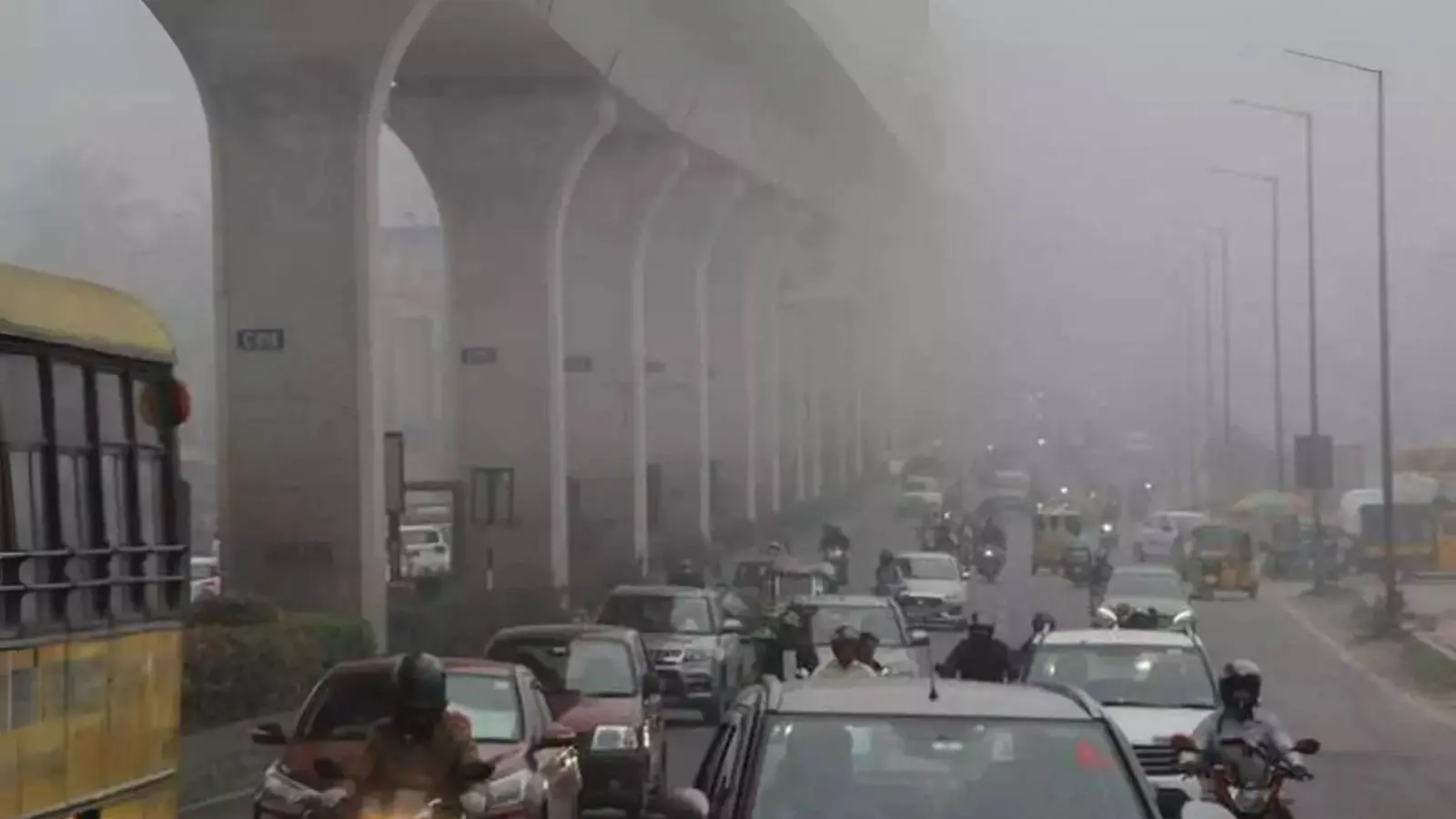
A layer of haze covering large parts of Hyderabad on Saturday morning has raised fresh concerns about rising Hyderabad air pollution, with meteorological experts linking the sudden deterioration in air quality to intensified construction activity, increasing traffic volumes and shifting wind conditions across the metropolitan region.
Residents in several neighbourhoods, including key commercial and residential zones in the western parts of the city, reported reduced visibility through the morning hours as the haze lingered well after sunrise. Urban air monitoring data indicated elevated levels of fine particulate matter, signalling a short-term spike in pollution exposure.According to environmental monitoring systems, particulate concentrations rose significantly beyond recommended baseline limits. Measurements from a monitoring station on the city’s outskirts indicated PM2.5 levels reaching around 173 micrograms per cubic metre—more than three times the standard reference level of 50 micrograms. The overall air quality index during the morning hours was recorded at approximately 186, placing it within the “moderate” pollution category.Urban climate experts say that Hyderabad air pollution episodes like this often occur when a combination of emissions and atmospheric conditions traps pollutants close to the ground. Dry weather, limited atmospheric dispersion and increased construction dust can create temporary pollution pockets in fast-growing cities.Hyderabad is currently witnessing an intense cycle of infrastructure expansion, with multiple road corridors, metro extensions, commercial developments and residential projects underway across the metropolitan region. While these investments are strengthening economic growth and urban connectivity, construction-related dust is emerging as a significant contributor to short-term air quality fluctuations.
Vehicular emissions remain another major factor. Transport analysts estimate that vehicle registrations in the city have grown sharply over the past decade as suburban growth pushes commuting distances higher. Congested road corridors, especially in emerging business districts and industrial clusters, can amplify particulate emissions during peak traffic hours.Environmental planners also point to the influence of seasonal wind shifts, which can carry pollutants from construction zones or industrial areas into dense residential and commercial districts. When wind speeds remain relatively low, pollutants tend to accumulate rather than disperse.Monitoring systems are critical to understanding such pollution events, yet officials noted temporary data gaps from one urban monitoring station during the morning period. Continuous monitoring is considered essential for identifying pollution sources and designing targeted mitigation strategies.The recent Hyderabad air pollution spike underscores a broader challenge facing rapidly expanding cities: balancing economic development with environmental health. Urban planners increasingly advocate stricter dust-control measures at construction sites, expanded green buffers, and stronger public transport systems to reduce vehicle dependence.As Hyderabad continues to evolve into a major technology and investment hub, experts say air quality management will become a central element of sustainable urban planning. The ability to align infrastructure growth with environmental safeguards could determine how effectively the city protects both public health and long-term urban resilience.
Hyderabad Air Pollution Spike Linked To Urban Growth
