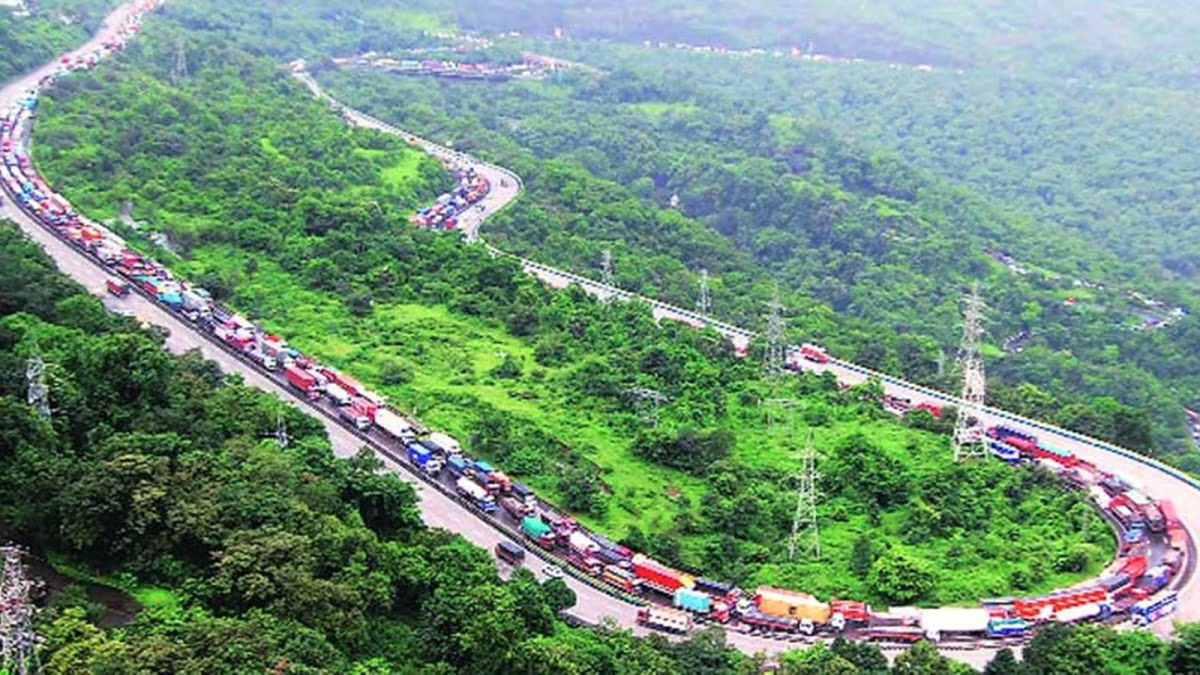
A massive elevated highway corridor stretching more than 30 kilometres is being planned along one of Pune’s busiest national highway routes, signalling a major shift in how the city intends to tackle chronic congestion and freight traffic pressures. The proposed structure, part of a broader road infrastructure pipeline in the region, would become the longest elevated flyover corridor in the country once completed.
Transport officials reviewing highway development in western Maharashtra confirmed that the proposed Pune elevated highway corridor will run along the Pune–Ahilyanagar route, linking the city’s eastern gateway with industrial zones further along the corridor. The elevated section is planned across a large portion of the Pune–Shirur stretch and will form the backbone of a wider expressway network connecting major regional centres. Urban mobility planners say the corridor could significantly reduce travel time for daily commuters and freight vehicles moving between Pune’s technology districts and industrial belts. At present, the highway corridor experiences severe congestion due to a mix of city traffic, heavy trucks and intercity vehicles using the same road infrastructure.
The proposed Pune elevated highway will begin near the Kharadi junction, a rapidly expanding business district that houses major information technology parks and residential townships. From there, the corridor will extend eastwards toward the Ranjangaon industrial area, home to a large manufacturing cluster and a major industrial estate.
Infrastructure planners involved in the project indicate that the design includes multiple traffic layers to accommodate future transport demand. In some sections, the structure is expected to combine conventional highway lanes with additional space for mass transit infrastructure where feasible. Such stacked transport systems are increasingly being explored in dense urban regions where land availability is limited. The elevated corridor will also form the first stage of a longer greenfield highway connecting Pune with Chhatrapati Sambhajinagar. The extended route is intended to create a faster intercity connection across Maharashtra’s industrial and logistics network. Transport analysts estimate that the improved corridor could significantly shorten travel times between the two cities while reducing congestion in intermediate towns.
The elevated highway proposal is part of a wider road investment programme being examined for the Pune region. Several other corridors, including routes linking Talegaon, Chakan and Shikrapur as well as sections of the Pune–Solapur highway, are also being considered for expansion through elevated road structures. Urban infrastructure experts say such projects reflect the scale of mobility challenges facing rapidly growing cities like Pune. Population growth, suburban expansion and the rise of logistics and manufacturing clusters have sharply increased road traffic over the past decade.
However, planners caution that long-term congestion relief will depend on integrating the Pune elevated highway corridor with sustainable urban mobility systems such as metro rail, bus networks and improved pedestrian infrastructure. Without such integration, cities risk shifting traffic bottlenecks rather than solving them. As the Pune metropolitan region prepares for another decade of economic expansion, transport investments of this scale will play a defining role in shaping commuting patterns, freight logistics and land-use development across the wider region.
Pune Elevated Highway Plan Includes 31km Flyover