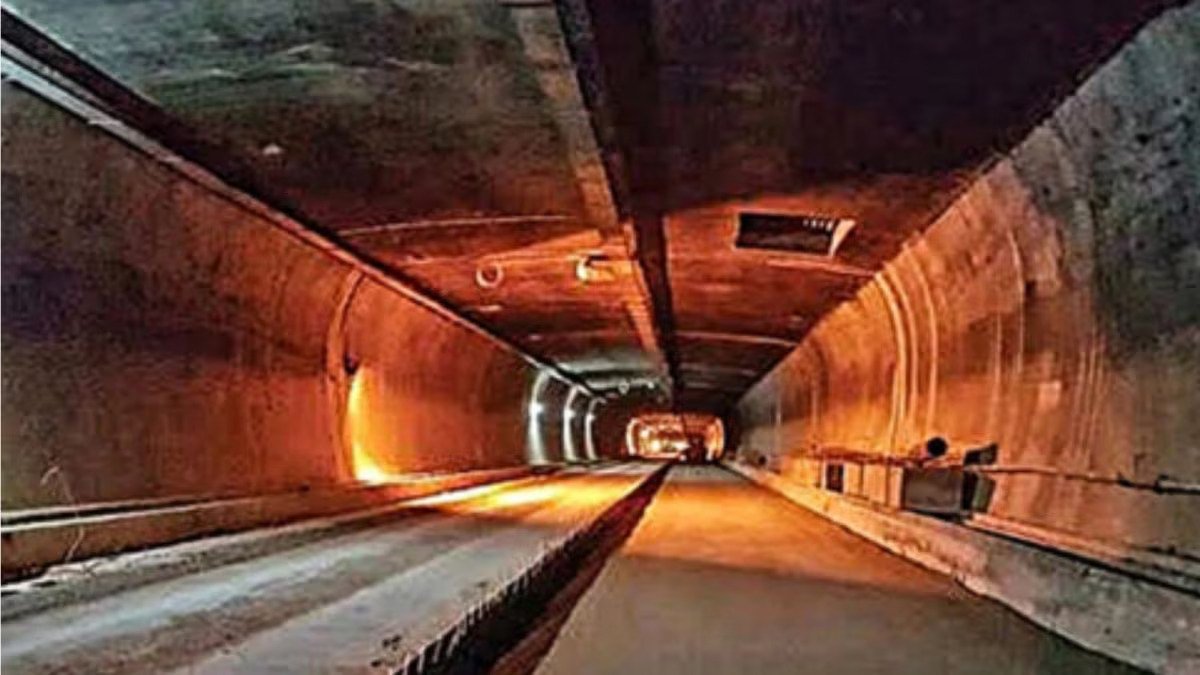
Mumbai’s urban transport landscape took a significant step forward with the completion of the launching shaft for the Goregaon–Mulund Link Road (GMLR) twin tunnel project at Dadasaheb Phalke Chitranagari on Thursday. This critical milestone paves the way for the deployment of tunnel boring machines (TBMs), advancing one of the city’s most ambitious infrastructure initiatives designed to improve east–west connectivity and reduce congestion across the metropolitan region.
The project includes a 4.7 km twin tunnel beneath Sanjay Gandhi National Park and a 1.6 km box tunnel through the Dadasaheb Phalke Chitranagari area. Senior municipal officials confirmed that a reinforced concrete cradle has been prepared at the shaft base to support the TBMs. Two heavy-lift cranes, with capacities of 350 and 800 tonnes, will lower the TBM components into the shaft, enabling excavation to commence by June. Industry experts note that this phase of the project reflects the careful integration of advanced engineering and urban planning. The GMLR tunnel is being designed to minimise surface disruption and environmental impact, a key consideration given its passage under protected green areas. The alignment and methodology have been structured to ensure both worker safety and long-term durability while supporting Mumbai’s broader ambitions for sustainable, climate-resilient transport corridors.
In addition to tunnelling operations, inspection of the Ratnagiri Junction flyover, another component of the GMLR corridor, revealed progress in pier cap construction, with girder launching slated for acceleration. Municipal authorities have mandated additional manpower and resources to ensure the flyover is operational by May 31, ahead of the monsoon season, highlighting the city’s focus on maintaining project timelines to ease commuter pressure and reduce traffic bottlenecks. Urban planners underscore the economic significance of the GMLR, noting that the corridor will provide faster, safer east–west connectivity, enhance logistics efficiency, and relieve strain on overburdened arterial roads. By linking key suburban hubs, the project also supports equitable access to employment, commercial centres, and public services, in line with broader city development objectives.
Environmental engineers highlight the importance of sustainable tunnelling practices in the project, including noise and dust mitigation strategies, groundwater management, and careful alignment through ecologically sensitive zones. This focus is consistent with Mumbai’s push for low-carbon infrastructure that balances urban expansion with ecological stewardship. With the assembly of the TBMs set to begin in early March, authorities are closely monitoring progress to adhere to scheduled excavation and flyover timelines. The completion of these phases is expected to generate immediate mobility benefits, reduce travel times, and contribute to the city’s long-term infrastructure resilience.
The Goregaon–Mulund Link Road project exemplifies Mumbai’s strategic approach to urban transport planning, demonstrating how large-scale infrastructure initiatives can integrate engineering innovation, environmental safeguards, and metropolitan mobility enhancement.
Mumbai Goregaon Mulund Tunnel Project Achieves Major Construction Milestone