


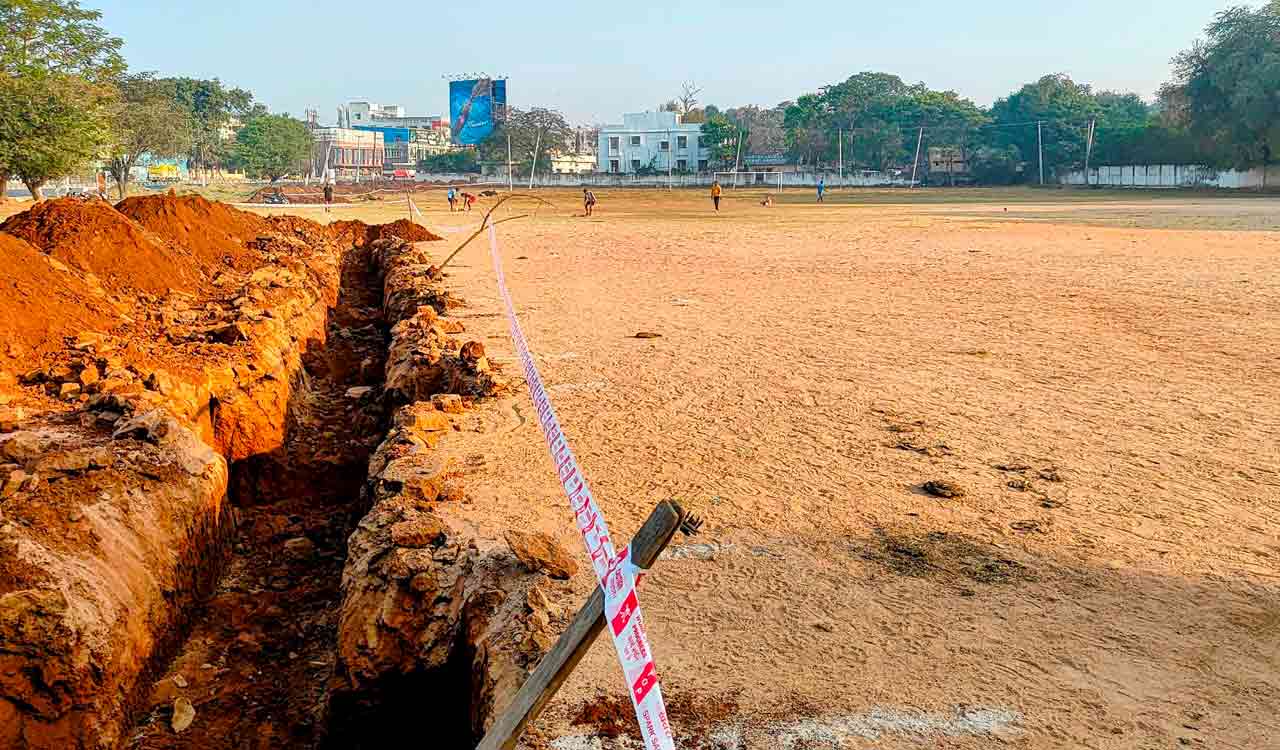
Construction activity linked to a planned elevated corridor in Secunderabad Cantonment has led to restricted access at the Trimulgherry football ground, raising questions about the treatment of neighbourhood open spaces amid expanding road infrastructure.The Hyderabad Metropolitan Development Authority (HMDA) has begun erecting a boundary wall across the nearly two-acre site as part of preparatory works tied to the proposed elevated corridor connecting Gymkhana Grounds to the Outer Ring Road limits near Shamirpet. For decades, the Trimulgherry football ground has functioned not only as a sports facility but also as one of the last remaining open commons in the cantonment area.
Regular users say entry has been limited over the past few weeks due to construction activity. The ground has traditionally hosted informal leagues, daily practice sessions and seasonal coaching camps for children. Local estimates suggest that each summer, hundreds of school-going students use the facility for football training, particularly during vacation months when structured sports access elsewhere is limited.Urban planners note that projects such as the Secunderabad Cantonment elevated corridor are designed to ease traffic congestion and reduce travel time along key defence and residential stretches. However, they caution that road capacity expansion must be balanced with the preservation of community assets. In dense urban areas, neighbourhood playgrounds double as climate buffers, groundwater recharge zones and informal gathering spaces — functions that are rarely accounted for in transport cost-benefit analyses.
Officials associated with the project indicate that land acquisition is also under way on adjoining parcels to accommodate corridor alignment and ancillary works. While infrastructure upgrades are seen as essential for regional mobility, the absence of clear communication about interim access arrangements has triggered concern among residents and sports groups.The Trimulgherry football ground is widely regarded as the only surviving football-specific open field within the cantonment limits accessible to the public. With entry currently restricted, players are exploring alternative venues, including larger institutional grounds, though these may not offer regular daily access.
Urban development experts argue that Hyderabad’s growth trajectory requires a more integrated approach to infrastructure delivery. “Transport efficiency cannot come at the expense of everyday urban life,” said a city-based planner familiar with cantonment land use patterns. “Open spaces are critical social infrastructure, particularly for young people.”The episode underscores a broader policy challenge: how to deliver mobility projects while safeguarding community assets that contribute to physical health, social cohesion and environmental resilience. As construction progresses, stakeholders say structured dialogue and transparent timelines will be key to ensuring that the Trimulgherry football ground remains part of the cantonment’s urban fabric rather than becoming collateral damage in its expansion.
Also Read:Chennai Metro Enhances Inclusive Transit Services
Hyderabad Trimulgherry Football Ground Access Curtailed
