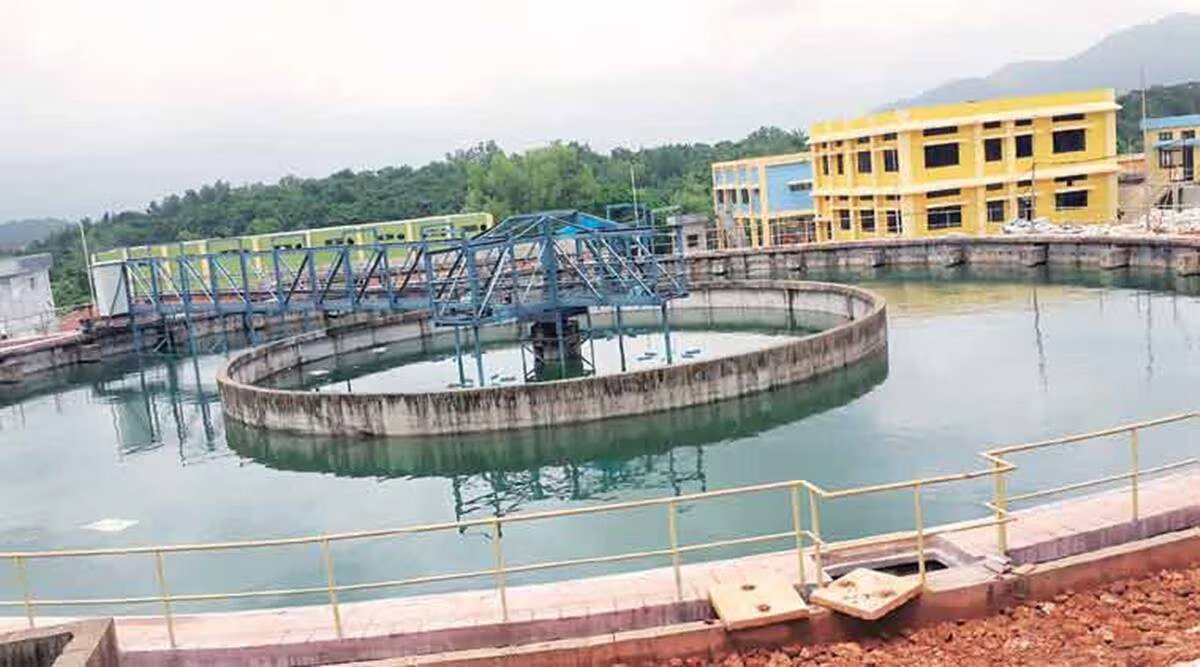
Mumbai is preparing for one of the most significant upgrades to its drinking water infrastructure as construction progresses on a Mumbai water treatment plant network expected to supply nearly 60 percent of the city’s daily needs. The projects, located at Bhandup and Panjrapur, represent a large-scale public infrastructure investment aimed at strengthening water security in one of the world’s most densely populated urban regions.
Urban infrastructure officials indicate that the Bhandup facility, with a treatment capacity of approximately 2,000 million litres per day (MLD), is expected to become the largest water treatment plant in Asia once operational. A second plant at Panjrapur, designed to process around 910 MLD, will complement the system, significantly expanding the city’s ability to treat and distribute potable water. Together, the two facilities form the backbone of the city’s long-term strategy to modernise its water infrastructure while responding to rising demand driven by population growth, real estate expansion, and economic activity across the Mumbai Metropolitan Region.
According to project engineers involved in the development, the Mumbai water treatment plant projects are being implemented through a partnership structure that combines global water technology expertise with domestic infrastructure execution capacity. The model allows different partners to focus on specialised roles such as design, construction, treatment technology and long-term operations. Urban planners note that such collaboration is increasingly necessary for complex infrastructure in megacities where traditional municipal delivery models struggle to keep pace with scale and technical demands.
The facilities are being designed using compact treatment technologies that reduce land requirements while improving energy efficiency. Experts say this is particularly important for Mumbai, where land availability is limited and infrastructure must coexist with dense residential neighbourhoods, transport corridors and ecological zones. Construction timelines are also shaped by the realities of working in a coastal city with a pronounced monsoon season. Infrastructure specialists estimate that effective construction activity is typically limited to about nine months a year due to heavy rains, which influences overall project planning and completion schedules.
Beyond treatment capacity, digital monitoring systems are expected to play a central role in managing the water network linked to the Mumbai water treatment plant infrastructure. Advanced data platforms are increasingly being deployed to track water flows, monitor pressure levels and identify leakages across complex urban distribution networks. Urban water experts say technologies such as artificial intelligence and digital twin modelling are gradually becoming standard tools in large water systems worldwide. These platforms allow utilities to detect leaks faster, reduce water losses and optimise energy consumption across treatment plants and distribution pipelines.
Such improvements are critical for cities like Mumbai where non-revenue water — water lost through leakages, theft or inaccurate metering — remains a persistent challenge. Sustainability considerations are also shaping the design of new water infrastructure. Engineers are focusing on reducing chemical use, lowering energy demand and exploring resource recovery from wastewater treatment by-products. As climate variability increasingly affects rainfall patterns and water availability across India, strengthening urban water infrastructure has become central to long-term city resilience strategies.
For Mumbai, the new Mumbai water treatment plant network represents more than a capacity upgrade. It signals a broader shift toward technologically advanced, climate-conscious urban water management designed to sustain the city’s growth while safeguarding essential resources for future generations.
Mumbai Water Treatment Plant To Reshape Urban Water Supply