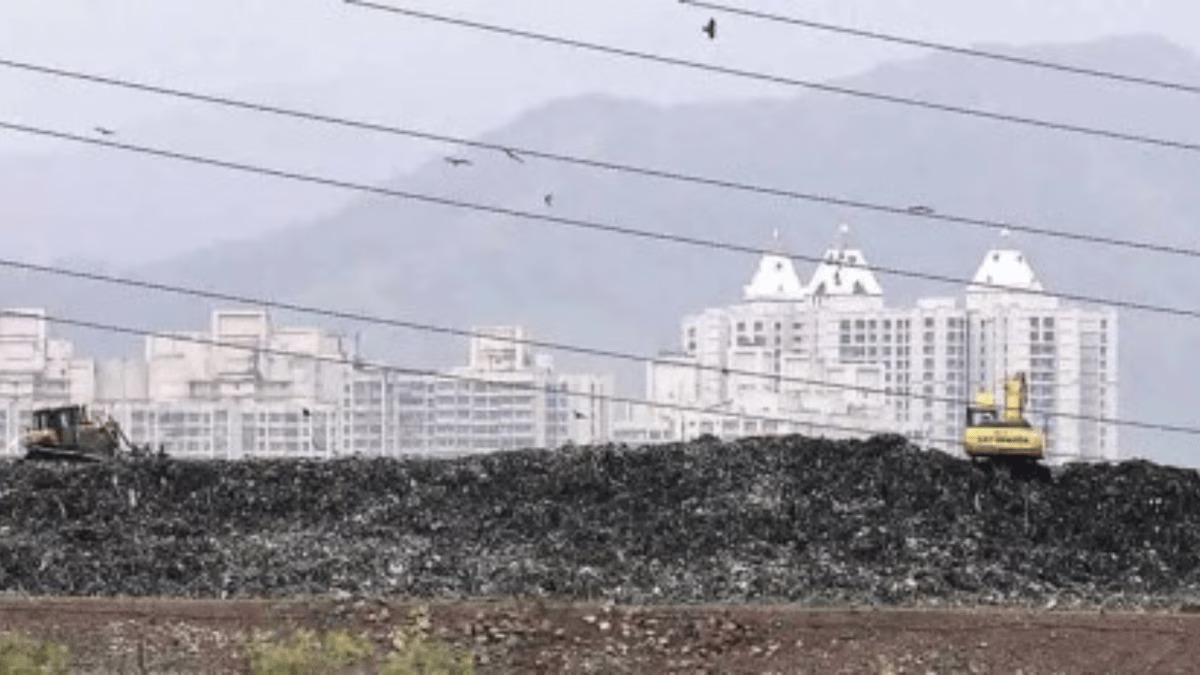
A court-appointed expert committee has proposed continuous air quality monitoring and public disclosure systems at Mumbai’s largest waste processing site, signalling a possible shift in how urban environmental risks are managed around dense residential zones. The recommendations, submitted to the Bombay High Court through civic authorities, seek to address persistent concerns over air quality, odour, and public health linked to the Kanjurmarg dumping ground.
The panel was constituted following judicial directions in a long-running public interest case focused on environmental compliance and citizen well-being. Its findings are based on a technical and operational comparison between Kanjurmarg and a recently commissioned municipal waste facility in Lucknow. According to officials familiar with the report, the committee concluded that transparency and real-time data access were critical gaps in Mumbai’s waste management framework, particularly in neighbourhoods where residents live in close proximity to large-scale processing infrastructure. A central recommendation is the installation of a continuous Air Quality Index monitoring station at Kanjurmarg, supported by a public display board to share real-time readings. Urban planners say such visibility could help rebuild trust between residents and authorities, while also enabling quicker interventions during pollution spikes. The panel also called for strengthening the site’s green buffer and enforcing stricter sanitary landfill practices to reduce odour dispersion and environmental stress.
The study noted that Kanjurmarg’s challenges stem less from outdated technology and more from the scale and location of operations. The facility processes close to 6,000 tonnes of waste daily—nearly 86 per cent of Mumbai’s total—far exceeding the throughput of the Lucknow facility, which handles about 2,100 tonnes per day. Despite similar composting and material recovery systems being in place, the lack of a sufficient buffer zone at Kanjurmarg has amplified its impact on surrounding residential clusters. Experts involved in the assessment highlighted odour as the most persistent grievance, particularly during evening hours and cooler weather conditions. Immediate measures suggested include expanded misting systems, enhanced deodorant dosing across composting and landfill zones, and data-driven grievance redressal mechanisms supported by mobile odour monitoring.
In the medium term, the committee has advised feasibility and safety studies for installing bio-filters and odour scrubbers at critical processing units. Over the longer horizon, it recommended transitioning the site into an integrated waste management ecosystem—combining waste-to-energy solutions for dry waste, bio-methanation for wet waste, and scientifically managed landfills limited to inert material. The report also proposes reorganising internal site layouts and relocating material recovery operations closer to landfill cells, freeing space for a dense urban green belt. Environmental economists note that such a shift could reduce health risks, stabilise land values in adjoining areas, and align Mumbai’s waste strategy with climate-resilient urban planning goals.
The court is expected to review the findings in the coming weeks before issuing further directions. For Mumbai, the outcome could shape how large infrastructure assets are managed within an increasingly compact and environmentally sensitive urban landscape.
Mumbai Kanjurmarg Dump Faces Air Monitoring Push