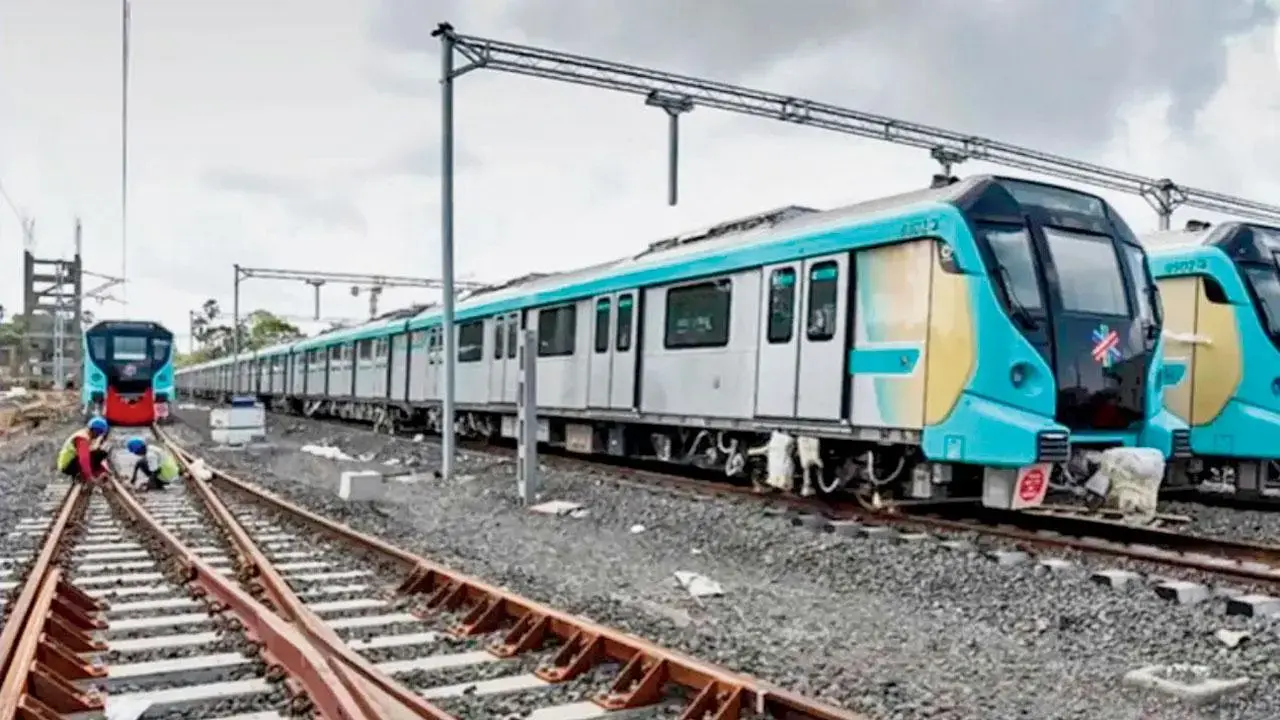
Mumbai’s public transport network is being placed at the centre of match-day mobility planning as authorities move to manage large crowds expected for a high-stakes international cricket fixture in South Mumbai. With a semi-final of the ICC Men’s T20 World Cup 2026 scheduled at the Wankhede Stadium, the city’s underground metro corridor will operate extended services to ensure safe, efficient movement of spectators late into the night.
Officials overseeing urban transport operations confirmed that Mumbai Metro Line 3 will run additional trains throughout the day, with services continuing beyond regular hours after the match concludes. The decision reflects a growing emphasis on using high-capacity, low-emission public transport to handle event-related surges rather than relying on road-based traffic management alone. The semi-final, scheduled as an evening fixture, is expected to attract tens of thousands of spectators from across the metropolitan region. Located in the heart of South Mumbai, the stadium sits close to dense commercial districts and arterial roads already operating near capacity during peak hours. Transport planners say extended metro operations can significantly reduce pressure on roads, suburban rail services, and parking infrastructure in the surrounding precinct.
Metro Line 3, stretching across the city from the southern business district to the north-western suburbs, connects employment hubs, residential clusters, and transit interchanges through a fully underground alignment. Stations in proximity to the stadium and major interchange points are expected to handle the bulk of match-day footfall, offering a direct, weather-protected alternative to surface travel. A key operational change for the match night is the extension of last-train timings from central stations in South Mumbai, allowing spectators to return home after the game without rushing or resorting to private vehicles. Urban mobility experts note that predictable late-night public transport is critical for safety, particularly during large events that extend beyond conventional operating hours.
The move is also being seen as a test case for how Mumbai handles crowd-intensive events as its rapid transit network expands. Industry observers point out that global cities increasingly rely on metros and mass transit corridors to anchor event logistics, cutting emissions, lowering congestion, and improving overall commuter experience. Authorities have advised commuters to plan journeys in advance and allow buffer time, especially during post-match dispersal. Digital tools, station signage, and on-ground coordination are expected to play a key role in managing passenger flow and avoiding bottlenecks at entry and exit points.
From a broader urban development perspective, the extended services highlight the role of transport infrastructure in supporting Mumbai’s economic and cultural life. Major sporting events generate significant activity across hospitality, retail, and services, but their success increasingly depends on how well cities manage mobility and public safety. As Mumbai continues to position itself as a global events destination, planners say integrating transport planning with crowd management and climate-conscious mobility will remain essential. The handling of the World Cup semi-final could offer a blueprint for future large-scale events, where efficient public transport becomes as important as the spectacle itself.
Mumbai Metro Extends Hours for World Cup Semi