


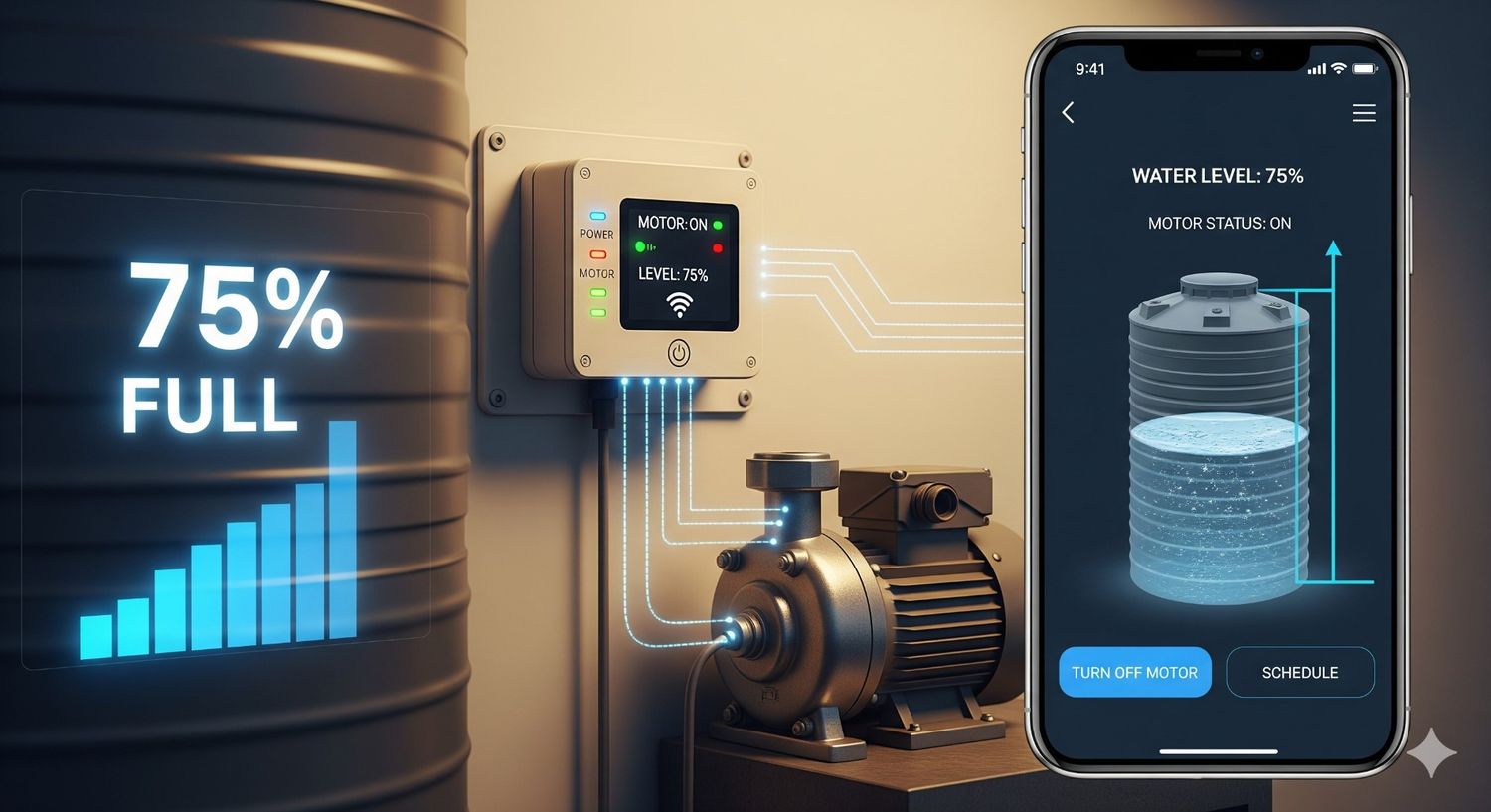
Smart water controllers are gaining momentum across Indian cities as households and housing societies look to manage erratic municipal supply and rising electricity costs more efficiently. From Delhi NCR to other fast-growing urban clusters, automated tank management systems are increasingly being treated as core infrastructure rather than optional home upgrades.
Industry data indicates a steady rise in demand for sensor-based pump automation, particularly in high-density residential developments where manual motor switching often results in tank overflows, dry running pumps and energy waste. The shift reflects mounting pressure on urban water systems as cities expand and climate variability disrupts supply cycles.Companies such as Aquabrim are expanding product offerings in this space, supplying ultrasonic tank sensors, wireless transmitters and IoT-enabled control units to residential and commercial users. These systems automatically detect water levels and regulate motor operations without human intervention, reducing the likelihood of mechanical failure and excess electricity consumption.
Urban planners note that traditional float valves and alarm-based indicators were designed for low-rise housing patterns. In multi-storey apartments and gated communities, however, the complexity of underground and overhead storage requires more precise monitoring. Wireless connectivity between tanks, combined with remote dashboards, allows facility managers to track usage patterns and schedule pumping cycles more strategically.The rise of IoT-based water monitoring also aligns with broader smart city ambitions. Real-time data on storage levels and pump performance can help optimise resource allocation and improve billing transparency in large residential societies. Analysts suggest that such automation may also support compliance with groundwater extraction norms and water conservation mandates in water-stressed regions.
In Delhi NCR, where supply timings can be inconsistent and voltage fluctuations frequent, reliable automation reduces operational stress on pumps. Engineers say automated start-stop cycles can extend equipment lifespan and lower maintenance costs, particularly in commercial complexes and hospitals that require uninterrupted water availability.Beyond individual buildings, experts argue that aggregated data from smart water controllers could inform municipal planning. Understanding peak demand periods and storage patterns may assist utilities in calibrating distribution schedules more effectively, potentially lowering overall system losses.
However, adoption remains uneven across income groups. While premium housing projects increasingly integrate automation at the construction stage, retrofitting older buildings requires upfront capital and awareness. Policymakers focused on equitable urban services may need to consider incentives or standardisation frameworks to encourage broader uptake.As Indian cities confront water scarcity and infrastructure strain, smart water controllers represent a practical intersection of technology and sustainability. Their expansion signals a gradual shift toward data-driven utility management, with implications for energy efficiency, climate resilience and the long-term viability of urban growth.
Also Read:Kerala NGT orders Kadambrayar pollution penalty
India smart water controllers gain traction
