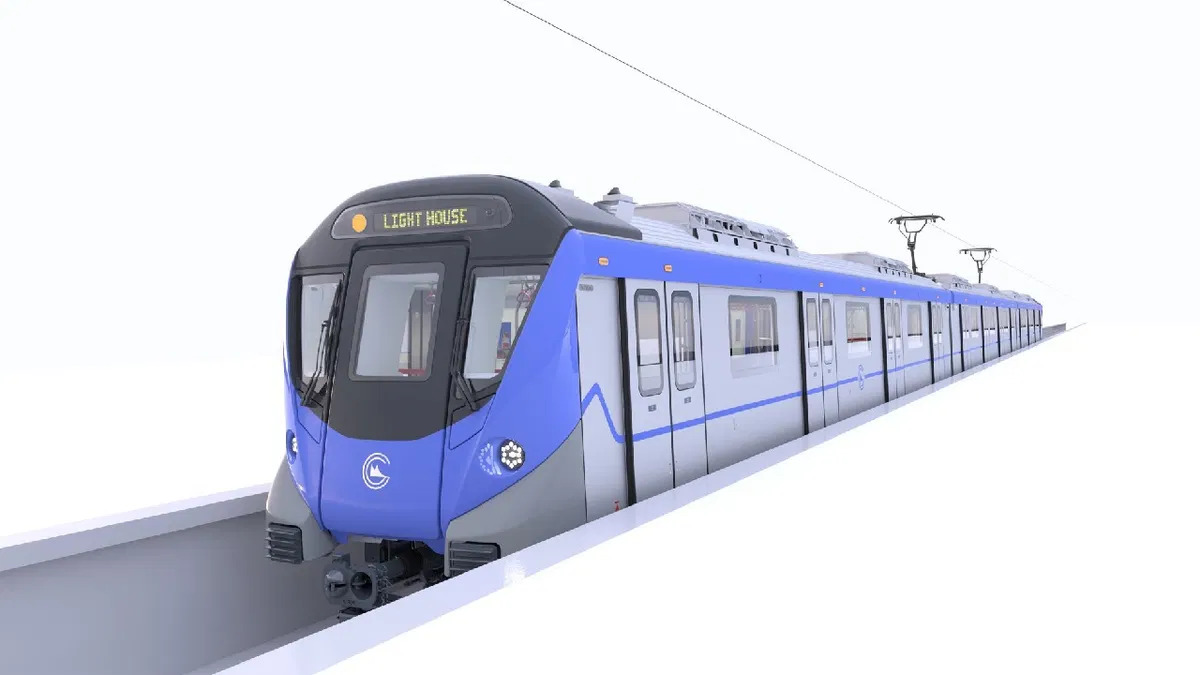
Chennai’s long-awaited western expansion of the metro network is set to begin operations within days, with the first segment of the Chennai Metro Phase 2 corridor between Poonamallee Bypass and Vadapalani cleared for commissioning. The 14.6-kilometre elevated stretch marks the first operational milestone under the city’s 118-kilometre second phase. Yet, initial services will run under restricted frequency and speed conditions, reflecting ongoing civil works along a critical double-decker section.
The statutory safety clearance from the Commissioner of Railway Safety allows commercial services across the entire approved stretch. However, metro authorities have indicated that operations between Porur Junction and Vadapalani will begin with controlled train movement. Only one train per direction will ply at a time on this segment, operating at lower speeds and wider headways compared to standard metro intervals. Between Poonamallee Bypass and Porur Junction, trains are expected to operate every 15 minutes. On the final leg towards Vadapalani, the frequency will be lower, with capped speeds. Commuters completing the end-to-end journey are likely to take around 35 minutes, after which they must use an elevated pedestrian link to access the existing Phase 1 station at Vadapalani.
The temporary constraints are linked to the completion of deck slabs on a double-decker viaduct section forming part of Corridor 5 infrastructure. Senior officials confirmed that a stipulated number of structural components must be completed before full-scale operations can commence across the entire stretch. The remaining works are expected to be concluded later this month. The 14.6-kilometre portion forms part of Corridor 4, connecting Lighthouse to Poonamallee Bypass, and includes 17 elevated stations. In the first operational stage, only 11 stations will open to passengers. For western suburbs such as Porur and Poonamallee, the launch offers long-awaited rapid transit access, potentially easing congestion along arterial corridors like Mount-Poonamallee Road. Urban planners note that even a limited opening of Chennai Metro Phase 2 carries economic significance. Improved east-west connectivity could stabilise travel times, enhance workforce mobility, and influence residential demand in peripheral neighbourhoods where real estate prices remain relatively moderate compared to central zones.
From a sustainability perspective, incremental activation of high-capacity public transport supports Chennai’s broader climate goals by offering alternatives to private vehicle use. The corridor runs through dense mixed-use neighbourhoods, where modal shift could reduce emissions and surface-level congestion over time. However, transport experts caution that seamless integration between Phase 2 and existing lines will be critical. Wayfinding, pedestrian safety across the skywalk, and reliable feeder services will determine early ridership uptake. As Chennai Metro Phase 2 expands in phases over the coming years, the current launch serves as both a symbolic and functional step towards a more connected metropolitan region. The coming weeks will reveal how quickly ridership builds once operational restrictions are eased and full-capacity services begin.