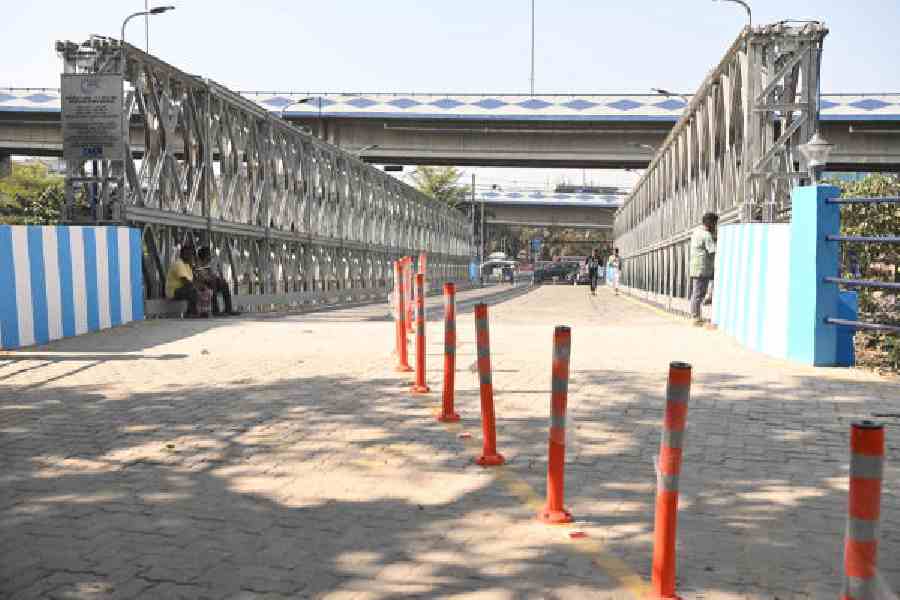
Kolkata’s eastern mobility network received a boost this week as the newly erected Bailey bridge at Dakshindari began carrying two-way traffic between Salt Lake’s AA Block and VIP Road. After a structured trial phase, authorities have allowed vehicles to ply the stretch daily from morning to late evening, marking a significant step towards decongesting one of the city’s busiest airport-bound corridors.
The opening of the Bailey bridge is expected to reduce pressure on adjoining intersections that routinely witness peak-hour snarls. The connector offers a more direct route for residents of Salt Lake and nearby neighbourhoods seeking access to VIP Road, a key arterial stretch linking central Kolkata with the airport and northern suburbs. Urban planners say such micro-level interventions often deliver disproportionate gains in travel time savings and fuel efficiency. Traffic officials initiated controlled movement earlier in February to assess vehicular behaviour, lane discipline and merging patterns at both ends of the structure. The review highlighted the need for additional safeguards, particularly to restrict oversized and heavy freight vehicles that could strain the temporary modular structure. Installation of height restriction barriers has been prioritised to prevent entry of trucks beyond the permissible load. Authorities are also preparing to deploy surveillance cameras and integrate traffic signals at the VIP Road approach.
These measures aim to streamline entry and exit flows while enhancing pedestrian and commuter safety. Transport experts note that signal coordination and monitoring are essential in mixed-use corridors where private vehicles, buses, and two-wheelers converge. Commuters report that access to the airport-bound flank of VIP Road has become more efficient since the Bailey bridge opened, though intermittent bottlenecks are observed on the Salt Lake approach during evening rush hours. Traffic engineers indicate that fine-tuning signal timings and enforcing lane discipline will be critical in the coming weeks to stabilise movement patterns. Beyond immediate relief, the project reflects Kolkata’s reliance on modular bridge technology to address urgent connectivity gaps without long construction cycles. Bailey bridges, traditionally used in emergency or defence contexts, are increasingly being deployed in urban settings where rapid assembly is needed to maintain continuity of movement during infrastructure upgrades or structural repairs.
From a broader city-building perspective, improved last-mile links can influence property demand, commercial viability and daily commuting behaviour in planned townships such as Salt Lake. Reduced idling time also contributes to lower vehicular emissions, a modest but meaningful gain in a city grappling with air quality and transport efficiency challenges. Officials suggest that once safety installations are complete, round-the-clock operations may be considered. For now, the phased rollout of the Bailey bridge offers Kolkata a functional, if interim, solution that underscores the importance of adaptive infrastructure in managing urban growth.