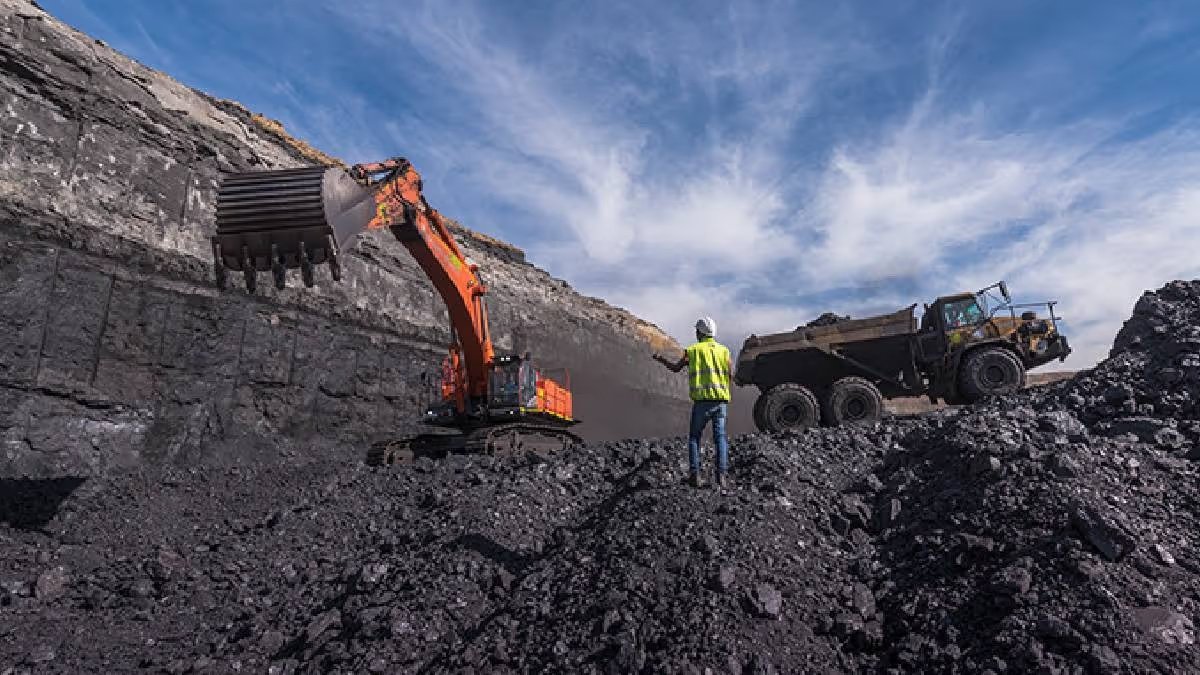
India Coal Output Strengthens Power Supply Stability
Eastern Coalfields Limited (ECL), a key subsidiary of India’s state-owned coal producer, undertook a high-level review of mining operations and future expansion initiatives at its Mugma Area in Jharkhand’s Dhanbad district, underscoring a renewed focus on operational efficiency, safety compliance and strategic growth. The visit by ECL’s Director (Technical–Operations) reflects broader emphasis on optimising performance in India’s vital coal mining sector amid evolving energy needs and supply pressures.
The technical review, conducted on 27 February 2026, centred on assessing current mining practices, infrastructure readiness, and proposed advancement projects including the Chapapur-II open-cast expansion and new coal depot development. Discussions at the site highlighted ongoing efforts to strengthen safety protocols, improve productivity, and modernise extraction workflows at key collieries.Mugma Area — one of ECL’s principal operational regions, producing non-coking coal vital for thermal power and industrial sectors — has historically been a backbone of the Raniganj Coalfield cluster and a significant contributor to domestic fuel supply. The review comes against a backdrop of broader strategic adjustments within ECL, which aims to advance both output and operational sustainability in a landscape marked by resource constraints and evolving regulatory expectations.
Safety improvement emerged as a dominant theme during the review. ECL officials outlined measures to reinforce compliance with established risk-mitigation protocols, particularly given the inherent hazards of opencast and underground mining. Enhanced safety frameworks are critical not just for workforce protection, but also for long-term community resilience in regions that bear the environmental and social footprint of extraction activities.Experts note that such strategic reviews are becoming increasingly imperative as India balances energy security with aspiration for a cleaner industrial footprint. Coal remains a mainstay of the nation’s energy mix, powering an estimated three-quarters of electricity generation even as renewable deployments scale. Strengthening domestic production capability and operational discipline in areas like Mugma supports national imperatives to reduce import dependence and maintain grid stability during peak demand cycles.
The expansion plans reviewed include infrastructure upgrades to coal handling facilities and enhanced logistics frameworks within the Mugma Area, designed to streamline supply routes to thermal plants and industrial consumers. Stakeholders say such developments could ease bottlenecks that have, in the past, disrupted consistent fuel delivery — a persistent concern for construction, manufacturing and urban service utilities that rely on steady energy flow.Strategic growth efforts are also aligned with national coal sector reforms that promote efficiency and environmental adherence. Recent coal grading reclassifications in ECL’s operational zones aim to better match resource quality with appropriate end-use categories, helping planners and energy buyers integrate fuel flows more effectively into broader energy and industrial planning.
For mining communities around Dhanbad and wider industrial consumers, ECL’s review and expansion blueprint signals both continuity and change: a commitment to sustaining coal production while elevating safety, productivity and resource optimisation. As India continues to grapple with energy transition ambitions and infrastructure demands, such initiatives will be closely watched by policymakers, urban planners and industry observers alike.