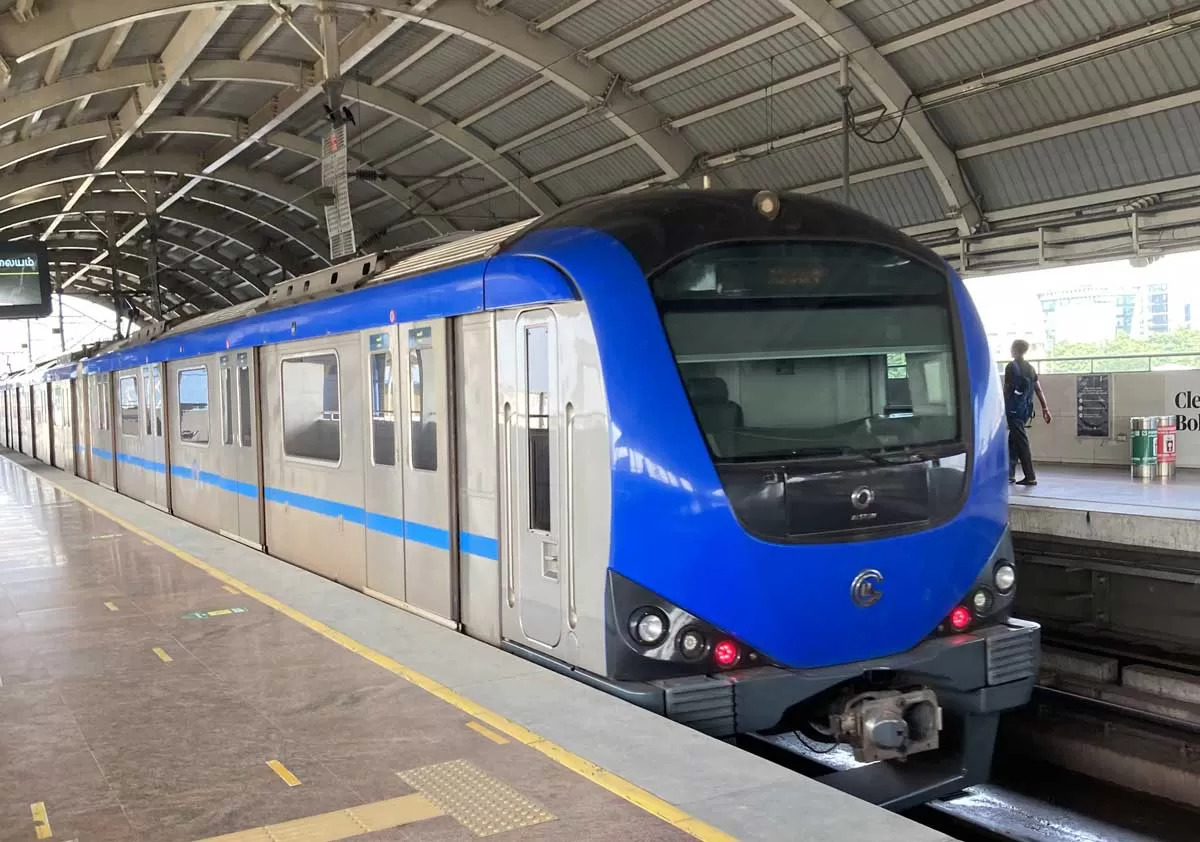
Chennai Metro Phase Two Nears Opening For Commuters
Chennai’s urban mobility network is poised for expansion as the city’s metro Phase-2 stretch from Vadapalani to Poonamallee successfully completes rigorous safety inspections, bringing the western corridor closer to public operation. Spanning approximately 15.8 km, this section represents a significant infrastructure milestone, promising enhanced connectivity for residents and commuters in the city’s growing western suburbs.
Authorities report that the Commissioner of Railway Safety (CRS) has conducted a second round of detailed checks, including operational trials at varying speeds and assessments of signalling and track integrity. Backup systems at the central operations control hub were also tested to ensure service continuity during emergencies. These validations are prerequisites before final clearance from the Railway Board, which could be granted imminently. Analysts suggest that once approved, passenger services could commence within days, reflecting a faster-than-expected commissioning trajectory for a major metro corridor. Urban planners and transport experts note that the new line will bring multiple operational and socio-economic benefits. Trains will run at differentiated speeds along the corridor, with higher velocities planned for the Poonamallee-Porur stretch and moderated speeds closer to Vadapalani. While a few stations in the mid-section are still under construction, connectivity to existing Phase-I infrastructure via pedestrian skywalks will enable seamless transfers, facilitating equitable access across neighbourhoods.
Economically, the corridor is expected to relieve congestion on arterial roads and provide reliable transport for office commuters, students, and small businesses along the route. Real estate analysts anticipate a gradual uplift in local property values and development activity around station nodes, consistent with global patterns where rapid transit expansion drives urban densification. From a sustainability perspective, the metro line offers a low-carbon alternative to private vehicle use, aligning with Chennai’s broader goals of reducing transport emissions and promoting resilient urban mobility.
City officials emphasise that the corridor is part of a phased, inclusive expansion strategy designed to connect underserved areas while maintaining high operational standards. Experts highlight that early deployment of partial stretches, even as some stations are finalised, allows the city to incrementally improve public transit uptake and adjust service patterns based on commuter demand. With Chennai’s western suburbs now better linked to the central business districts, the metro’s operationalisation could reduce travel times, decongest roads, and contribute to more sustainable urban growth. Further sections of Phase-2, including eastern and northern extensions, are under construction, signalling a long-term commitment to an integrated, climate-conscious transport network.