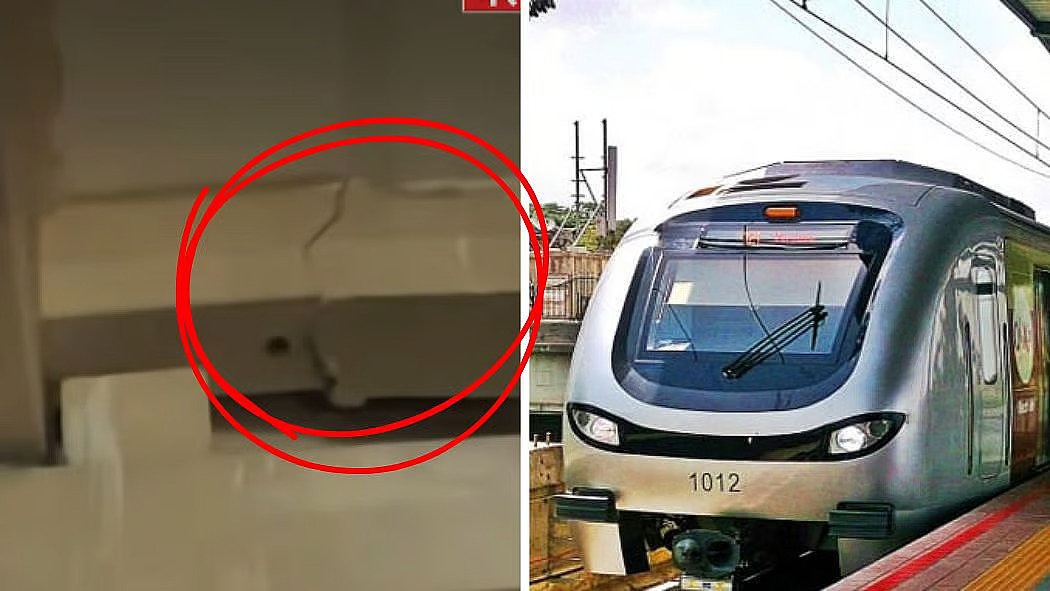
Fresh concerns around construction safety have emerged along the under-development Mumbai Metro Line 4 after visuals showing apparent surface cracks on an elevated pillar near Vikhroli circulated widely over the weekend. The footage, reportedly captured close to a major commercial hub in the eastern suburbs, has heightened public anxiety just days after a fatal structural failure elsewhere on the same corridor, sharpening scrutiny on quality control across one of Mumbai’s most critical transport projects.
The latest visuals appear to show visible fissures on a concrete support column near a proposed station zone, prompting residents and daily commuters to flag the issue with civic and transport authorities. While the structural severity of the cracks is yet to be officially confirmed, urban engineers note that even superficial defects on load-bearing infrastructure demand immediate investigation, particularly in high-density corridors carrying future mass transit loads. This episode follows a deadly incident earlier this month in Mulund West, where a portion of a viaduct parapet wall collapsed onto vehicles below, resulting in one fatality and multiple injuries. That accident, occurring near an active public roadway, exposed the risks posed by construction-stage infrastructure in crowded urban environments and intensified calls for stricter oversight of large public works.
In response, the Mumbai Metropolitan Region Development Authority has constituted a multi-disciplinary safety inspection committee to conduct an end-to-end structural audit of the entire Line 4 corridor. According to officials familiar with the process, construction activity has been halted at vulnerable locations until the review is completed and corrective actions are prescribed. The inspection is expected to assess alignment accuracy, material integrity, and compliance with approved engineering designs. Urban planners argue that the issue extends beyond a single project. Mumbai is simultaneously building multiple metro lines, coastal infrastructure, and redevelopment clusters, placing unprecedented pressure on contractors, consultants, and supervisory systems. Any lapse in quality assurance, they warn, undermines public confidence in public transport—an essential pillar of the city’s long-term low-carbon mobility strategy.
From a governance perspective, the episode has also reopened debate on accountability mechanisms in publicly funded infrastructure. Industry experts point out that transparent disclosure of inspection findings and remedial measures will be key to restoring trust, especially for communities living and working below elevated corridors during prolonged construction phases. Despite the setbacks, transport specialists maintain that Metro Line 4 remains vital for decongesting Mumbai’s eastern suburbs and enabling equitable access to jobs and services. However, they stress that safety must remain non-negotiable, particularly as cities push for faster project delivery to meet climate and mobility targets.
As inspections continue, the coming weeks will test whether systemic reforms—stronger supervision, independent audits, and tighter construction protocols—can translate into safer outcomes on the ground. For a city betting heavily on mass transit to shape its sustainable future, the margin for error is rapidly narrowing.
Mumbai Metro Corridor Raises Construction Quality Concerns