


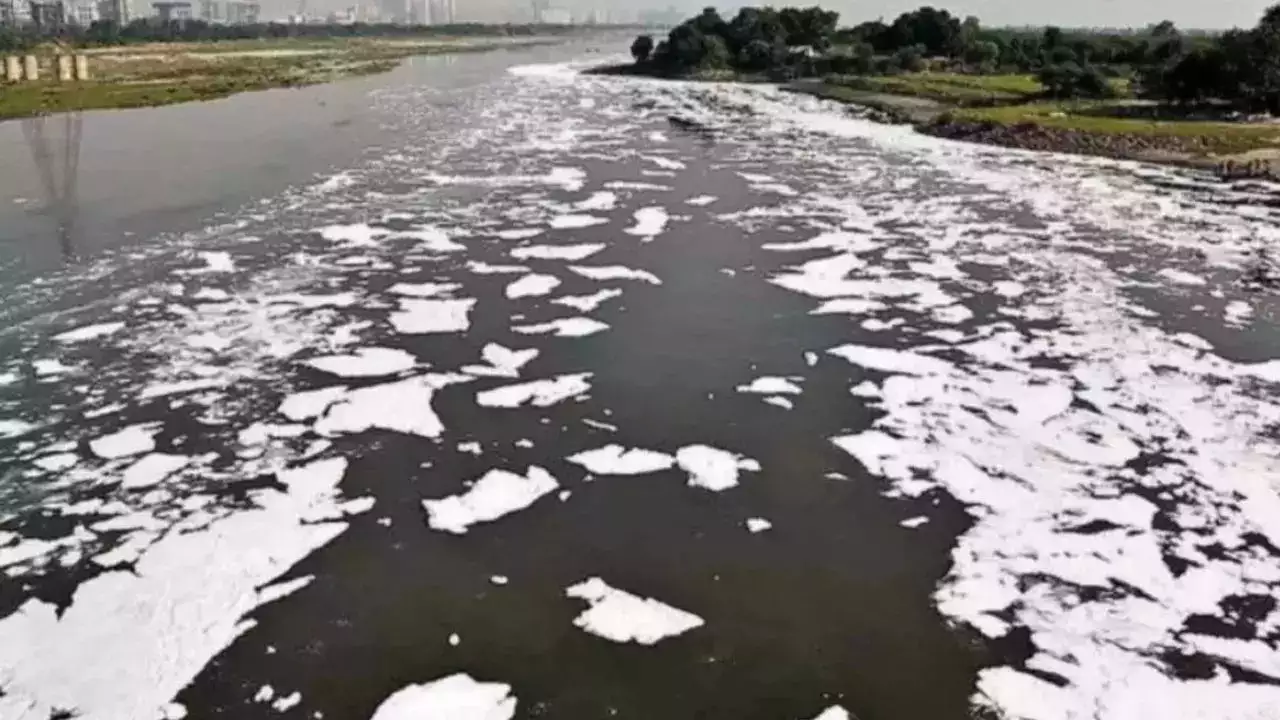
Yamuna River Faces Worst Pollution in Five Years
The Yamuna River, one of Delhi’s most vital water bodies, has seen its pollution levels reach alarming heights this January, according to the latest report from the Delhi Pollution Control Committee (DPCC). Despite efforts over the past few years, the river continues to be highly contaminated, with biochemical oxygen demand (BOD) levels soaring to 70mg/l—an indication of the river’s inability to cleanse itself of organic pollutants. This marks the highest pollution levels recorded in January since 2020, demonstrating the ongoing struggle to restore the river to a healthy state.
For a river to sustain life and recover from pollutants, its BOD should ideally be below 3mg/l. However, the Yamuna’s current levels far exceed this threshold, underscoring the environmental crisis at hand. The BOD, which signifies the river’s capacity to restore balance by absorbing organic waste, remains an alarming concern, showing the persistence of untreated waste entering the river. As a result, the river is effectively ‘dead’ when it exits Delhi, marked by a consistent zero in dissolved oxygen levels—a crucial indicator of the river’s health.
Equally disturbing are the faecal coliform levels, which have surged to 8.4 million MPN/100ml. This represents a serious health hazard, as faecal contamination directly correlates to untreated sewage and excreta entering the water. For water to be considered safe, the faecal coliform count should not exceed 2,500 units, and ideally should be closer to 500 units. Unfortunately, the Yamuna continues to breach this limit, making the water unsuitable for any form of aquatic life or human use.
The situation has worsened from the previous year, with December’s faecal coliform levels at 8.4 million, and November’s at 7.9 million, suggesting that despite efforts to improve the situation, pollution levels remain stubbornly high. In 2020, during a particularly bad phase, the river recorded even higher levels of faecal contamination, hitting 9.4 million MPN/100ml, with a BOD of 23mg/l and dissolved oxygen at zero.
The findings in the January report highlight a stark reality for the Yamuna. Despite government interventions and increased focus on pollution control, the river’s condition continues to deteriorate. The chemical, industrial, and domestic waste poured into the river has left it struggling for survival, and unless decisive and sustained action is taken, the outlook for the Yamuna remains bleak.
Restoring the river’s health requires significant investment in waste treatment infrastructure, improved monitoring, and stricter enforcement of regulations to control effluent discharge into the river. In addition, it is essential for both governmental and non-governmental stakeholders to come together and form a cohesive strategy for the river’s rehabilitation. The Yamuna’s health is not just an environmental concern—it is a public health issue that affects millions who rely on its water, directly or indirectly.
As the river continues to serve as a lifeline for Delhi, the increasing pollution levels call for urgent action to safeguard its future. The time to take meaningful steps is now—before the river’s deterioration becomes irreversible.
