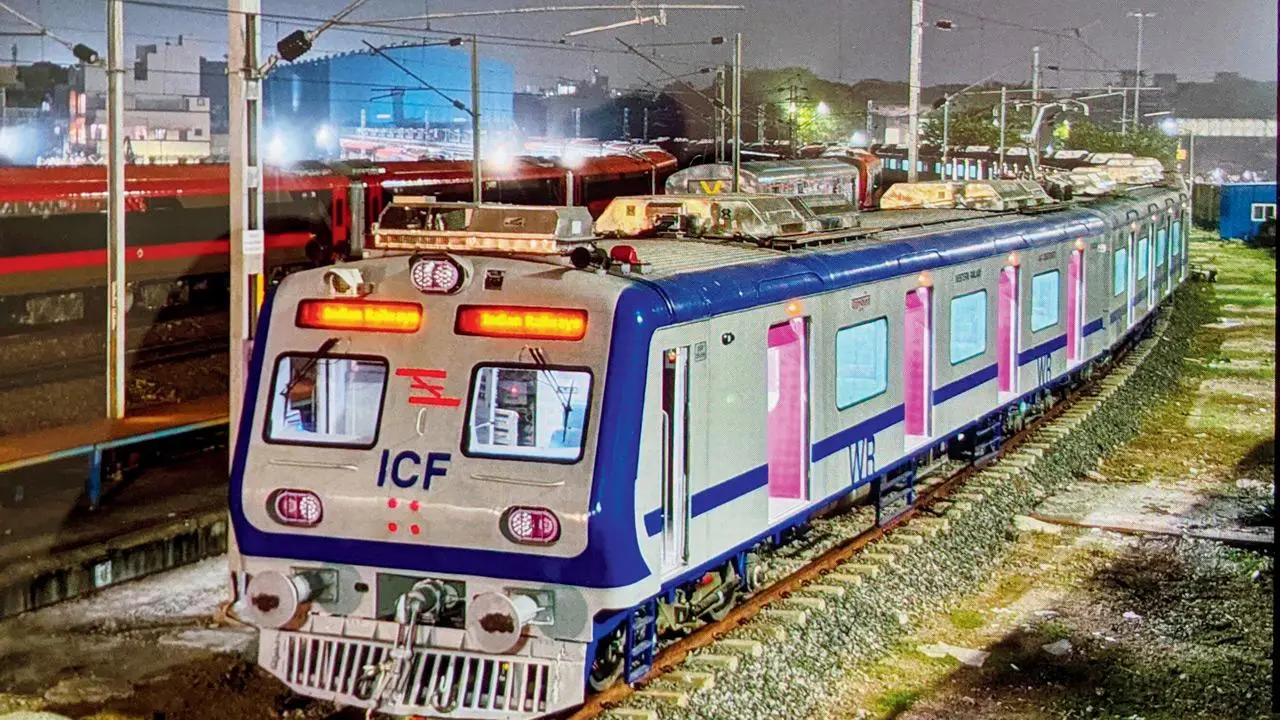
Mumbai’s suburban rail network is set for a measured capacity upgrade as Western Railway prepares to introduce additional air-conditioned and non-air-conditioned local train services across its busiest corridors from February 19. The move reflects a broader recalibration of urban transport priorities in the Mumbai Metropolitan Region, where commuter demand, climate comfort, and service reliability are increasingly shaping infrastructure decisions.
According to officials overseeing suburban operations, the rollout includes a dozen new AC local services alongside three conventional non-AC services. These additions are being slotted into peak and shoulder-hour schedules to ease pressure on overcrowded rakes while offering commuters greater choice in travel conditions. The deployment follows months of ridership assessment and operational modelling across high-density residential and employment belts. Mumbai’s local trains remain the backbone of daily mobility, carrying millions across sprawling suburbs where housing affordability often comes at the cost of long commutes. Transport planners note that while AC locals currently account for a small share of total services, their steady expansion reflects shifting commuter expectations around safety, thermal comfort, and predictability—particularly as heat stress becomes a recurring urban challenge.
Railway officials indicate that the new services are being introduced without reducing existing frequencies, ensuring that affordability-sensitive passengers remain served by standard coaches. This dual-track approach is critical in a city where transport equity is closely tied to livelihood access. Industry observers point out that maintaining a balance between premium and mass services will be essential as operating costs rise and energy efficiency standards tighten. From a sustainability perspective, suburban rail continues to outperform private vehicles on emissions intensity, even with increased air-conditioning loads. Urban mobility experts underline that higher-capacity electric rail systems, when optimised, help curb road congestion, lower per-capita carbon output, and reduce dependence on fossil-fuel-based travel. Incremental service expansion, they argue, is more effective than large-scale overhauls when integrated into existing networks.
The latest addition also intersects with Mumbai’s evolving real estate geography. As commercial hubs decentralise and housing growth accelerates in peripheral suburbs, reliable rail connectivity becomes a determining factor for liveability and economic participation. Developers and employers alike closely track service frequency and travel comfort when assessing location viability. Officials suggest that further timetable rationalisation and fleet modernisation remain under review, particularly as newer rolling stock and signalling upgrades are phased in. For commuters, the immediate impact will be marginally reduced crowding and improved travel options. For the city, it signals a continued shift towards strengthening public transport as the foundation of a resilient, inclusive, and low-carbon urban future.
WR Expands Suburban Fleet With New AC Train Services From Feb 19