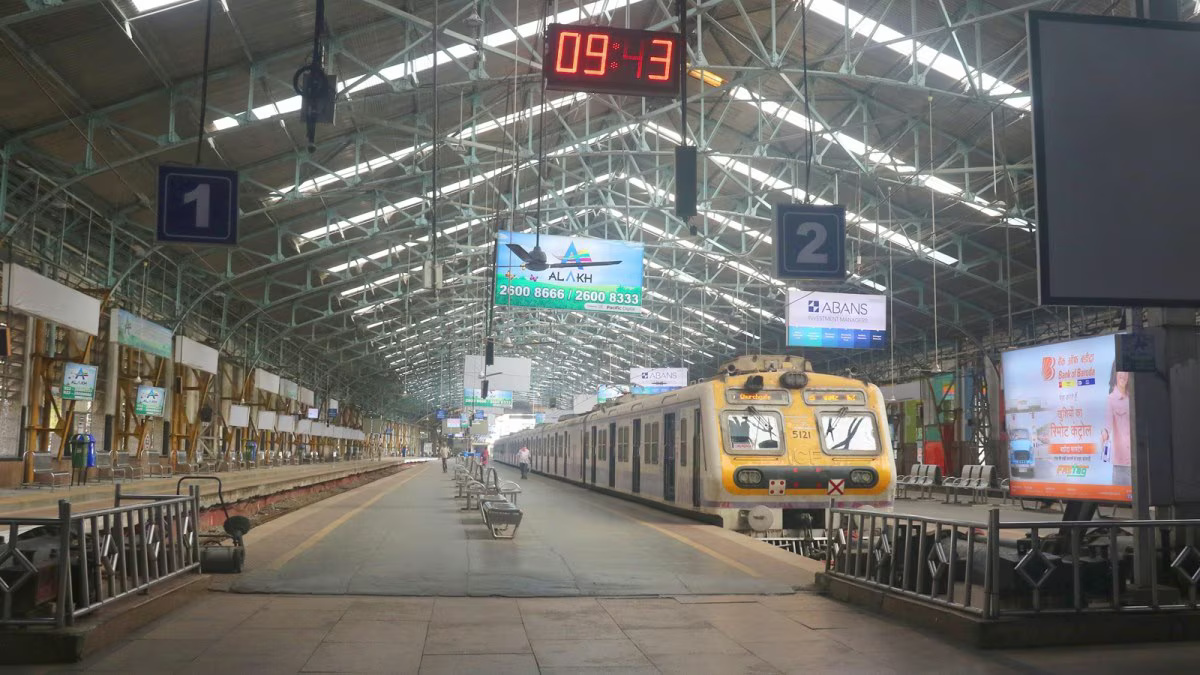
Mumbai’s Western Railway (WR) is taking a significant step toward modernising local train safety with the phased deployment of the indigenous Kavach system along the 60-kilometre Virar–Churchgate corridor. The initiative aims to reduce collisions, enforce speed limits, and prevent signal violations, reinforcing commuter safety across one of the city’s busiest suburban stretches. Foundation work for 12 key locations along the route is reported to be 80 per cent complete, while tower construction is underway at roughly half the planned sites.
Kavach, India’s Automatic Train Protection (ATP) system, monitors real-time train movements and intervenes autonomously when operational limits are breached. The system is designed to automatically apply brakes in cases of over-speeding or when trains approach signals at danger. It also provides in-cab signal displays, enabling train operators to respond to low-visibility conditions, such as fog. Certified at Safety Integrity Level 4, Kavach represents a globally recognised benchmark for safety-critical technologies, indicating extremely low probability of failure. A senior railway official explained that the system leverages RFID tags, optical cables, radio communication, and onboard computing to continuously track and manage train positions. This integration allows Kavach to enforce safe speeds and maintain safe distances between trains, reducing the risk of human error in dense urban rail corridors. Engine trials covering 24 kilometres of the Virar–Churchgate line have already been conducted, signalling readiness for broader operational testing.
As part of the installation, 17 stations along the corridor are earmarked for Kavach infrastructure, with six stations already equipped. Lidar surveys and the installation of RFID tags are ongoing, ensuring the system’s real-time monitoring capabilities. Industry experts suggest that such upgrades not only enhance commuter safety but also support more efficient scheduling, reduce service delays, and improve the overall reliability of Mumbai’s suburban rail network. Urban planners note that deploying advanced train control systems like Kavach aligns with wider goals of sustainable urban mobility. By reducing collisions and improving operational efficiency, the system encourages public transport use over road alternatives, contributing to lower emissions and reduced traffic congestion. Furthermore, prioritising commuter safety strengthens public confidence in mass transit, a critical factor in high-density cities where rail transport forms the backbone of daily urban mobility.
The WR’s Kavach rollout on the Virar–Churchgate route represents a phased, technology-driven transformation aimed at creating a safer, smarter, and more reliable suburban rail network. Completion of remaining tower foundations, station installations, and real-time system testing will determine the timetable for full operationalisation. For Mumbai commuters, these developments promise a future of safer and more dependable travel across the city’s critical north–south suburban corridor.
WR Enhances Virar Churchgate Commuter Safety