


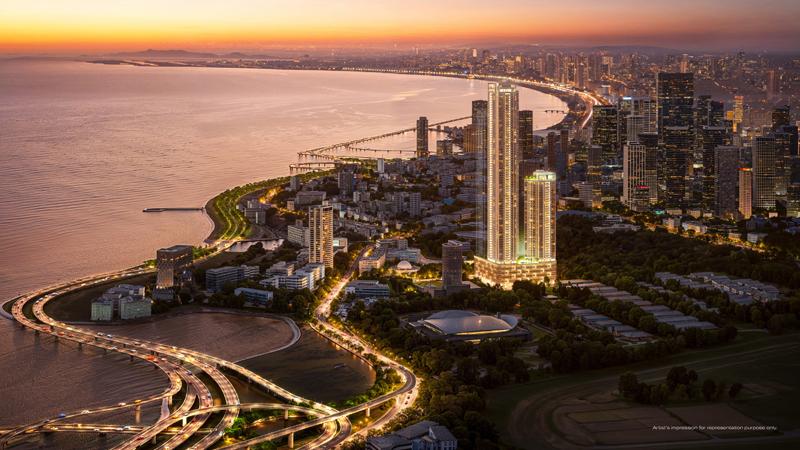
Mumbai’s premium housing market continues to demonstrate resilience at the upper end, with strong buyer appetite concentrated in a handful of established coastal neighbourhoods. Godrej Properties has recorded sales exceeding Rs 2,000 crore in the first phase of a newly launched residential development in Worli, reinforcing the area’s position as one of the city’s most sought-after addresses for high-value housing.
The project, spread over a compact land parcel in central Mumbai, comprises three residential towers and is being released in phases. In the initial launch, homes from select floors in two towers were opened for sale, with approximately 100 apartments absorbed within a few months of market entry. Industry analysts note that such absorption levels indicate depth in end-user demand despite elevated ticket sizes and broader concerns around affordability in the city. Worli’s sustained appeal lies in its strategic location between Mumbai’s traditional central business districts and emerging commercial hubs along the western coastline. Proximity to employment centres, established social infrastructure, and arterial road connectivity has helped the micro-market retain pricing power even as other parts of the city experience uneven demand. Real estate data firms have consistently identified Worli as a focal point for large-ticket residential transactions, particularly among high-net-worth households. From an urban development perspective, the project reflects the continued densification of Mumbai’s core through vertical luxury housing. With limited land availability, developers are increasingly relying on redevelopment and high-rise formats to unlock value in centrally located neighbourhoods. Urban planners caution, however, that such concentration underscores the need for parallel investment in public transport, open spaces, and climate-resilient infrastructure to support rising residential density.
The development offers large-format apartments with low unit density per floor, a configuration that has gained traction in the post-pandemic market. Buyers in this segment are prioritising privacy, ventilation, and internal space, even within dense urban environments. Analysts suggest this preference is reshaping design choices across Mumbai’s luxury housing pipeline. The strong Worli response also adds to the developer’s broader performance across Indian cities, where booking values and cash collections have shown sustained growth over recent years. Market observers say that consistent execution and balance-sheet discipline have enabled large developers to capture demand in premium segments, even as mid-income housing remains more price-sensitive. However, experts stress that the concentration of capital in ultra-prime locations raises questions about housing equity and spatial balance. As Mumbai grapples with land scarcity and climate risks, there is growing emphasis on ensuring that luxury-led redevelopment does not divert attention from affordable housing, rental stock, and resilient urban infrastructure.
Looking ahead, Worli’s continued dominance in luxury housing is likely to persist, but its long-term livability will depend on how effectively private development aligns with public investment. For policymakers and city planners, the challenge lies in managing growth in these high-demand districts while ensuring that Mumbai’s broader housing ecosystem remains inclusive, sustainable, and responsive to future urban pressures.
Also Read: Emerging Cities Redefine India Real Estate Gains
Worli Luxury Housing Draws Rs 2000 Crore Demand
