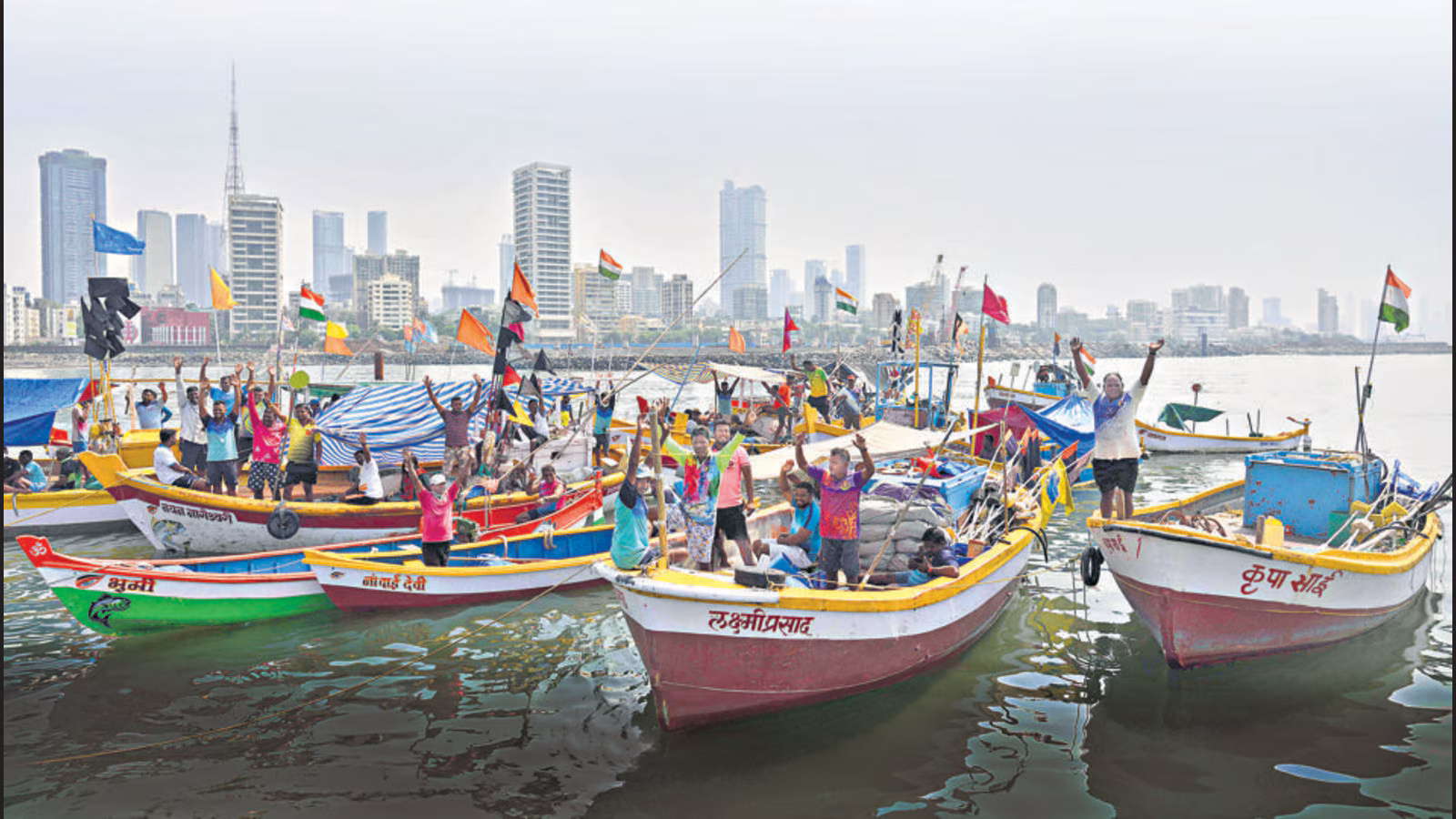
A long-pending land rights dispute in Mumbai’s Worli coastal settlement has entered a decisive phase, with authorities commencing internal land demarcation following judicial directions. The move marks a critical step toward formal recognition of customary land ownership in one of the city’s oldest fishing villages, highlighting broader challenges around heritage protection, equitable urban growth, and land governance in dense metropolitan regions.
Officials from the district administration began detailed measurements of land parcels within Worli Koliwada earlier this month, acting on orders from the Bombay High Court. The exercise covers the entire village land under a single survey number and is scheduled to be completed within a court-mandated timeline later this month. Urban governance experts describe the development as a rare instance where historical occupation and formal land records are being reconciled in Mumbai’s core city. The dispute dates back over five decades, when residents first approached the judiciary seeking protection against what they described as encroachment and reclassification of village land. The community has consistently maintained that the area qualifies as a traditional gaothan and therefore falls outside the jurisdiction of municipal and slum redevelopment authorities. For years, the absence of updated land records left households vulnerable to redevelopment pressures and regulatory uncertainty.
According to officials involved in the process, the current phase focuses on internal demarcation—measuring individual house plots and shared spaces using GPS-based mapping technology. This follows the completion of outer boundary measurements several years ago. Once finalised, the survey is expected to lead to updated property cards that formally record ownership and occupancy, a key requirement for legal certainty and planned redevelopment. Urban planners note that the outcome carries significance well beyond Worli. Coastal gaothans and fishing settlements across the Mumbai Metropolitan Region face similar risks of being misclassified as slums, often resulting in top-down redevelopment that disrupts livelihoods. Formal recognition of gaothan land, experts argue, allows for community-led renewal models that balance housing safety, climate resilience, and cultural continuity.
The land in question supports not only housing but also the economic ecosystem of traditional fishing. Open areas are routinely used for boat storage, net repair, and fish drying—activities that are central to coastal livelihoods. Displacement or densification without adequate planning could undermine these systems, increasing social and economic vulnerability among fishing households. The survey is also aligned with a recent state-level push to update land records in gaothans and tribal settlements, addressing long-standing gaps between historical use and formal documentation. Policy analysts see this as an opportunity to integrate traditional settlements into urban planning frameworks without erasing their identity.
Officials confirmed that compliance reports will be submitted to the High Court upon completion of the demarcation. For residents, the process represents more than administrative action—it is a pathway toward legal security, responsible redevelopment, and inclusion within Mumbai’s evolving urban fabric. How authorities translate this recognition into sustainable planning outcomes may shape the future of similar settlements across Maharashtra.
Worli Koliwada Sees Long Delayed Land Mapping Begin