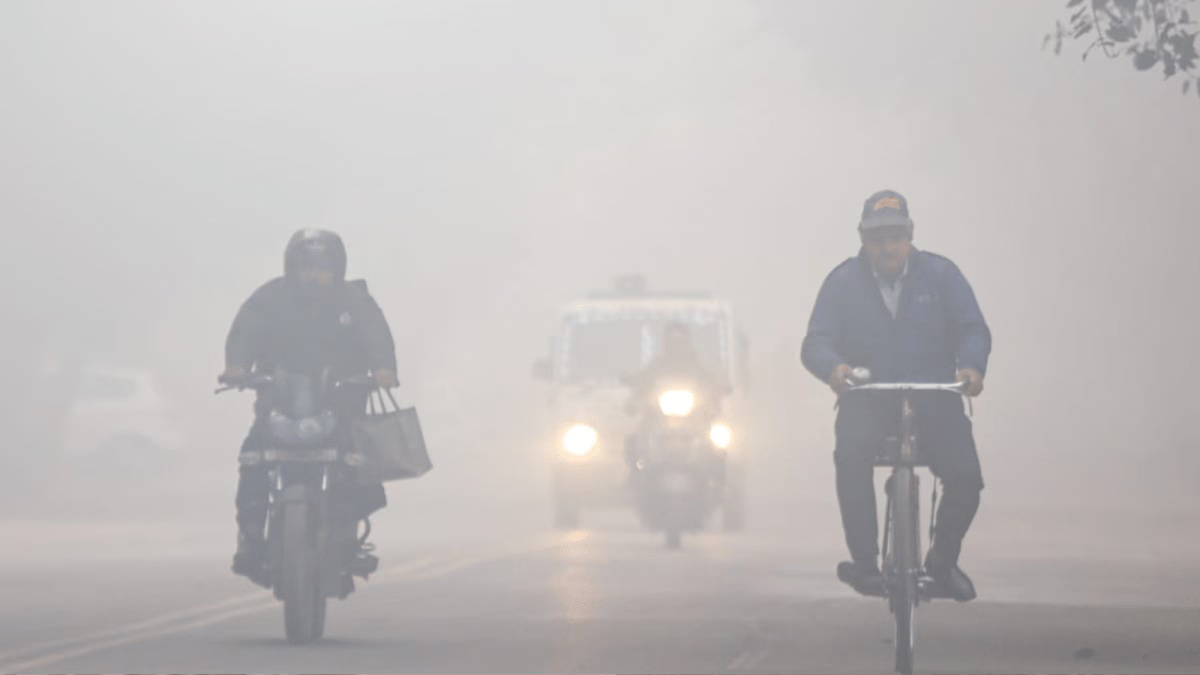
India is experiencing a marked intensification of winter conditions, with dense fog, cold day spells, and snowfall expected across northern, eastern, and northeastern regions through the end of December and into early January 2026. The India Meteorological Department (IMD) has forecast isolated to scattered snowfall over the western Himalayas, while dense fog and cold waves are likely to impact multiple states, affecting daily life and transport systems.
According to officials, Jammu-Kashmir, Ladakh, Himachal Pradesh, and Uttarakhand will see intermittent snowfall between December 27 and January 1. “These conditions are likely to persist due to sustained western disturbances, and residents are advised to exercise caution, especially during early morning and late-night hours,” an IMD official said. Thunderstorms with gusty winds of 30–40 kmph are expected over the Andaman & Nicobar Islands from December 27 to 30, highlighting the varied meteorological challenges across the country. The minimum temperature has remained below normal across central, eastern, and southern India, with Rajgarh in Madhya Pradesh recording 4.2°C as the coldest spot. Maximum temperatures, however, have stayed relatively moderate, with Karwar in Karnataka and Kottayam in Kerala reporting highs of 35.2°C. Officials have projected only minor temperature changes across northwest, central, and east India over the coming week, with a slight rise of 2–3°C anticipated later.
Dense fog is expected to cover Assam, Himachal Pradesh, Arunachal Pradesh, and several northeastern states through December 31, while Punjab, Haryana, and Chandigarh may experience fog until December 30. Uttar Pradesh is forecasted to remain under dense fog conditions until January 1. These conditions could affect road, rail, and air transport, prompting authorities to issue advisories for commuters. Cold wave alerts have been issued for north Rajasthan on December 28 and for Jharkhand between December 28–29. Severe cold day conditions are likely across East Uttar Pradesh, Bihar, parts of Uttarakhand, and western Uttar Pradesh during this period. Industry experts emphasise the importance of public awareness campaigns to minimise health risks, particularly among vulnerable populations such as the elderly and children.
The persistent cold and fog present challenges for urban and transport planners, highlighting the need for adaptive city infrastructure that can handle extreme weather events. Sustainable urban solutions, including improved heating and emergency response protocols, can help reduce the social and economic impact of prolonged cold spells. As winter conditions continue, citizens are advised to monitor official weather updates, take precautions against cold-related illnesses, and prepare for potential travel disruptions. Authorities have reinforced contingency measures to ensure road safety, rail operations, and essential services remain functional.
Winter Conditions Intensify Across India With Fog And Cold Wave