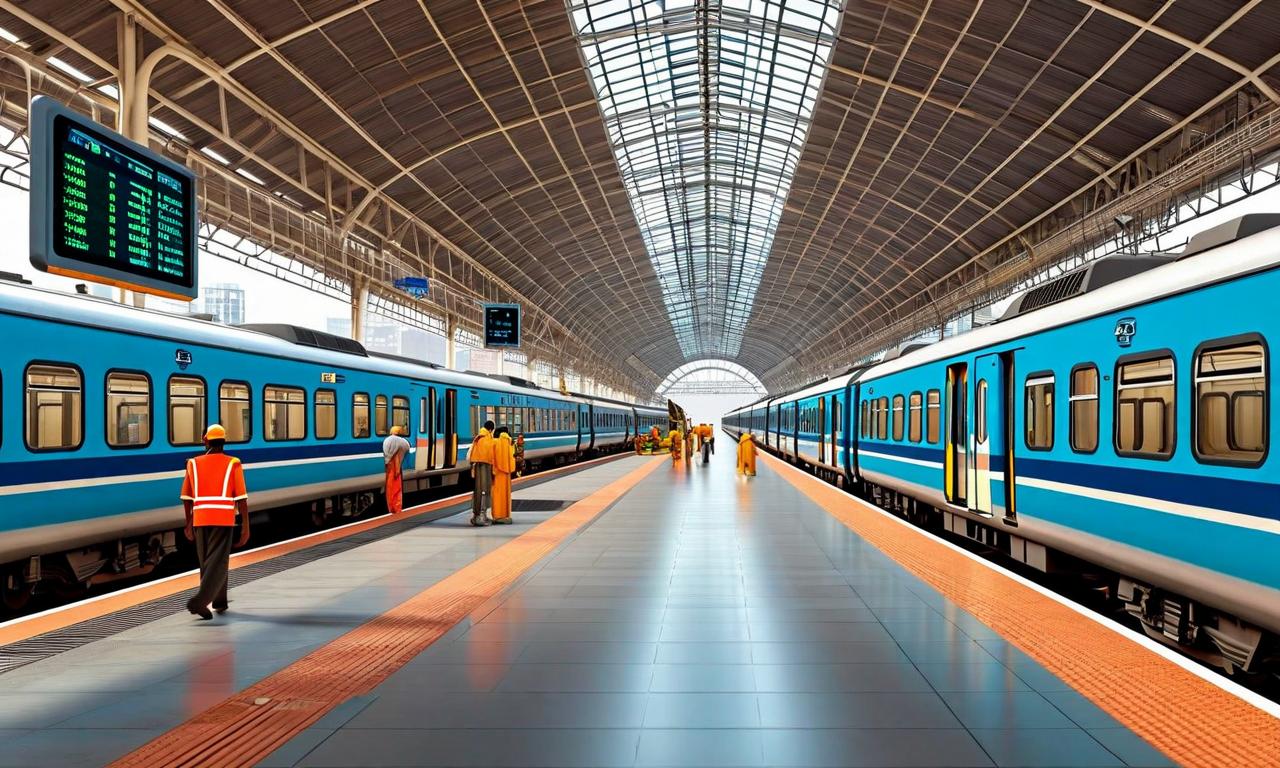
Western Railway has used its 70th Railway Week observance in Mumbai to foreground a less-visible but critical aspect of urban infrastructure delivery: workforce performance. At a ceremony held at a central city auditorium, the zonal railway honoured dozens of employees for sustained service excellence, underlining how human capital remains central to the reliability, safety, and resilience of one of India’s most heavily used suburban rail networks.
The annual recognition programme comes at a time when Mumbai’s transport systems face growing pressure from rising commuter demand, climate-related disruptions, and the need for continuous upgrades to ageing assets. Officials said the awards were intended to acknowledge employees who have delivered consistent outcomes while managing daily operational complexity across stations, workshops, signalling, rolling stock maintenance, and passenger services. A total of 92 officers and staff from across Western Railway were recognised with the Vishisht Rail Seva Puraskar 2025 for meritorious service. Senior railway leadership noted that such acknowledgements are not ceremonial alone but serve as an internal benchmark for performance and accountability. In a network that carries millions of passengers daily, even marginal improvements in operational discipline and response time have measurable impacts on safety, punctuality, and commuter confidence.
Urban transport experts point out that staff capacity and motivation are often overlooked in infrastructure discussions dominated by capital expenditure and new projects. “Cities depend not just on assets but on the people who operate them, especially during peak demand or extreme weather events,” said an urban mobility specialist. Recognition frameworks, they add, help institutionalise best practices and knowledge retention in large public systems. The ceremony also highlighted a broader shift in how public transport agencies are framing performance — linking individual effort to organisational outcomes such as energy efficiency, service continuity, and inclusive passenger experience. Western Railway’s suburban operations play a central role in reducing road congestion and transport emissions in the Mumbai Metropolitan Region, making operational excellence a key contributor to the city’s low-carbon mobility goals.
Senior departmental heads, divisional managers, workshop leadership, and representatives from the railway’s women’s welfare organisation were present, signalling cross-functional endorsement of the initiative. In addition to current awardees, officers who had earlier received national-level recognition for exceptional service were felicitated again at the zonal level, reinforcing continuity between national policy goals and regional execution. Cultural performances accompanied the formal proceedings, reflecting the long-standing Railway Week tradition of blending institutional reflection with community engagement. Officials reiterated that future priorities would include skill development, safety enhancement, and service reliability — areas increasingly critical as Mumbai expands and climate resilience becomes central to urban planning.
As cities invest heavily in new rail corridors and transit-oriented development, Western Railway’s focus on recognising service excellence offers a reminder that sustainable urban mobility ultimately depends on the people running the system — every day, under real-world conditions.
Western Railway Marks Workforce Excellence Mumbai