


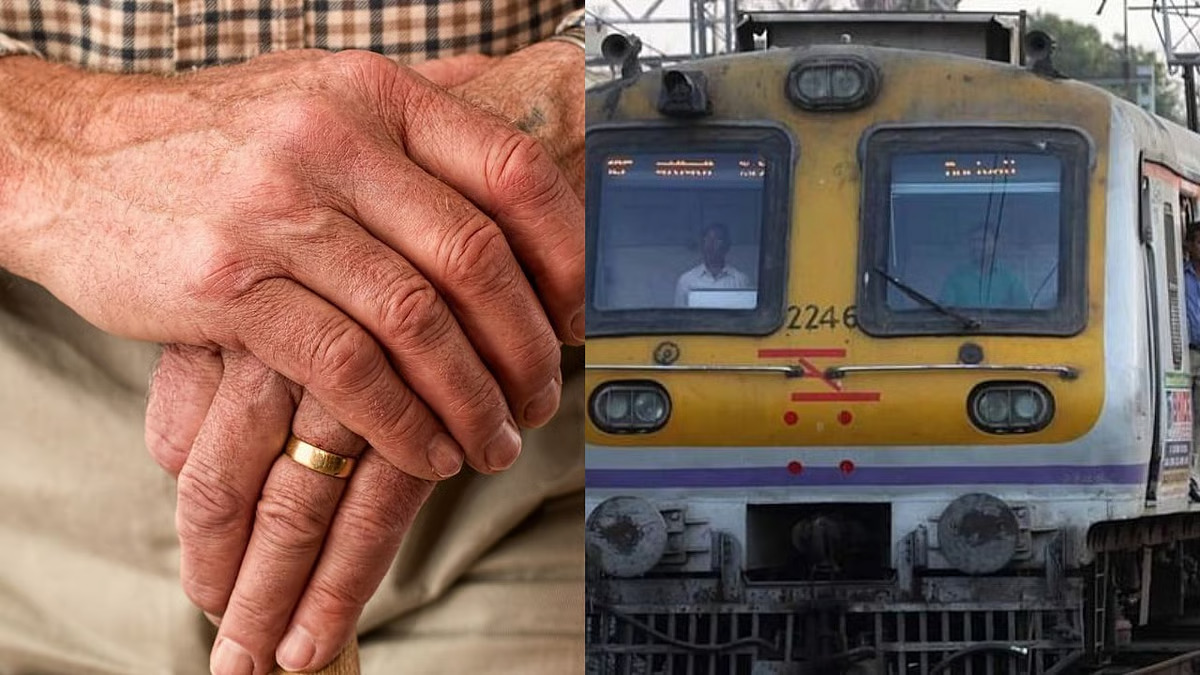
Western Railway has begun introducing senior-only compartments across all its non-air-conditioned local train rakes in Mumbai. The decision marks a significant shift in prioritising inclusive urban mobility within one of the world’s most densely crowded suburban rail networks.
Currently, Mumbai locals allocate just 14 seats per train to senior citizens, split between two designated coaches. However, during peak hours, these limited seats become inaccessible due to intense crowding, leaving elderly passengers to jostle for space, often in unsafe conditions. The new initiative by Western Railway seeks to directly address this longstanding concern by converting an existing luggage compartment into a dedicated coach exclusively for senior citizens. The initiative will cover all 105 non-AC rakes operated by Western Railway, which includes 90 twelve-coach and 15 fifteen-coach trains. The designated senior-only compartment will be positioned as the seventh coach from the Churchgate end—formerly used for luggage and vendor purposes. Each of these modified coaches will offer seating for 13 passengers and standing room for 91, aiming to strike a balance between capacity and accessibility. The upgrade is expected to benefit over 50,000 elderly commuters who rely on Mumbai’s suburban railways every day.
This development comes in response to increasing public and legal advocacy for safer travel conditions for senior citizens. A Public Interest Litigation filed in the Bombay High Court had earlier drawn attention to the precarious situation faced by older commuters and called for exclusive coaches akin to those allocated for differently-abled passengers. Acknowledging these demands, officials in the railway administration have moved swiftly to formalise the rollout. According to Western Railway officials, the conversion project is estimated to cost approximately ₹5.4 crore and is scheduled for completion within a year. The refurbishment work has already commenced at key car sheds located at Mumbai Central and Virar, ensuring that the implementation progresses without disrupting daily operations. The remaining luggage coach in each rake will continue to serve cargo transport and vendors.
Western Railway, which operates 1,406 local services daily and transports over 3 million passengers, has been grappling with mounting pressure to improve travel conditions amid surging population density and rising mobility needs. The introduction of senior-only compartments is expected not only to enhance safety but also to encourage more elderly citizens to use public transport, contributing to a more inclusive and sustainable urban transit system. Experts in urban mobility and transport planning have lauded the decision as a step in the right direction. Repurposing underutilised infrastructure like luggage vans, they argue, is a smart and eco-conscious strategy that optimises existing resources without requiring significant expansion or new construction. The move also aligns with broader goals of sustainable, gender-neutral, and equitable city planning, where public transport infrastructure must serve all demographics fairly.
For the elderly, who often experience physical challenges while boarding overcrowded compartments, this dedicated space could significantly reduce travel-related anxiety and physical strain. In a city where boarding a moving train is often seen as a survival skill, the assurance of a reserved coach promises a safer, more humane commuting experience. Importantly, the design of the new compartment is being planned with inclusivity in mind. Apart from clear signage, rail authorities are exploring the use of priority boarding markings and awareness campaigns to prevent misuse and ensure smooth implementation. Officials have also stressed that the new compartments will maintain the general class fare structure, ensuring affordability remains a core principle of the upgrade.
The initiative comes at a time when Mumbai is actively seeking to transform its transport infrastructure to be more climate-resilient and inclusive. With challenges such as overcrowding, air pollution, and socio-economic disparities deeply woven into the urban commute, public transport innovations that prioritise marginalised groups are increasingly seen as crucial interventions. As the rollout progresses, feedback from senior commuters will play a critical role in refining the model. Western Railway officials have indicated that depending on the response and usage data, further improvements—including cushioned seating, handrails, and improved lighting—could be considered in subsequent phases. There is also the potential for this model to be replicated across other zones of the Mumbai suburban railway network, including Central and Harbour lines, thus amplifying the impact citywide.
While the transformation may appear modest in terms of budget, it carries profound implications for social equity in urban mobility. The launch of senior-only compartments sends a strong message: public infrastructure must evolve to reflect the changing needs of a diverse and ageing population. As Mumbai continues its journey towards building a sustainable and people-centric urban environment, initiatives like this signal a shift in policy thinking—where accessibility, dignity, and safety are given precedence over sheer volume and speed. In doing so, it reimagines public transport not merely as a utility but as a vehicle of urban justice.
Also Read : Mumbai on High Alert for Thursday Downpour
