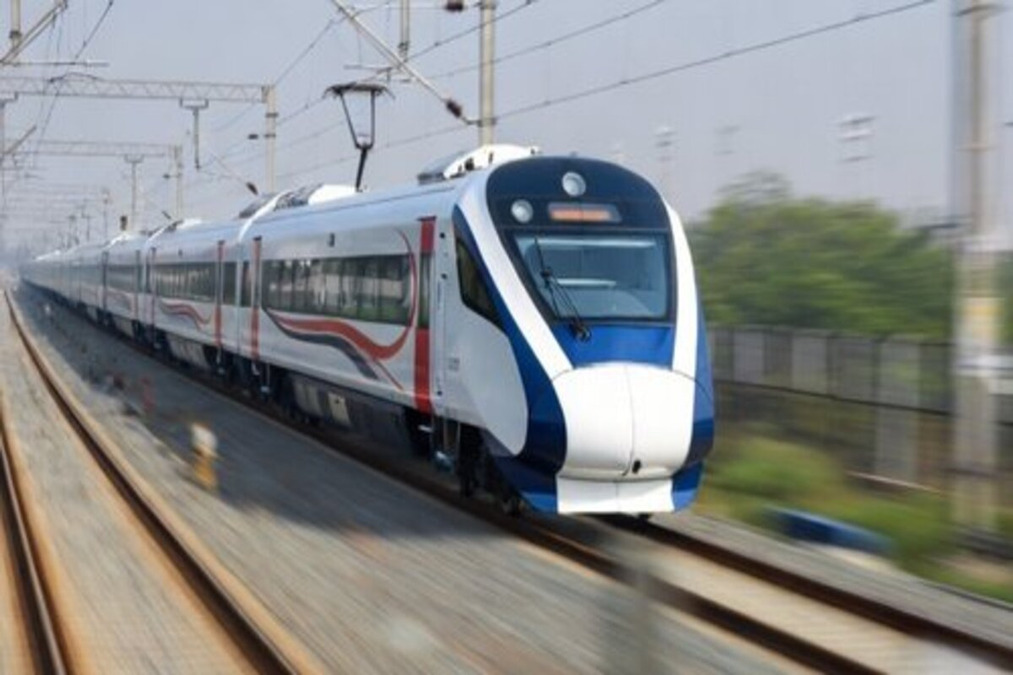
A major safety upgrade has been rolled out on a critical section of India’s busiest rail artery, with the deployment of the indigenous Kavach system across a key stretch of the Delhi–Mumbai corridor. The move by Indian Railways is aimed at strengthening operational safety while supporting faster and more reliable train movement on high-density routes.
The newly covered segment spans over 220 kilometres between Vadodara and Nagda, falling under the jurisdiction of Western Railway. This section forms a vital link in the broader Delhi–Mumbai trunk route, which handles a mix of passenger and freight traffic and plays a central role in the country’s economic logistics network. The Kavach system, an Automatic Train Protection technology developed domestically, is designed to minimise human error by intervening in critical situations. It can automatically apply brakes if a train crosses a signal at danger, exceeds permissible speed, or risks collision with another train. Experts say such systems are increasingly essential as train speeds rise and network utilisation intensifies.
The rollout is part of a wider modernisation programme under Mission Raftaar, which focuses on improving speed, safety, and efficiency across major rail corridors. With a significant portion of the targeted route already equipped, railway authorities are moving towards near-continuous coverage along the western trunk line connecting Mumbai and New Delhi. Implementation of the system has required extensive infrastructure integration, including the installation of thousands of trackside electronic markers, radio communication towers, and optical fibre networks. Continuous communication between locomotives, stations, and signalling systems enables real-time monitoring and rapid response to operational risks.
Railway engineers indicate that deploying Kavach on operational lines involves complex coordination, particularly in sections with mixed traffic and legacy signalling systems. Each station and block section must be individually configured to ensure seamless system performance. From a broader infrastructure perspective, the adoption of Kavach represents a shift towards technology-driven rail management. Safer operations not only reduce accident risks but also improve network reliability, which is critical for both passenger confidence and freight efficiency.
Urban and transport planners note that enhanced rail safety can indirectly support more sustainable mobility patterns by encouraging a modal shift from road to rail. As cities and industrial regions continue to expand, reliable long-distance rail connectivity plays a key role in reducing congestion, fuel consumption, and emissions. The next phase of work will focus on completing the remaining gaps in system coverage and integrating advanced signalling upgrades. Experts emphasise that consistent maintenance, staff training, and system interoperability will be essential to fully realise the benefits of such safety technologies.
As India continues to invest in modern rail infrastructure, the expansion of Kavach signals a broader commitment to building a safer, more resilient, and future-ready transport network.
Western Railway Expands Kavach Safety System Coverage