


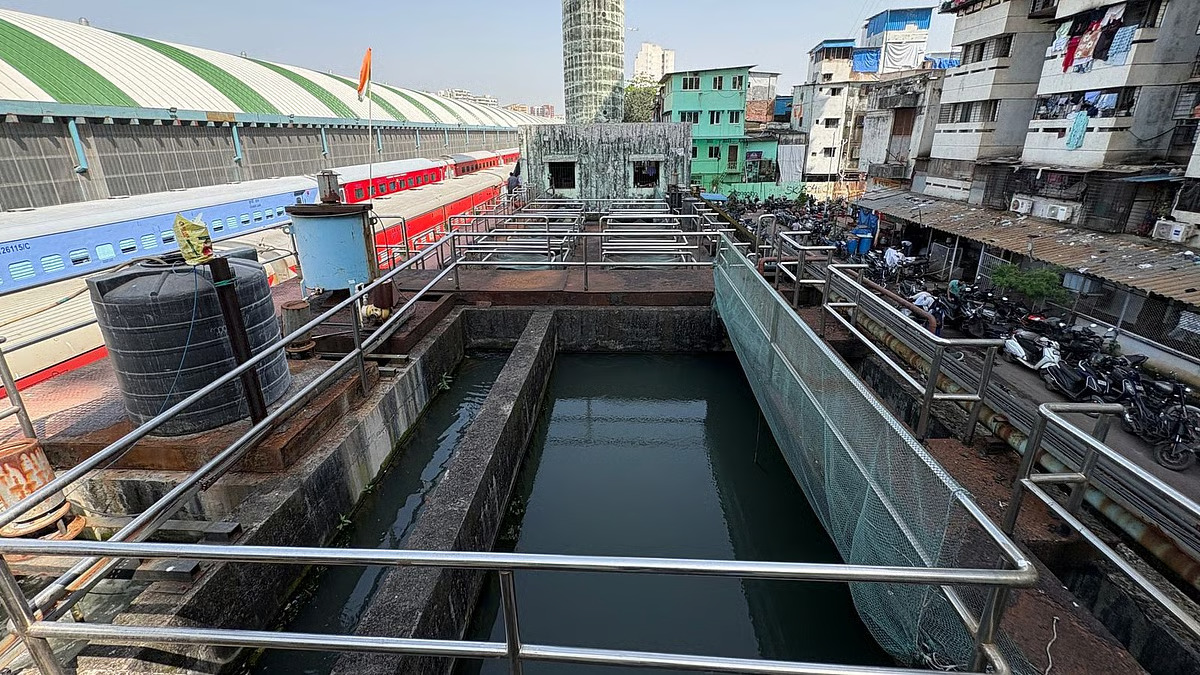
Western Railway’s Mumbai Central Division has commissioned a 100 Kilo Litre per Day (KLD) Effluent Treatment Plant (ETP) at the Bandra Terminus Depot. The initiative is part of the Indian Railways’ nationwide environmental programme to conserve water, reduce pollution, and transition towards net-zero carbon operations.
The newly installed ETP is designed to process wastewater generated from washing lines and depot maintenance. According to officials, the plant treats over 12 lakh litres of wastewater each month, converting it into reusable water suitable for non-potable purposes such as coach washing, platform cleaning, gardening, and other station maintenance activities. This recycling effort significantly reduces the division’s dependency on freshwater resources and promotes responsible water management in one of Mumbai’s busiest railway hubs. A senior railway official explained that the new ETP represents a vital component of Western Railway’s broader sustainability framework. The plant employs advanced treatment technologies to remove contaminants before the water is reused, ensuring compliance with environmental standards. This system not only improves operational efficiency but also prevents untreated effluents from entering natural water bodies, helping curb pollution in the surrounding urban environment.
The facility forms part of the Indian Railways’ Mission Amrit Sarovar and several green initiatives aimed at achieving sustainable water usage across the national network. Officials stated that the Bandra Terminus project will serve as a model for replication at other major depots, particularly in metropolitan regions struggling with water scarcity and wastewater management challenges. The Western Railway has, over recent years, accelerated its environmental transition, introducing solar panels, bio-toilets, and solid waste management systems across its network. The installation of the ETP further strengthens its commitment to building eco-resilient infrastructure that reduces the operational carbon footprint while ensuring efficient resource use.
Officials also indicated that similar wastewater treatment systems are being planned at other suburban depots, with the long-term goal of achieving a self-sustaining water cycle across the Mumbai railway network. The move is expected to yield significant cost savings, reduce reliance on municipal water supply, and promote environmental accountability within railway operations. This initiative marks another step in Western Railway’s journey towards a greener future, blending technology with environmental stewardship. By closing the loop on water use, the division is setting an example of how India’s transport infrastructure can evolve sustainably while supporting the nation’s broader climate and water security goals.
Also Read : Mumbai Traffic Diversions Announced In Sakinaka For Metro 6 Construction
