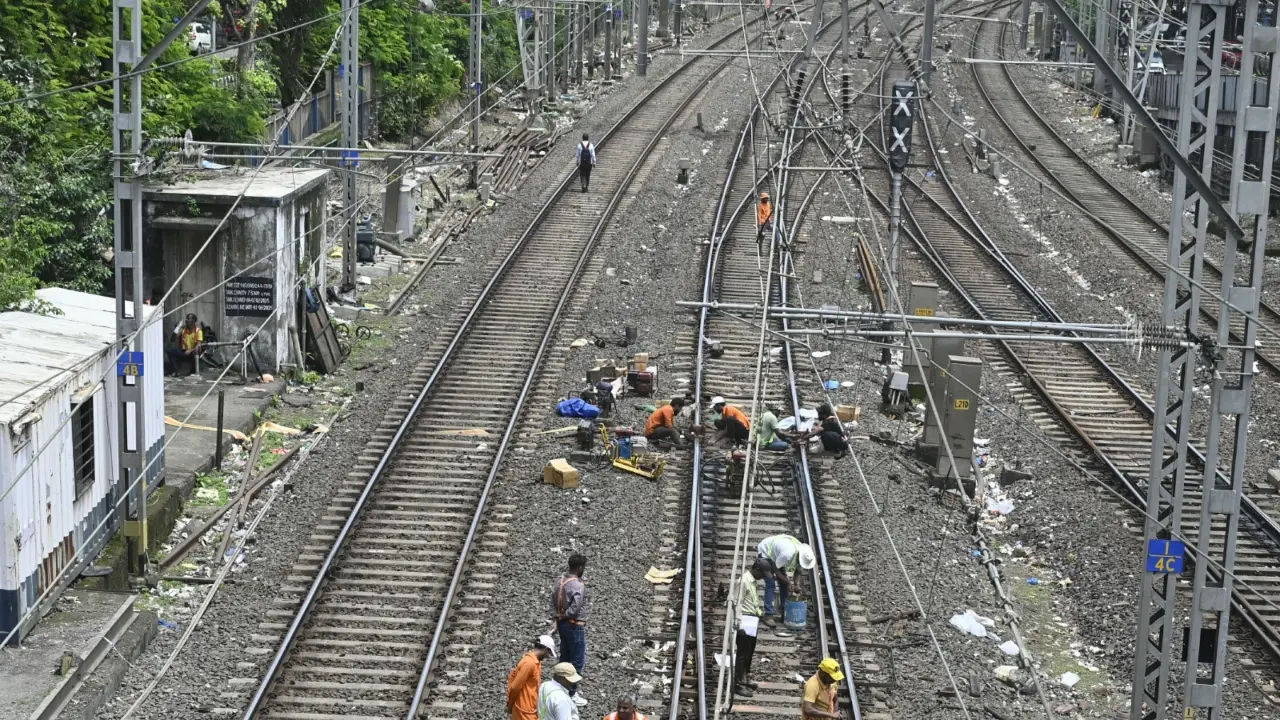
Mumbai’s western suburban rail corridor will see significant service disruptions over January 17 and 18 as critical construction advances on the Kandivali–Borivali rail expansion project. Western Railway has confirmed the cancellation of 240 suburban services across the two days, a move officials say is necessary to complete time-bound engineering work for the sixth railway line on one of the city’s busiest commuter stretches.
The cancellations will affect local train operations during late-night and early-morning hours, coinciding with a major infrastructure block between Borivali and Malad. The works form part of a month-long programme aimed at easing long-term congestion on the Western Line, which carries millions of daily commuters and remains a backbone of Mumbai’s low-carbon urban mobility network. Railway planners note that the Kandivali–Borivali section is a known bottleneck, where limited track capacity constrains both service frequency and reliability. The addition of a sixth line is expected to improve operational flexibility, reduce cascading delays, and allow better segregation of fast and slow services—key to improving passenger experience on high-density corridors.
According to operational schedules, 120 suburban services will be withdrawn on each of the two days. The block will be imposed during the nights of January 16–17 and January 17–18, with separate shutdown windows on the up and down fast lines. These hours have been chosen to minimise disruption to peak commuting periods while allowing uninterrupted work on track alignment, signalling interfaces and safety clearances. Urban transport experts point out that such short-term pain is often unavoidable in cities retrofitting legacy rail networks for future demand. Mumbai’s suburban system, among the world’s most intensively used, is being upgraded while remaining fully operational—an engineering challenge rarely faced at this scale. Temporary service reductions, they argue, are part of building resilience into infrastructure that must serve the city for decades.
The ongoing block is also linked to the temporary suspension of an existing line and the enforcement of speed restrictions in the work zone, further reducing available capacity. Western Railway has indicated that station-level information desks and digital platforms will carry updated service details to help commuters plan alternative travel arrangements. From a sustainability perspective, expanding suburban rail capacity is critical to limiting Mumbai’s dependence on private vehicles and road-based transport. Improved rail throughput can directly reduce emissions, travel stress and economic losses caused by daily congestion, particularly in the city’s western suburbs where population density continues to rise.
Officials say the current phase of work is scheduled to conclude on January 18, after which services are expected to stabilise progressively. However, planners caution that further targeted blocks may be required as signalling integration and safety certification advance. As Mumbai balances immediate commuter inconvenience with long-term mobility gains, the Kandivali–Borivali upgrade highlights a central challenge for Indian cities: upgrading essential infrastructure without halting daily life. The success of this phase will be measured not just by construction progress, but by how quickly improved capacity translates into more reliable and inclusive suburban rail services.
Western Line Commuters Affected as 240 Trains Cancelled on January 17–18