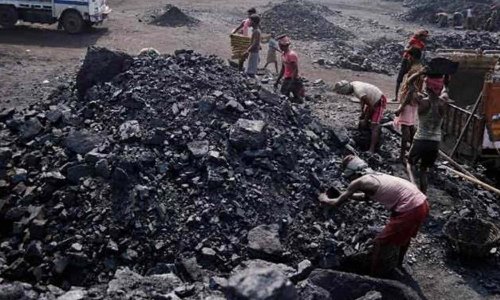
West Bengal’s Eastern Coalfields Limited (ECL) is on track to achieve a coal production target of 58 million tonnes this fiscal year, signalling a potential return to profitability. The company plans to close or redeploy six loss-making underground mines while enhancing coal quality at key sites, aiming to stabilise operations, manage legacy costs, and meet increasing demand from power plants and industrial units in eastern India.
Prolonged monsoon rainfall between June and August caused significant disruptions in mining activity, with daily precipitation limiting output growth from a 2 percent increase in mid-June to a 5.2 percent decline by late August. Production recovered in September and October, but cyclonic conditions briefly impeded operations. An official noted that output is expected to resume positive growth from November, provided weather conditions remain favourable.Last year, ECL produced 52 million tonnes of coal, and achieving the additional 6 million tonnes is considered essential to financial viability. The company needs a minimum monthly output of four million tonnes to sustain operations. “Reaching the 58-million-tonne target is vital for returning to profit, although market conditions may temper gains,” said a senior company official.
Market pressures have shifted the coal sector towards a buyer-driven model, with clients demanding higher-quality coal at competitive prices. Industry experts observe that higher production alone will not guarantee profitability, which now depends on pricing efficiency and market demand.High legacy costs from ECL’s longstanding underground operations in the Raniganj coalfield continue to constrain margins. Around 67 percent of production costs are allocated to salaries and wages, significantly above Coal India’s average of 48 percent and far higher than newer subsidiaries. “These costs persist regardless of mine activity,” an official explained.To address structural losses, six underperforming underground mines have been identified for closure or manpower redeployment, with decisions expected within the fiscal year. Meanwhile, the company is improving coal quality at major sidings such as Salanpur, Mugma, and Chitra. Salanpur has achieved full compliance with quality standards, while Mugma is 80–90 percent compliant. Chitra continues to face challenges due to steeply dipping coal seams, but improved practices from Salanpur are being applied across sites.
Evacuation and sales constraints at Rajmahal, where ECL maintains its largest coal stockpile, are linked to power plants with lower merit order operations. Discussions are ongoing to optimise pricing and operational efficiency to benefit both ECL and electricity generators.These measures position ECL to strengthen operational resilience, enhance coal quality, and gradually improve profitability while supporting energy and industrial demands in West Bengal and Jharkhand.