


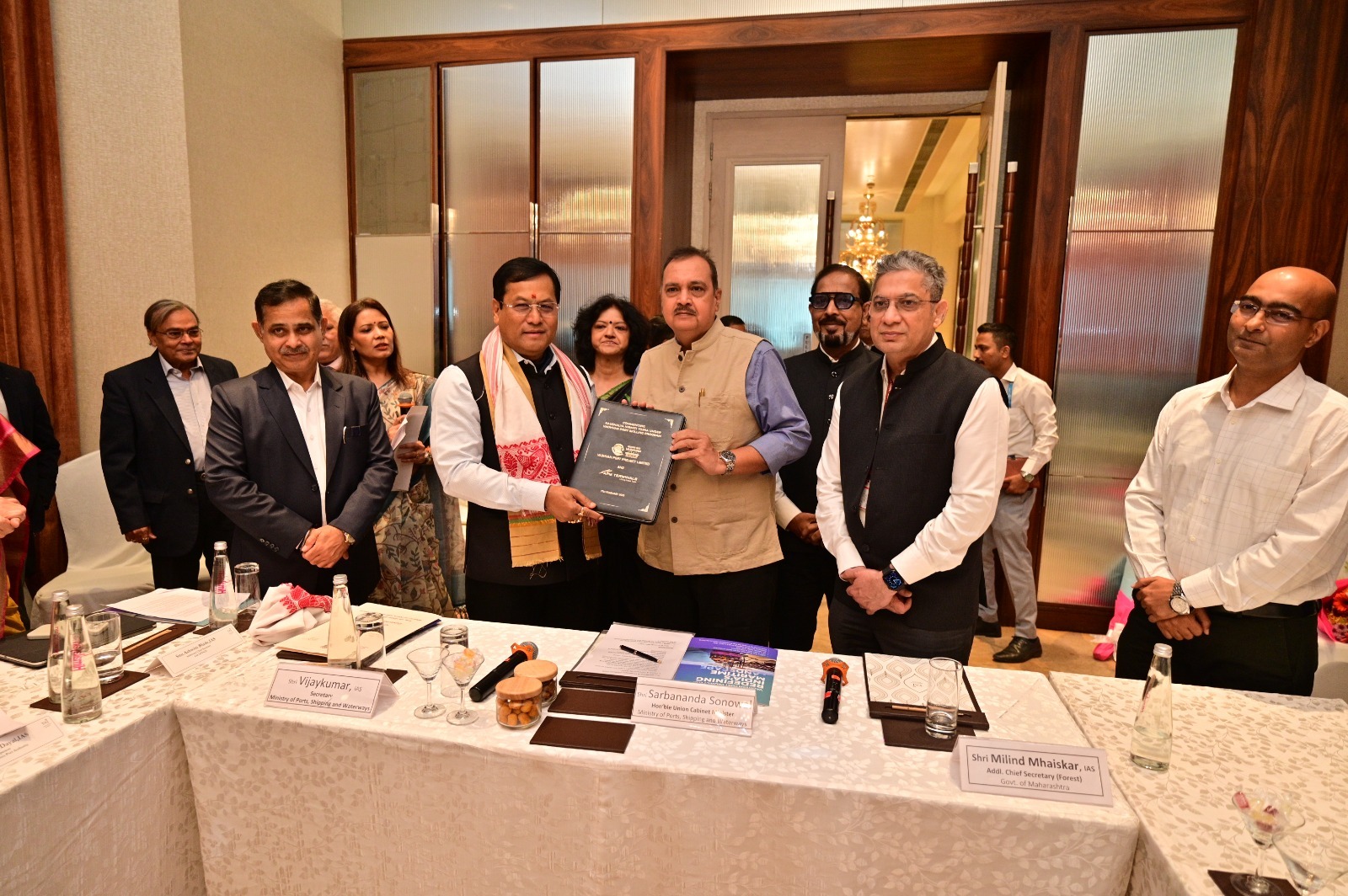
The Vishakhapatnam Port Private Limited (VPPL) and the Directorate of Vocational Education and Training (DVET), Assam, have formalised a memorandum of understanding to strengthen maritime skill development in the region. The agreement, signed in Assam, aims to align local workforce training with emerging port operations and logistics requirements, reflecting broader efforts to integrate human capital planning into urban and regional industrial growth.
The partnership is expected to create structured training programmes for students and local professionals, focusing on contemporary port management, shipping operations, and logistics technology. Senior officials note that regional ports are increasingly modernising their operations to accommodate higher cargo volumes and advanced automation systems. Without skilled human resources, such investments risk underutilisation or operational inefficiencies. From an economic standpoint, the MoU has the potential to generate inclusive employment opportunities in and around port cities. Industry analysts highlight that targeted skill development not only boosts local livelihoods but also supports sustainable urbanisation by reducing migration pressure on larger metropolitan hubs. Enhanced local capacity can improve operational productivity and safety standards while enabling residents to participate in evolving maritime value chains. Urban planners stress that human capital initiatives must complement infrastructure expansion. Ports are no longer isolated trade nodes; they form part of broader urban-industrial ecosystems where logistics corridors, warehousing, and transport networks intersect with residential and commercial development. Officials indicate that equipping the workforce with technical and managerial competencies ensures that ports operate efficiently without straining local infrastructure or ecological capacity.
Environmentally, skill development programmes are increasingly incorporating green practices. Trained personnel can manage energy-efficient cargo handling, monitor emissions, and support climate-resilient port operations. Experts suggest that equipping local labour with knowledge of sustainable port management is as crucial as upgrading physical infrastructure, especially in ecologically sensitive coastal regions. The MoU also signals a shift toward decentralised maritime education. By collaborating with state vocational authorities, port operators can nurture a continuous talent pipeline that meets national logistics priorities. Industry stakeholders view such initiatives as vital to India’s long-term port competitiveness and inclusive urban-industrial growth.
Moving forward, effective implementation will require monitoring frameworks, investment in training infrastructure, and alignment with national skill development standards. If successful, the initiative could serve as a model for other regional ports seeking to integrate workforce development with sustainable infrastructure and urban planning goals, reinforcing the interdependence of human capacity, economic growth, and climate-resilient urban development.
Also Read: Mormugao Port Plans Berth Redevelopment Funding
VPPL Partners With DVET To Boost Maritime Skills
