


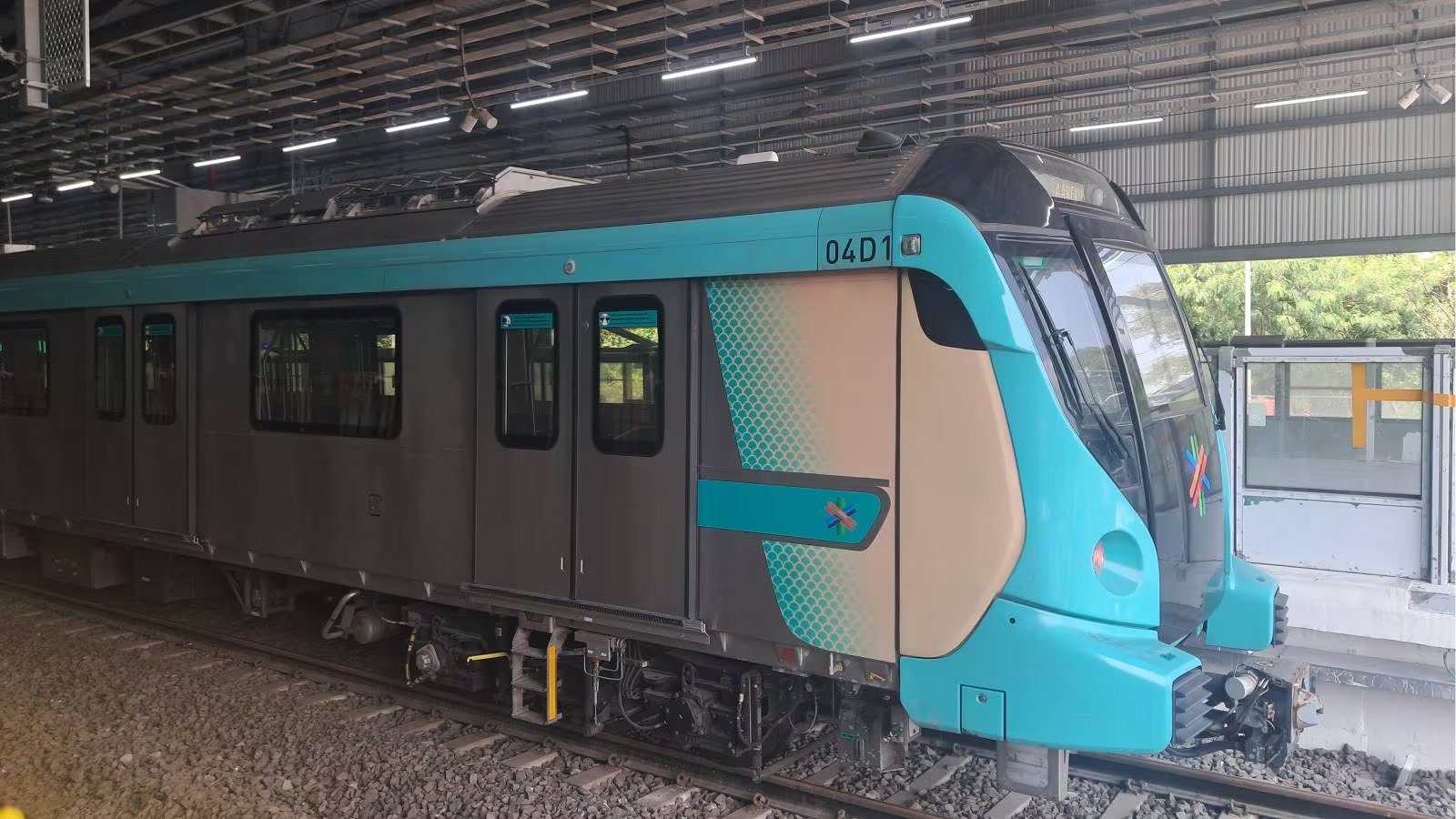
Mumbai’s metro success is fuelling a wave of underground infrastructure projects across the metropolitan region, with multiple agencies drawing confidence from the completion of the 33.5-km Aqua Line corridor between Aarey Colony and Cuffe Parade. The milestone has encouraged authorities to expand the use of tunnel boring machines (TBMs) for new citywide connectivity projects, ranging from cross-city road tunnels to linkages with the upcoming bullet train and airport networks.
Among the most ambitious of these ventures is the Thane–Borivali twin tunnel, a 10.25-km passage set to cut across the Sanjay Gandhi National Park (SGNP). Officials said four large-diameter TBMs will drill simultaneously from both ends, with excavation expected to reach depths of over 100 metres beneath the forested hills. The project aims to offer a faster alternative to the heavily congested Ghodbunder Road, reducing travel time between Thane and western suburbs to less than 20 minutes. The success of the Aqua Line, which deployed 17 TBMs across 35 shafts, has instilled new confidence in local agencies. Officials from the Mumbai Metro Rail Corporation Limited said that the experience of handling complex geology and urban constraints has helped build local expertise in underground engineering — a skill set previously limited to international contractors.
The Mumbai Metropolitan Region Development Authority (MMRDA) is now exploring a 70-km network of interconnected tunnels designed to decongest surface roads and integrate key mobility corridors. The first phase of this plan — a 16-km tunnel linking the Coastal Road’s Worli endpoint to Terminal 2 of Chhatrapati Shivaji Maharaj International Airport via the Bandra-Kurla Complex (BKC) bullet train station — has already entered the feasibility stage. Consultants will soon be appointed for detailed project reports. Meanwhile, the National High-Speed Rail Corporation Limited (NHSRCL) is advancing work on a 21-km tunnel connecting the BKC bullet train terminal to Shilphata in Navi Mumbai. This alignment includes a 7-km section under Thane Creek, combining TBM and New Austrian Tunnelling Method (NATM) techniques. The underwater segment, engineers said, will set new benchmarks in India’s tunnelling technology.
Urban mobility experts view this shift towards underground development as a pragmatic response to Mumbai’s space constraints. With land acquisition costs and displacement risks rising, sub-surface corridors offer a cleaner, less disruptive alternative to expanding surface infrastructure. However, experts caution that energy efficiency, ventilation, and long-term maintenance must remain central to project design if the city aims to achieve a sustainable and low-carbon mobility ecosystem. By reimagining connectivity below ground, Mumbai is signalling a broader shift towards smarter, space-efficient infrastructure — one that balances urban growth with environmental stewardship and commuter convenience.
Also Read: Mumbai Metro Launches Feeder Routes Amid Citizens Demand For BEST Inclusion
