Visakhapatnam Scientists Innovate Advanced Nano Concrete To Strengthen Nuclear Power Infrastructure Durability
Scientists in Visakhapatnam are pioneering advanced nano concrete to enhance the durability of nuclear power infrastructure. Developed by the Institute of Solid Waste Research and Ecological Balance (INSWAREB), the high-strength concrete integrates complementary cement materials and nano-scale additives to resist radiation-induced microcracking and long-term structural deterioration. This innovation aims to extend the service life of nuclear facilities while promoting sustainable construction practices and resource-efficient urban development.
Concrete, the world’s second-most consumed material after water, faces growing challenges in high-radiation environments such as nuclear reactors. Conventional formulations often deteriorate prematurely due to modern high early-strength cements that prioritise rapid construction over longevity. INSWAREB researchers note that earlier cements released heat and lime gradually, allowing concrete to gain strength over years. Today’s faster-setting cements, while efficient, can compromise structural resilience, making innovation critical for energy infrastructure.INSWAREB’s approach centres on integrating complementary cement materials (CCMs) such as fly ash, silica fume, metakaolin, slag, and rice husk ash. These additives react chemically with excess lime during hydration, producing denser microstructures that enhance both compressive strength and long-term durability. For nuclear power plants, this densification is particularly important, as concrete is exposed to prolonged radiation. Studies show that radiation can alter the crystalline structure of quartz aggregates, triggering expansion, cracking, and gradual loss of structural integrity—a phenomenon confirmed by research at the University of Tokyo.
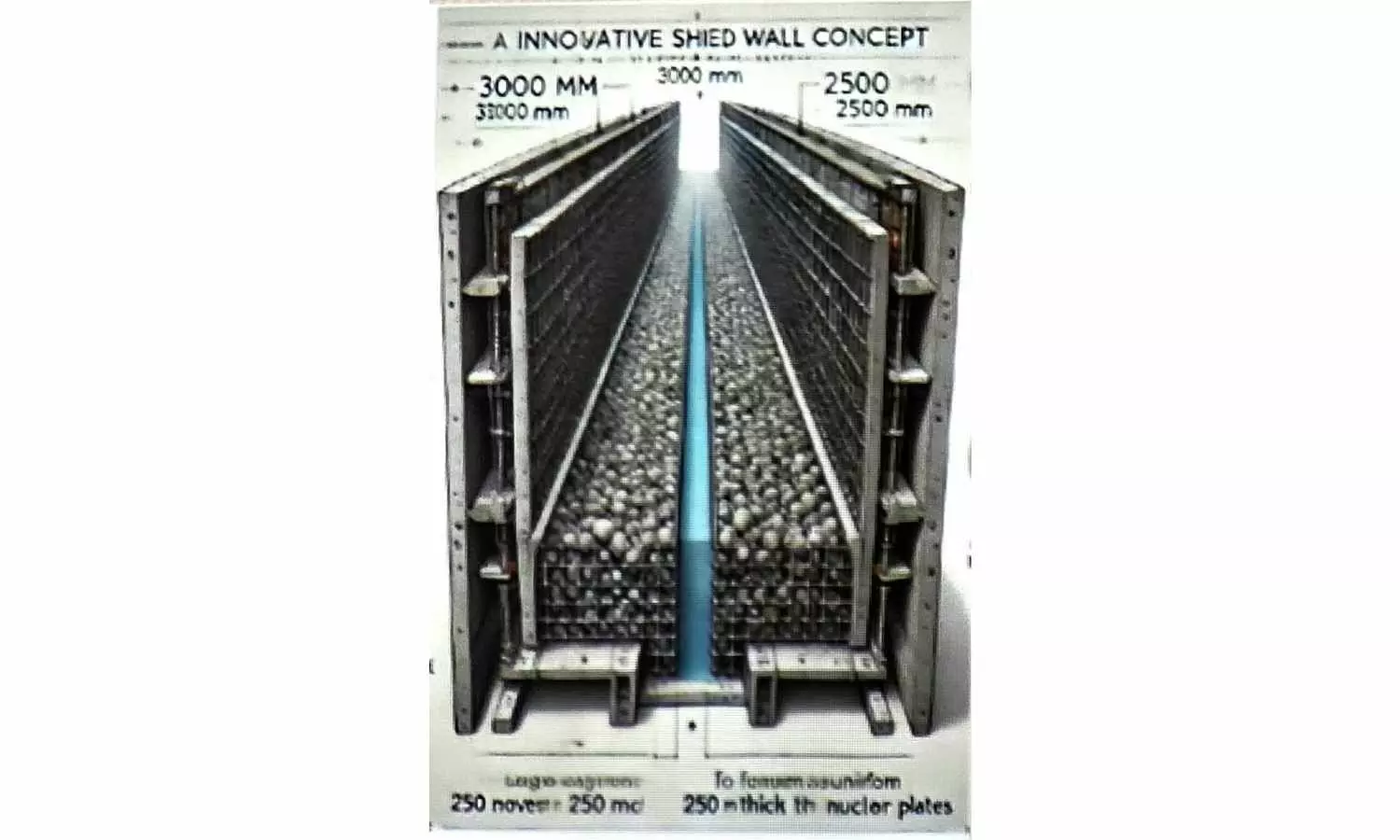
The institute is also investigating irradiated complementary cement materials (ICCMs), exploring whether exposure to radiation can convert conventional and supplementary materials into highly resilient concrete. INSWAREB has submitted detailed proposals to the Prime Minister’s Office and the Department of Atomic Energy to validate the concept. Preliminary discussions with the Bhabha Atomic Research Centre (BARC) and the Nuclear Power Corporation of India Limited (NPCIL) have opened avenues for initial feasibility studies.Given the limited availability of irradiated material domestically, INSWAREB is exploring collaborations with international facilities, including the Advanced Test Reactor in the United States, to obtain larger samples for testing. Parallel efforts focus on nano concrete for shield walls in nuclear reactors. Its compact microstructure, combined with high fly ash content, offers superior resistance to radiation-induced microcracking, maintaining both strength and structural integrity over extended periods.
Industry experts suggest that these concrete innovations could redefine standards for nuclear infrastructure, balancing safety, longevity, and sustainability. By reducing material wastage and improving structural performance, advanced and nano concrete technologies support eco-conscious construction and resilient urban development. As India seeks to expand its nuclear energy capacity, such research positions Visakhapatnam at the forefront of next-generation, sustainable building materials for critical infrastructure.