


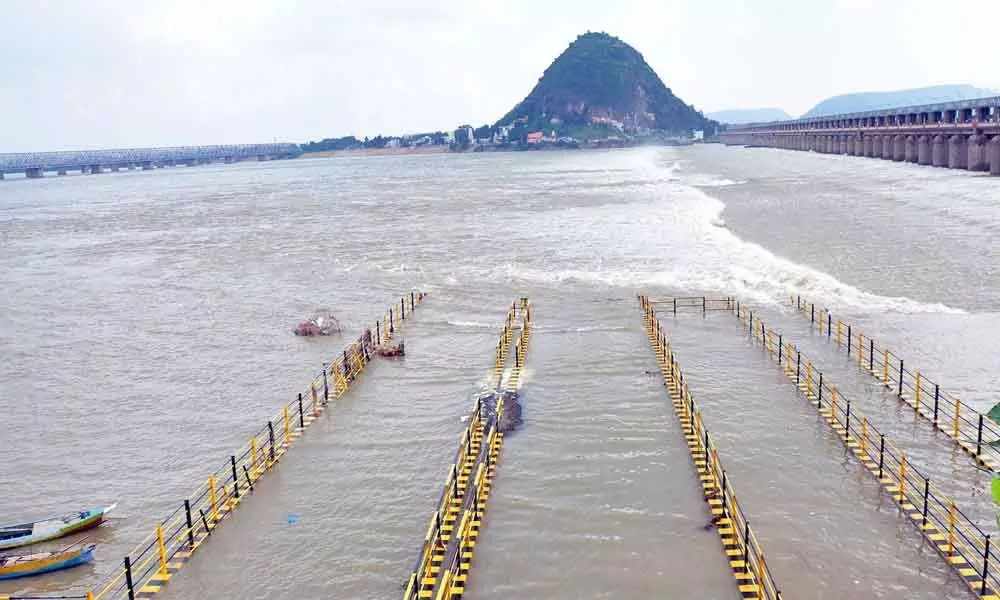
A ₹49.4-crore rural drinking water scheme drawing from the Krishna River is entering its final implementation stage in Andhra Pradesh’s NTR district, offering long-awaited relief to fluoride-affected habitations in A. Konduru mandal. The Krishna Water Project, executed under the Jal Jeevan Mission, is expected to become operational later this month, delivering treated surface water directly to households across 38 villages.
For decades, residents in this semi-arid belt relied heavily on borewells with high Total Dissolved Solids (TDS) and mineral contamination. Local health records over the past ten years indicate a persistent incidence of chronic kidney ailments, with several hundred reported cases and multiple fatalities linked to prolonged consumption of untreated groundwater. Public health experts have repeatedly flagged groundwater quality as a structural rural infrastructure issue rather than an isolated medical concern.The Krishna Water Project seeks to structurally address that gap by shifting the primary source from groundwater to treated canal-fed river water. Officials involved in the rollout confirmed that water will be drawn from the Ibrahimpatnam VTPS canal system, treated, and pumped through a central sump before being distributed through an upgraded storage and pipeline network.
Infrastructure upgrades under the scheme include the repair and strengthening of 43 Over Head Service Reservoirs (OHSRs) and construction of 12 new storage tanks, creating a grid of 55 operational reservoirs. The network has been designed to meet the 55 litres per capita per day (LPCD) benchmark and cater to projected population growth, covering an estimated 56,000 residents through Functional Household Tap Connections (FHTCs).Trial runs have already been conducted. According to a senior district water supply official, minor redesign work is underway to ensure equitable supply to tail-end habitations before formal commissioning. Full-scale distribution is expected once these adjustments are completed.Beyond public health, the project has wider implications for rural resilience and economic stability. In water-stressed agrarian mandals, healthcare expenditure linked to chronic illness often places a disproportionate burden on low-income households. Safe drinking water access can reduce medical costs, improve productivity and enhance overall quality of life.
Urban development planners note that reliable rural water infrastructure also curbs distress migration by improving liveability standards in smaller habitations. As Andhra Pradesh expands piped water networks under national mandates, the A. Konduru model reflects a transition toward centralised treatment, monitored supply systems and long-term source sustainability.The upcoming commissioning will mark the operational shift from contaminated aquifers to regulated surface water supply. The durability of the Krishna Water Project, however, will depend on consistent maintenance, energy-efficient pumping systems and water quality monitoring mechanisms in the years ahead.If executed as planned, the scheme could significantly reduce groundwater dependency in the mandal and strengthen rural public health outcomes — underscoring how targeted water infrastructure investments can directly influence human development indicators.
Vijayawada Krishna Water Project nears rollout
