


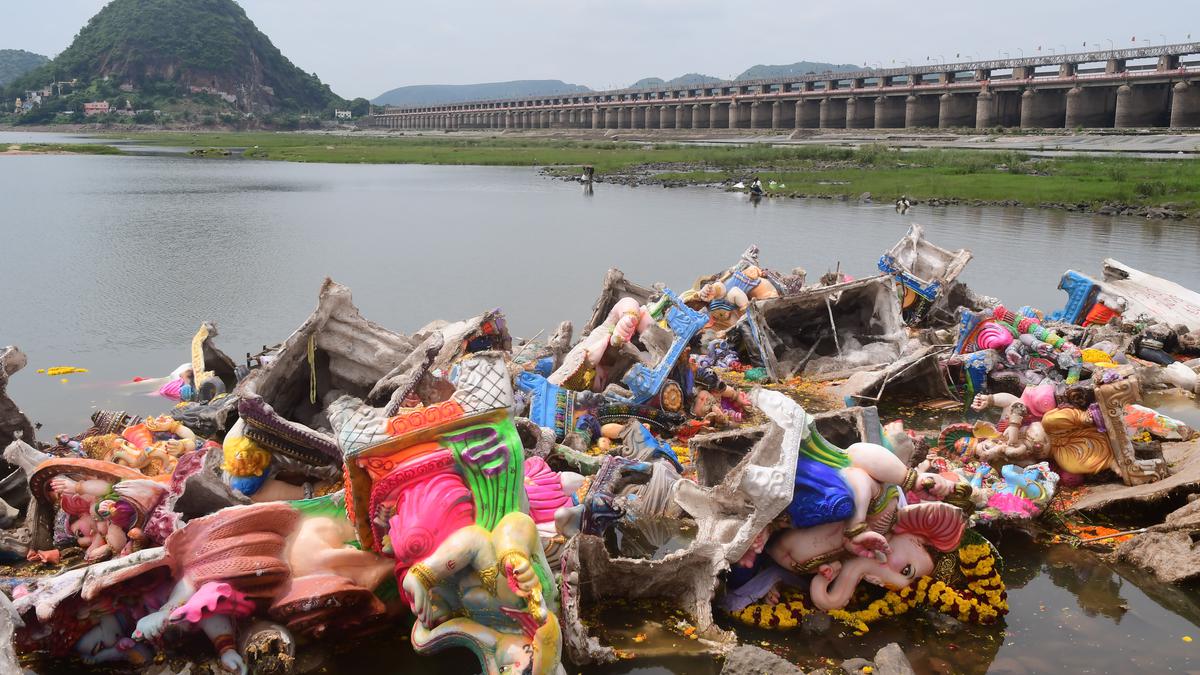
The city’s officials have overseen a meticulous arrangement for the immersion ceremonies, aimed at providing devotees with hassle-free facilities while minimizing environmental damage. A designated immersion point near Seethamma Vari Paada has been prepared for larger idols, while smaller ones can be immersed in special tankers or even at home, offering convenience and reducing the logistical and environmental burden of a mass event. Crucially, the municipal corporation has deployed bins to collect biodegradable waste like flowers and religious offerings, ensuring they are transported regularly to prevent littering and pollution. This dual approach of facilitating religious rituals while strictly managing their environmental impact underscores a forward-thinking governance model.
A key pillar of this initiative is a powerful public awareness campaign against the use of Plaster of Paris (PoP) and chemical-painted idols. The city’s irrigation canals, a vital part of its urban ecosystem, have historically borne the brunt of pollution from these non-biodegradable materials. In a concerted effort to curb this, special monitoring teams will be stationed on canal bridges to ensure only clay idols are immersed and that no plastic or garbage is dumped. This measure is not merely a logistical one; it is an appeal to the collective conscience of the community, urging citizens to become partners in preserving their natural heritage. The message from civic leaders is clear: protecting the Krishna River and the city’s canals is a shared responsibility that benefits all.
This shift towards eco-friendly immersion practices is a reflection of a growing global trend where cities are grappling with the environmental consequences of rapid urbanization and traditional practices. The human element is at the heart of this narrative, as it calls upon individuals to make conscious choices that serve the larger interest of society. The collaboration between the city administration and its residents is a testament to the power of community-driven change. It is an acknowledgment that a sustainable city cannot be built by regulation alone; it requires a cultural transformation where environmental stewardship becomes an integral part of daily life.
In conclusion, Vijayawada’s approach to the Ganesh festival is a beacon of hope for other urban centres facing similar challenges. By blending tradition with modern environmental consciousness, the city is not just managing a religious festival; it is actively shaping a more sustainable and equitable future. The success of this model depends on sustained public cooperation and a continued commitment from the authorities to provide the necessary infrastructure. It is a compelling narrative that shows how cultural celebrations, far from being a source of pollution, can become a powerful vehicle for environmental conservation and the creation of a cleaner, greener urban landscape.
Also Read :Nagpur Gondia Expressway Approved, ₹3162 Crore Project Cuts Travel Time
