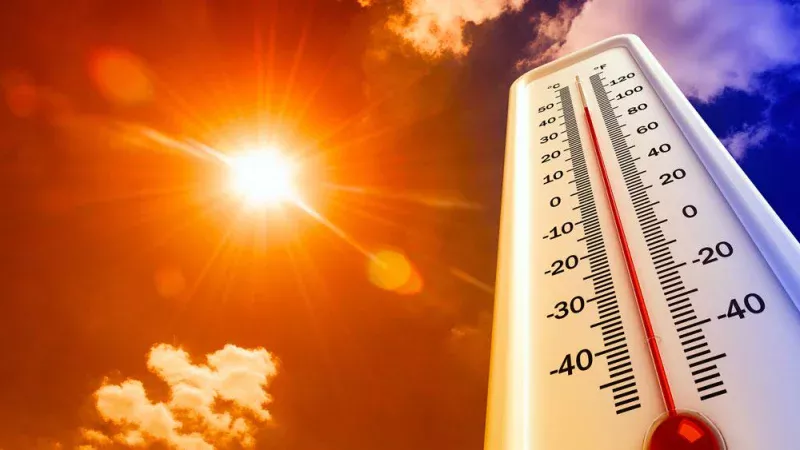
Several districts in Maharashtra’s Vidarbha region are experiencing intense early-season heat, with temperatures crossing the 40°C mark and prompting weather authorities to issue a heatwave warning for parts of the region. The spike in temperatures across districts such as Amravati, Akola and Wardha highlights the onset of unusually hot conditions even before the peak summer months.
Meteorological observations show that Akola recently recorded a maximum temperature of about 40.8°C, making it one of the hottest locations in the country for the day. Amravati followed closely at around 40.6°C, while Wardha reported temperatures near 40°C. These readings are significantly above the seasonal average for early March, signalling heatwave-like conditions in parts of Vidarbha.The India Meteorological Department (IMD) has issued a yellow alert for several districts in the region, warning that heatwave conditions could persist in isolated pockets over the coming days. The alert advises residents to limit outdoor activity during peak afternoon hours, remain hydrated and take precautions to avoid heat-related illnesses.
Weather experts attribute the sudden rise in temperatures to dry atmospheric conditions and clear skies across interior Maharashtra. These conditions allow stronger solar heating during the day, pushing maximum temperatures several degrees above normal levels. Other districts in the region—including Washim, Yavatmal and Chandrapur—have also recorded temperatures approaching or exceeding 39°C, indicating a broader warming trend across eastern Maharashtra.Vidarbha frequently records some of the highest temperatures in India during the summer months due to its inland geography and dry climatic patterns. However, the current spike is notable because it has occurred early in the pre-monsoon season, suggesting that prolonged heat could become a recurring feature in the coming weeks.
Urban centres across the region are particularly vulnerable to heat stress due to dense construction, limited tree cover and rising urbanisation. In cities such as Nagpur and Amravati, expanding built-up areas and increased traffic activity can intensify local temperatures through the urban heat island effect. Experts say this makes heatwaves more challenging for city residents, particularly for outdoor workers, elderly populations and people living in densely populated neighbourhoods.Public health officials and civic authorities typically respond to such warnings by promoting heat-safety measures, including water distribution points, awareness campaigns and emergency medical preparedness. Schools and workplaces may also adjust schedules if temperatures continue to rise sharply.The IMD has indicated that maximum temperatures across interior Maharashtra may climb further by one to three degrees Celsius in the coming days if dry conditions persist.
With summer still in its early stages, meteorologists are closely monitoring weather patterns across central India. Continued heatwave activity could affect daily life, agriculture and urban infrastructure, making preparedness and climate-resilient planning increasingly important for cities across the region.