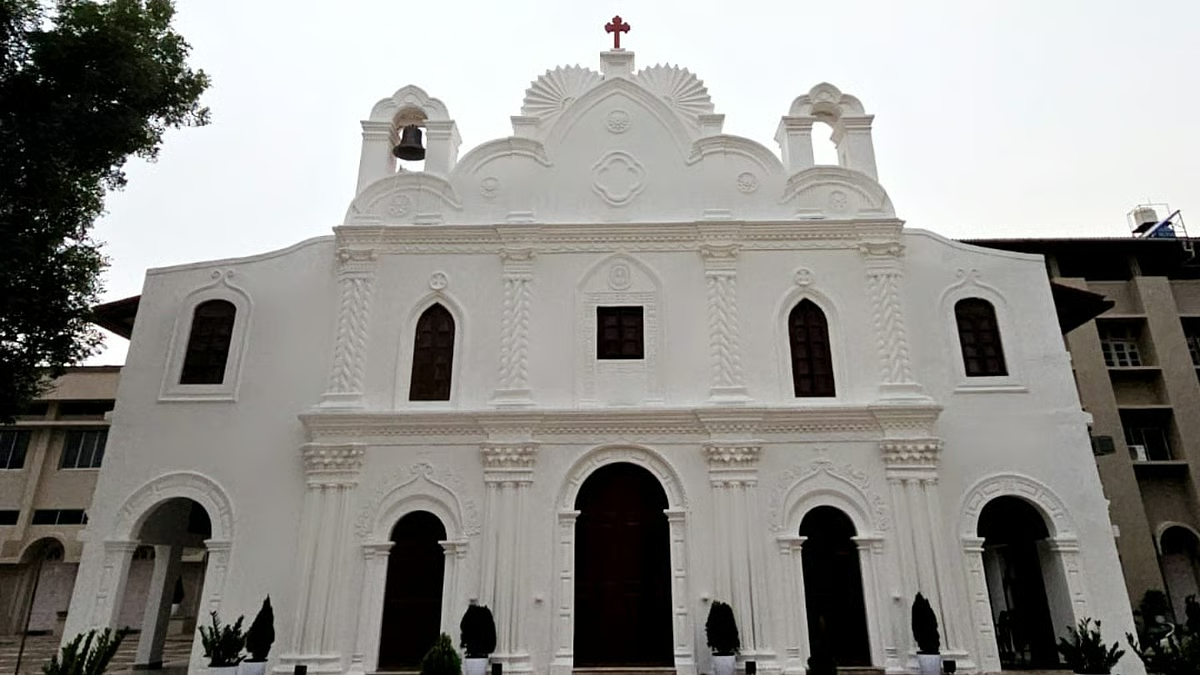
Vasai Cathedral Wins UNESCO Heritage Conservation Award
A 475-year-old cathedral in Vasai has been recognised with a prestigious UNESCO Asia-Pacific Award for Cultural Heritage Conservation, spotlighting a rare community-led restoration success in a region where rapid urban growth often pressures historic environments. The accolade underscores the role of inclusive heritage care in strengthening urban identity and sustainable cultural tourism near India’s financial capital.
The Our Lady of Grace Cathedral, an enduring monument from the Portuguese colonial era located in Papdy village, received the Award of Merit at the 2025 UNESCO Asia-Pacific Awards for Cultural Heritage Conservation during a ceremony in Bangkok. Selected from nearly 90 entries across 16 countries, the cathedral’s recognition places it among notable regional projects that balance architectural integrity with social relevance.Built in the mid-16th century and elevated to cathedral status centuries later, the structure is an example of period construction characterised by locally sourced stone and traditional building techniques. Over time, exposure to monsoon conditions and piecemeal repairs had threatened its structural stability and aesthetic character. The restoration, funded predominantly by local parishioner contributions and supported by expert conservation architects and artisans, reversed decades of wear while retaining the cathedral’s original materiality and design ethos.
Urban planners and heritage conservationists note that the award reflects a broader imperative to integrate historic preservation with evolving urban landscapes. Vasai, part of the wider Mumbai metropolitan region, has witnessed rapid socio-economic transformation, with infrastructure expansion and residential development reshaping its coastal and hinterland corridors. Amid this growth, maintaining tangible links to the past — and leveraging them for inclusive community engagement — becomes crucial for balanced urban identity and cultural continuity.The UNESCO jury commended the project for its skilled use of traditional craftsmanship and sustainable conservation practice, highlighting how technical achievement and community stewardship together can yield heritage outcomes that resonate with local residents and draw wider interest. Such accolades can also catalyse cultural tourism, offering economic opportunities rooted in historic value and place-based experiences.
Experts stress that conservation success in heritage precincts often hinges on participation beyond institutional frameworks. In Vasai, the restoration model demonstrated that when residents and faith communities take ownership of cultural assets, the outcomes tend to align better with both historical authenticity and contemporary needs. This stands in contrast to top-down interventions that can sometimes prioritise commercial redevelopment over heritage value.Despite its age, the cathedral remains an active place of worship and social gathering, underscoring heritage’s role as a living asset rather than a static relic. As cities culturally and economically evolve, projects like this offer a blueprint for sustainable heritage management that respects local histories while forging inclusive opportunities for appreciation and community-centred growth.
Looking ahead, the spotlight from UNESCO may encourage further investment in preserving heritage sites across the Mumbai region — from fortifications to colonial-era precincts — as part of a cohesive urban strategy that supports climate resilience, social equity, and cultural enrichment.